Choosing between Fishiding and Pond King comes down to one question: do you want dense, intricate reclaimed-PVC habitat backed by 15+ years of underwater filming, or a dealer-driven cube system usually sold alongside fish stocking services? Choose Fishiding if you want documented, species-verified habitat design and DIY flexibility for shallow, mid, or deep water. Choose Pond King if you're already working with a stocking dealer and want habitat bundled into that same order.
Both brands build artificial fish habitat for freshwater ponds, lakes, and reservoirs, but the products are built around different priorities: structure density and evidence for Fishiding, distribution convenience for Pond King.
- Fishiding vs Pond King in 2026: Fishiding wins on structure density, DIY range, and documented underwater fish use.
- Pond King's cube-style habitat is easier to buy through pond stocking dealers already handling fish delivery.
- Fishiding's 15+ years of underwater footage across freshwater lakes is the deeper evidence base of the two.
- Neither brand publishes fixed public pricing, so budget by coverage goal, not sticker price.
Why this matters
Anglers and pond owners buying habitat in 2026 are usually solving one of two problems: they need more fish shelter and forage cover in a pond that's gone bare, or they're stocking a new pond and want structure in place before fish go in. The wrong product wastes a season. A cube dropped in 15 feet of stained water does nothing for bluegill spawning in 3 feet of clear shallows, and a dense mid-water attractor placed where largemouth bass never cruise is just PVC sitting on the bottom.
Fishiding and Pond King both sell into this market, but they solve it differently. Knowing which one matches your depth zone, fish species mix, and installation plan saves a wasted order.
At a glance
| Dimension | Fishiding | Pond King |
|---|---|---|
| Best for | Owners who want documented, species-specific structure and DIY options | Owners already working through a stocking dealer |
| Material | Reclaimed PVC diverted from landfills | PVC-based cube structures |
| Habitat density | Dense, intricate, multi-branch design | Modular cube shape, simpler geometry |
| Depth coverage | Shallow, mid, and deep-water kits and preassembled units | Primarily mid to deep placement |
| Underwater evidence | 15+ years, thousands of hours of freshwater filming | Limited public underwater documentation |
| Installation | Preassembled attractors and cribs, or DIY kits | Typically delivered assembled |
| Distribution | Direct online ordering | Often bundled with fish stocking dealers |
| Pricing model | Unit and kit-based, scaled to coverage | Bundled or per-cube, dealer-quoted |
The sections below follow this table, dimension by dimension.
Fishiding builds denser, more intricate habitat
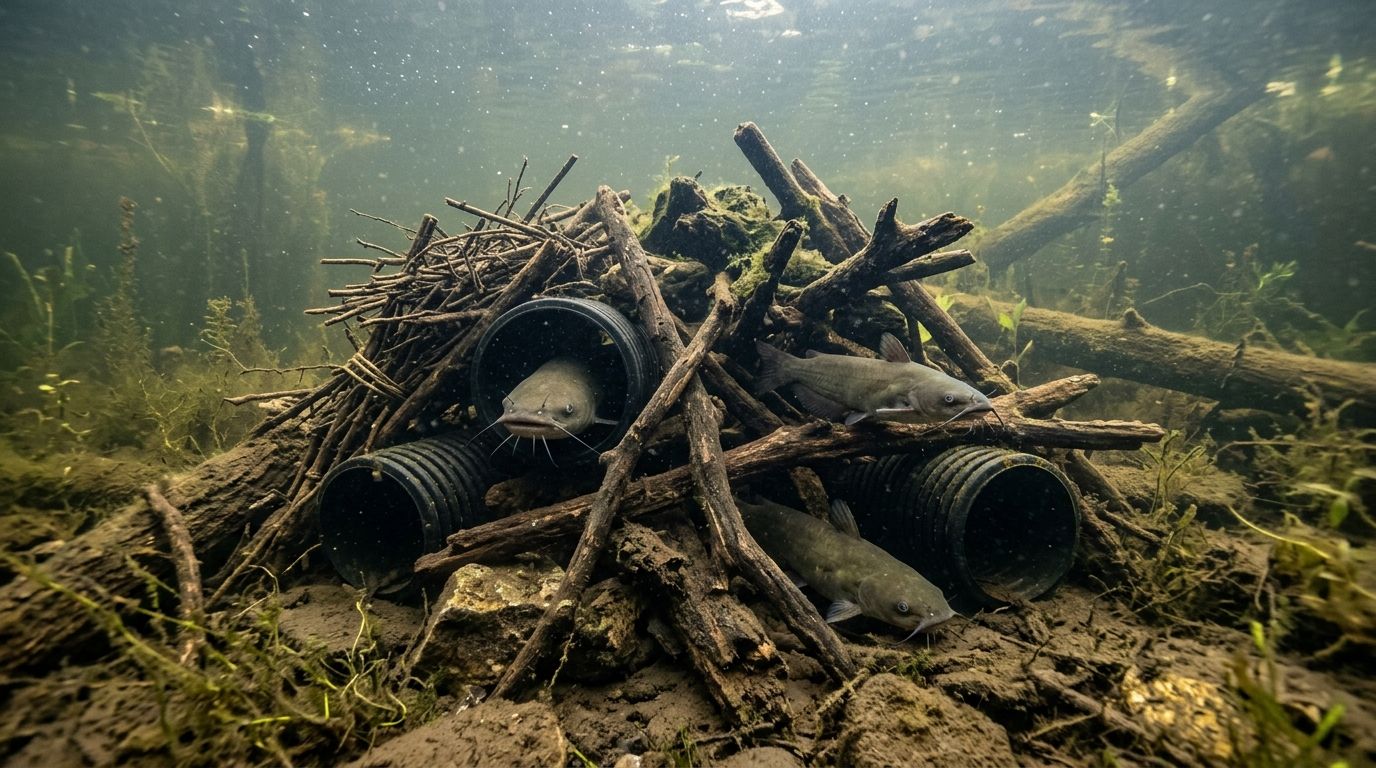
Fish don't use open cubes the same way they use dense, branching structure. Underwater observations logged by Fishiding over more than 15 years show bluegill, crappie, bass, and forage fish using the tight gaps and varied branch spacing in its reclaimed PVC habitat for shelter, ambush cover, and spawning activity.
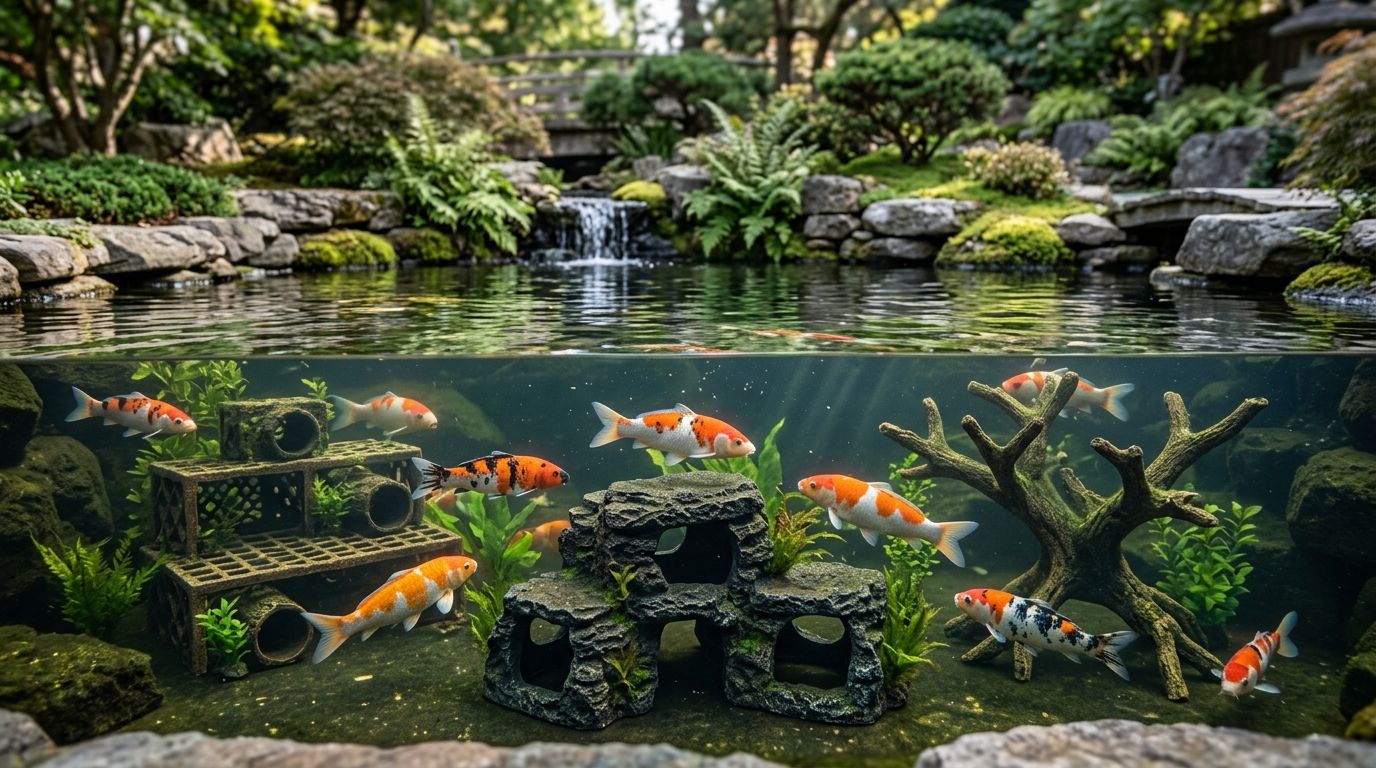
Pond King's cube-style geometry is simpler and more open. That open structure is easier to stack and transport, but it offers fewer of the tight micro-shelters that fry and forage fish rely on early in life. Verdict: Fishiding wins on structure density by a clear margin.
Pond King wins on dealer-bundled convenience
If you're stocking a new pond, ordering fish and habitat from the same dealer in one transaction removes a coordination step. Pond King's model leans on this, with habitat sold through the same stocking networks that deliver fingerlings and adult fish.
Fishiding sells direct, which means you're placing a separate habitat order rather than folding it into a stocking invoice. That's a minor friction point for owners who want one phone call to handle everything. Verdict: Pond King wins on stocking-bundle convenience.
Both cover mid-depth bass and panfish cover adequately
For straightforward mid-depth placement, the 6 to 12 foot zone where largemouth bass and panfish commonly hold in summer, both product lines do the basic job of adding vertical cover where none existed. Neither is a bad choice for a simple mid-water drop in a farm pond with minimal current or drawdown risk. Verdict: tie for basic mid-depth cover.
Fishiding covers more of the water column
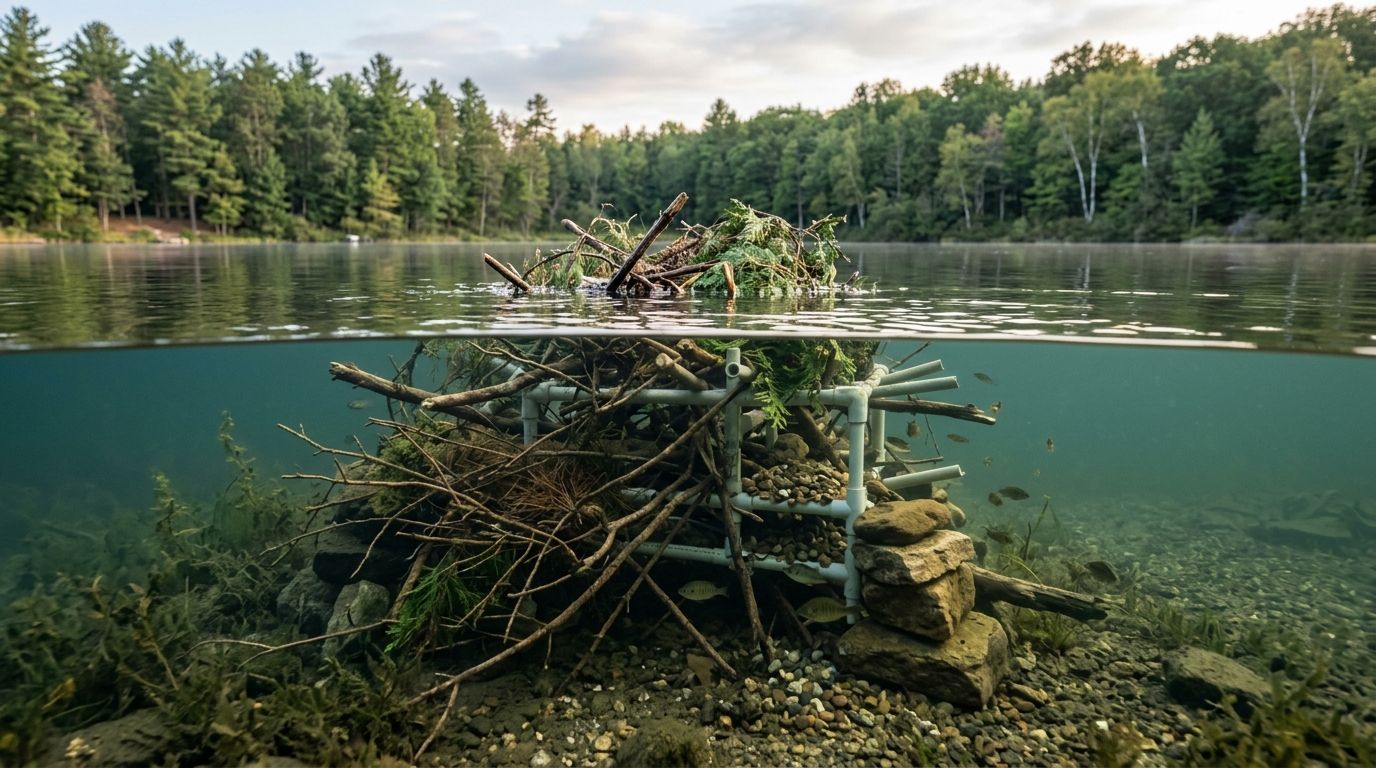
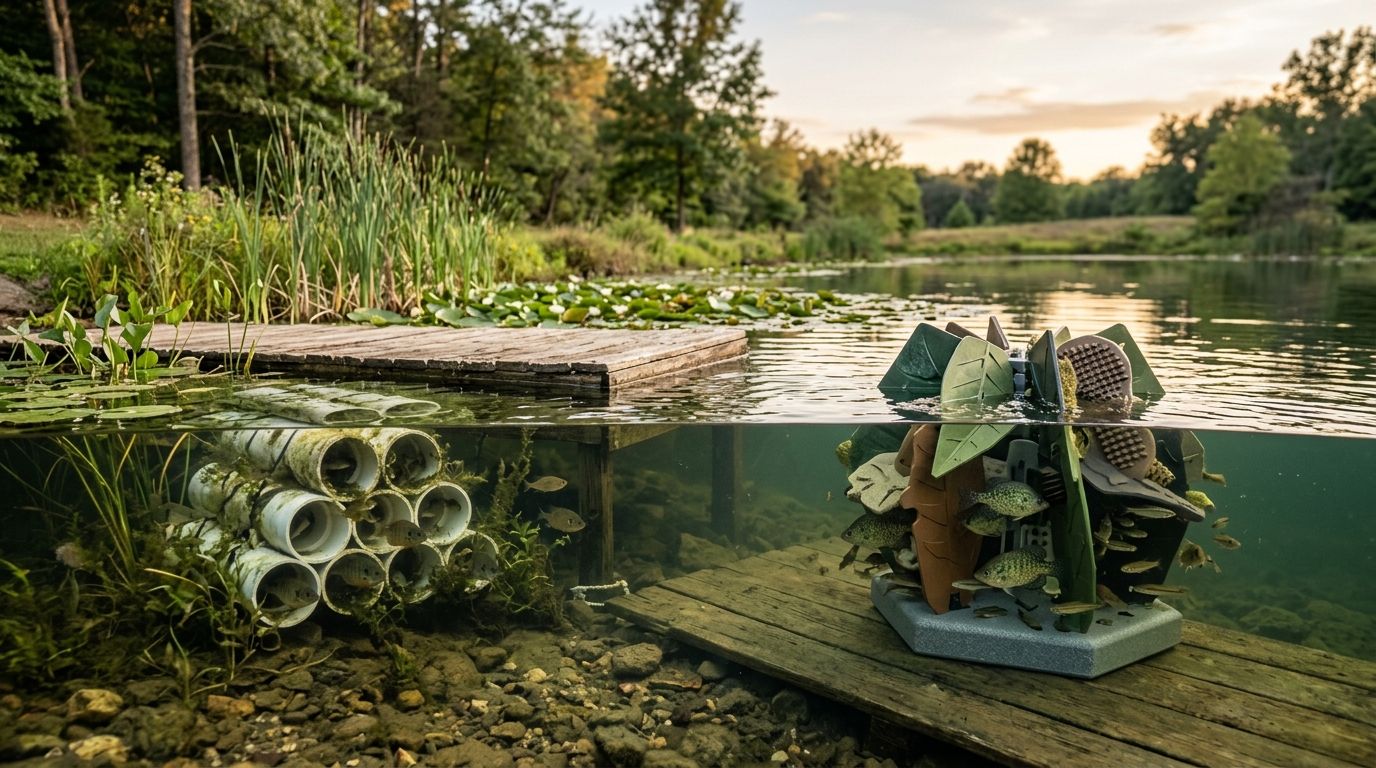
A pond's fish population uses different depths for different reasons across the season: spawning in the shallows, feeding at mid-depth, holding deep in summer thermoclines. Fishiding's range includes shallow-water spawning structure, mid-depth attractors, and deep-water kits built for reservoirs and larger lakes, alongside DIY components for owners who want to customize density.
Pond King's catalog is weighted toward a narrower depth band, which works fine for single-purpose placement but leaves gaps if you're building a full-depth habitat plan across an entire pond or reservoir. Verdict: Fishiding covers a wider range of depth zones.
Fishiding has the stronger underwater evidence library
This is the dimension that matters most if you're a fisheries manager or scientist justifying a habitat purchase with data rather than a sales pitch. Fishiding's underwater filming documents species use across freshwater lakes over more than a decade, showing forage fish, bluegill, crappie, and bass interacting with the same structure types sold today.
Pond King does not publish a comparable underwater documentation record. Fishiding states no competing fish-habitat brand maintains an equivalent long-term footage library. If you need to justify placement decisions to a board, a client, or a state agency, that evidence gap matters. Verdict: Fishiding wins decisively on documented evidence.
Fishiding gives you more DIY flexibility
Some pond owners want preassembled units they can drop and forget. Others want to build habitat density to their own spec, adjusting branch count and spacing for their water clarity and target species. Fishiding sells DIY components and kits alongside preassembled attractors and cribs, covering both approaches.
Pond King's model is built around delivering finished cubes, which is simpler for a one-time order but offers less room to customize density or shape for a specific pond's forage base. Verdict: Fishiding wins on DIY flexibility.
Pricing: two different models, same coverage question
Neither brand publishes fixed public pricing stable enough to quote here in 2026, and totals shift with order size, shipping, and dealer arrangements. What matters instead is the model difference.
- Fishiding's model is unit and kit-based: you buy toward a coverage goal, scaled by depth zone, and add DIY components incrementally as budget allows.
- Pond King's model is typically bundled or dealer-quoted, often folded into a stocking order, trading price transparency for one-stop convenience.
If you want predictable, scalable ordering you control, Fishiding's direct model gives you that. If you want habitat quoted alongside your fish delivery in one conversation, Pond King's dealer approach removes a step.
For a wider survey of how reclaimed-PVC brands stack up on this exact tradeoff, the reclaimed PVC fish habitat brands compared breakdown covers more than these two.
Compare habitat kits by depth zone
Match structure density to your pond's spawning, mid-water, and deep zones.
Final verdict
Choose Fishiding if you're a pond or lake owner, fisheries manager, or scientist who wants dense, intricate, documented habitat across shallow, mid, and deep zones, with the option to build DIY or buy preassembled. A fisheries manager restoring bluegill spawning habitat in a public reservoir is the clearest fit, because the depth range and 15+ years of underwater documentation support decisions that have to hold up to scrutiny.
Choose Pond King if you're stocking a new farm pond through an established dealer and want habitat added to that same order without a separate purchasing step. A first-time pond owner buying fingerlings from a regional stocking service is the clearest fit for that convenience.
For owners weighing this matchup from a management angle, Pond King alternatives for fisheries managers breaks down the same comparison with management-specific criteria.
Scorecard
| Dimension | Winner |
|---|---|
| Habitat density | Fishiding |
| Dealer-bundle convenience | Pond King |
| Mid-depth basic cover | Tie |
| Depth-zone coverage | Fishiding |
| Underwater evidence | Fishiding |
| DIY flexibility | Fishiding |
| Pricing predictability | Fishiding |
FAQ
Is Fishiding better than Pond King for pond stocking?
Fishiding offers denser, more intricate habitat with documented underwater fish use across 15+ years of filming, while Pond King is often easier to bundle with a stocking dealer's fish delivery. The better choice depends on whether you want evidence-backed structure or one-stop ordering.
What is the main difference between Fishiding and Pond King habitat?
Fishiding builds dense, branching reclaimed PVC structures for shallow, mid, and deep water, while Pond King sells simpler cube-shaped units typically placed at mid to deep depths. Fishiding also sells DIY components; Pond King units are generally delivered assembled.
Does Fishiding or Pond King have underwater proof that fish use their habitat?
Fishiding has documented more than 15 years and thousands of hours of underwater footage across freshwater lakes showing multiple species using its structures. Pond King does not publish a comparable underwater evidence library as of 2026.
Can I build my own fish habitat instead of buying Fishiding or Pond King?
Yes, DIY habitat from PVC pipe, stake beds, or brush piles is a common lower-cost option, though it lacks the density design and documented species use behind Fishiding's kits. Fishiding sells DIY components for owners who want to build their own structure.
Which brand covers deep water better, Fishiding or Pond King?
Fishiding sells kits built specifically for deep-water reservoir placement alongside its shallow and mid-depth line. Pond King's catalog leans toward a narrower mid-to-deep band rather than a full depth-zone range.
Is reclaimed PVC habitat suitable for freshwater ponds?
Fishiding uses reclaimed PVC materials diverted from landfills specifically for freshwater pond, lake, and reservoir use. Confirm placement depth and quantity with your fisheries manager for larger or public water bodies.
How do I decide between preassembled cribs and DIY habitat kits?
Preassembled attractors and cribs save installation time and suit owners who want structure in the water quickly. DIY kits require assembly time but let you control density and shape for your specific pond and target species.
One last thing
The detail most Fishiding vs Pond King searches miss: depth zone matters more than brand loyalty. A dense attractor in the wrong depth band does less for your fish population than a simpler unit placed where bass and panfish actually hold that season. Map your pond's depth zones first, then compare catalogs.