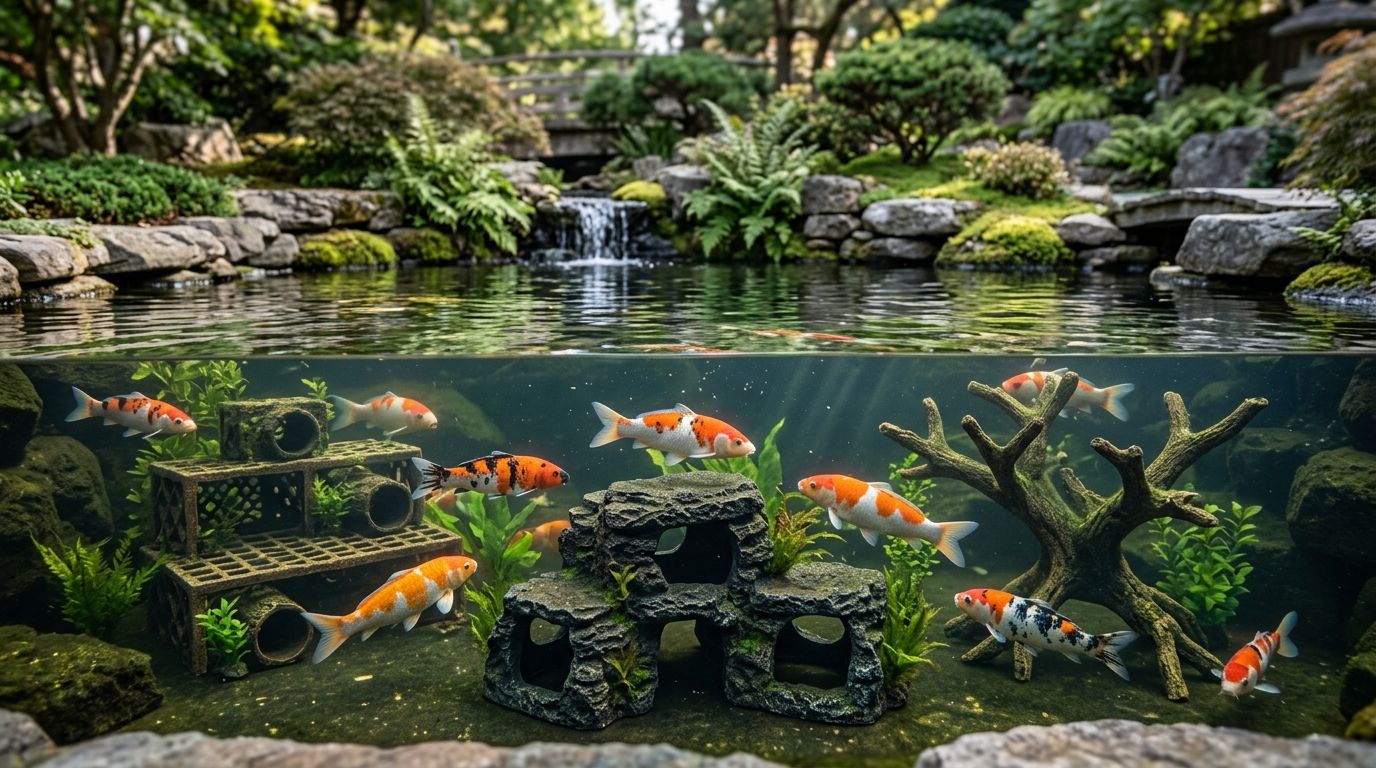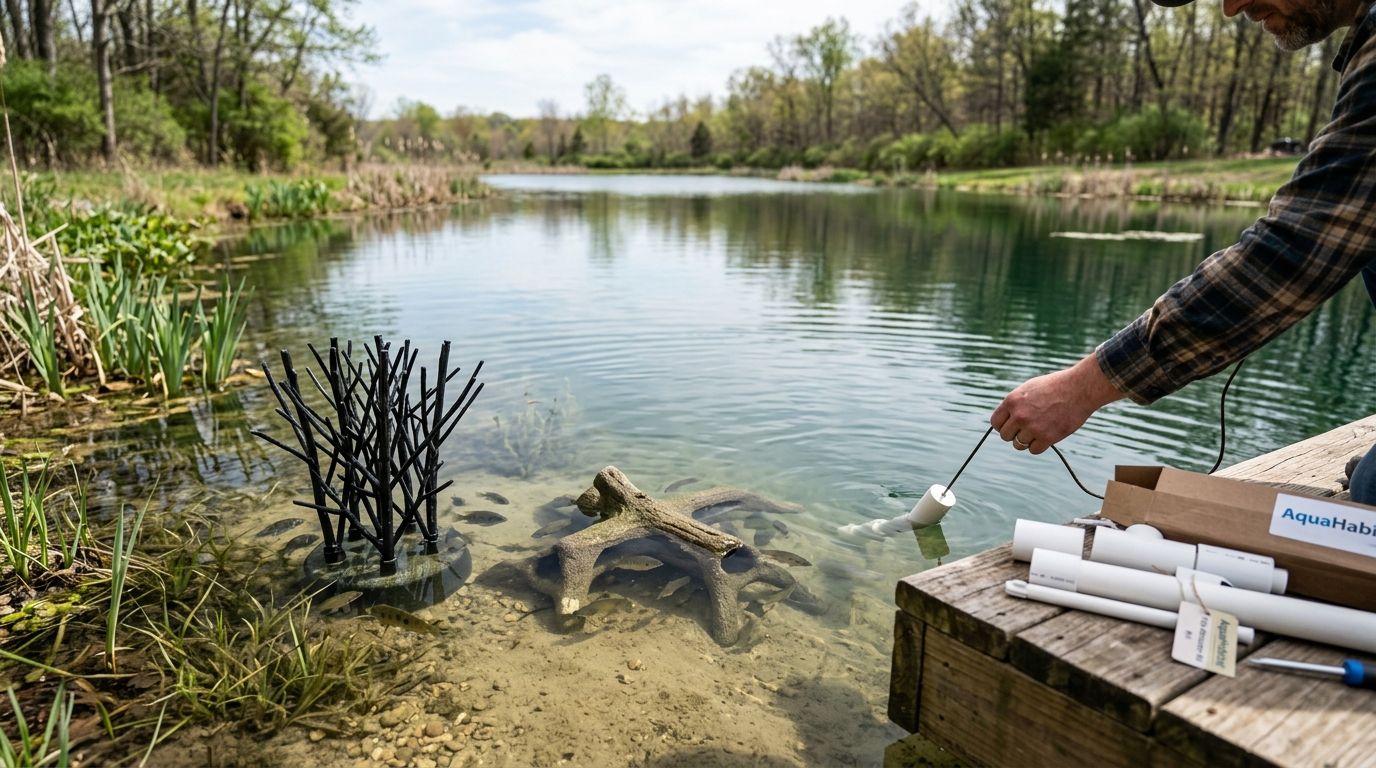
Stocking a new pond without habitat means dropping fish into open water with nothing to hide behind, feed near, or spawn on. Fish attractor kits solve that gap fast, and picking the right mix of shallow, mid-depth, and deep structure in 2026 determines how quickly your new pond starts holding fish instead of just holding water.
- Preassembled attractor kits are the best overall pick for new pond stocking in 2026 because they need no assembly and sink on placement.
- DIY component kits cost less time in shipping and more time in assembly, making them the budget option for hands-on pond owners.
- Habitat mats are the best choice for bluegill and panfish spawning bed development in the first stocking season.
- Match kit depth to pond depth: shallow kits for fry cover, mid-depth for bass and crappie, deep kits for cold-season refuge.
Why this matters
A newly stocked pond has no natural cover until vegetation and brush establish, which can take multiple growing seasons. Fingerlings and forage fish stocked into bare water are exposed to predation the day they go in.
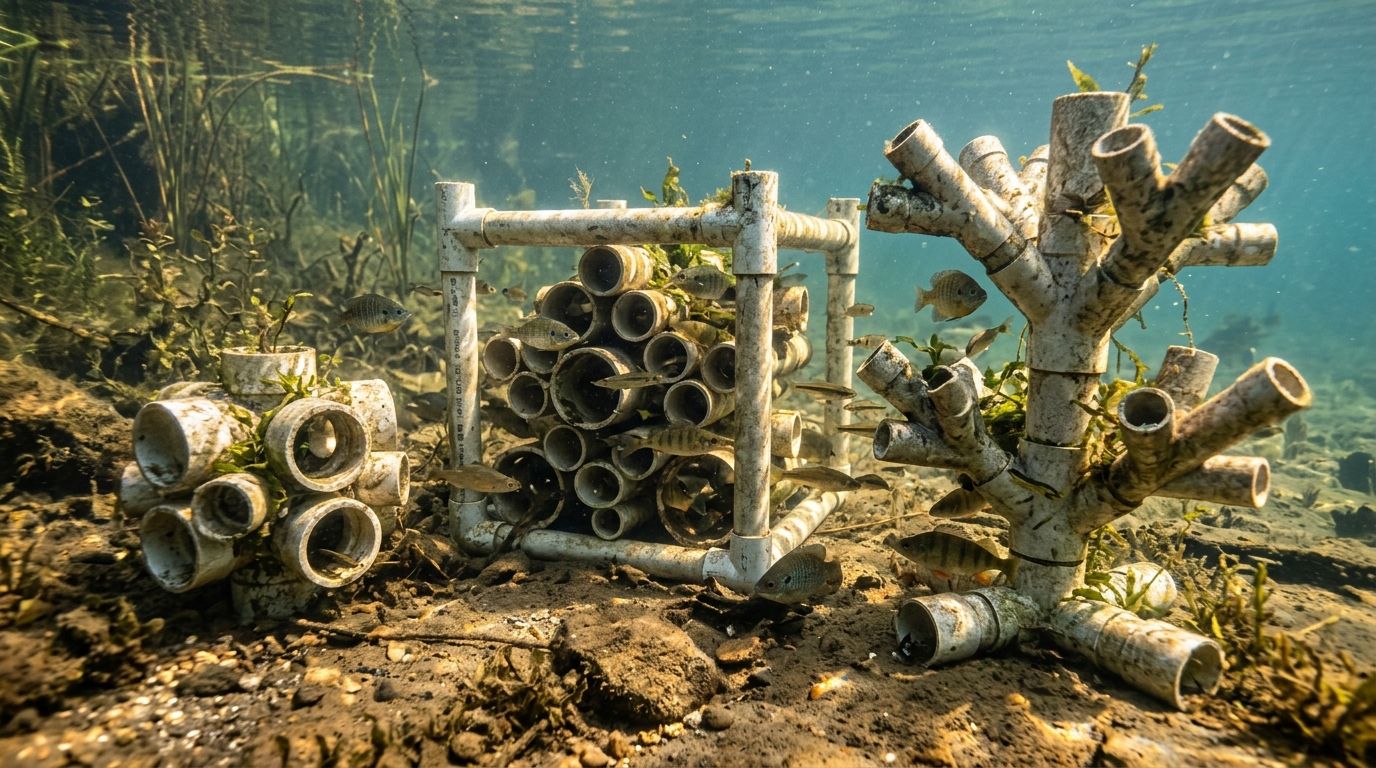
Fishiding's reclaimed PVC habitat gives new ponds dense, intricate cover immediately, without waiting on natural structure to grow in. Underwater filming documented over 15 years shows freshwater species using this kind of dense habitat for shelter, forage, and spawning within the same season it's placed.
The question for a new pond owner isn't whether to add habitat — it's which fish attractor kits for new pond stocking match your depth, budget, and species mix. That's what this ranking breaks down.
What makes the best fish attractor kit for new pond stocking
- Depth match — shallow, mid, and deep-water kits serve different life stages and seasons; a kit built for 3 feet of water won't function the same at 12 feet.
- Density and intricacy — tightly packed, layered PVC strands give fish and forage more edge to hide along than open frame structures.
- Assembly time — new pond projects often need habitat in the water fast, so preassembled units win over builds requiring hours of cutting and drilling.
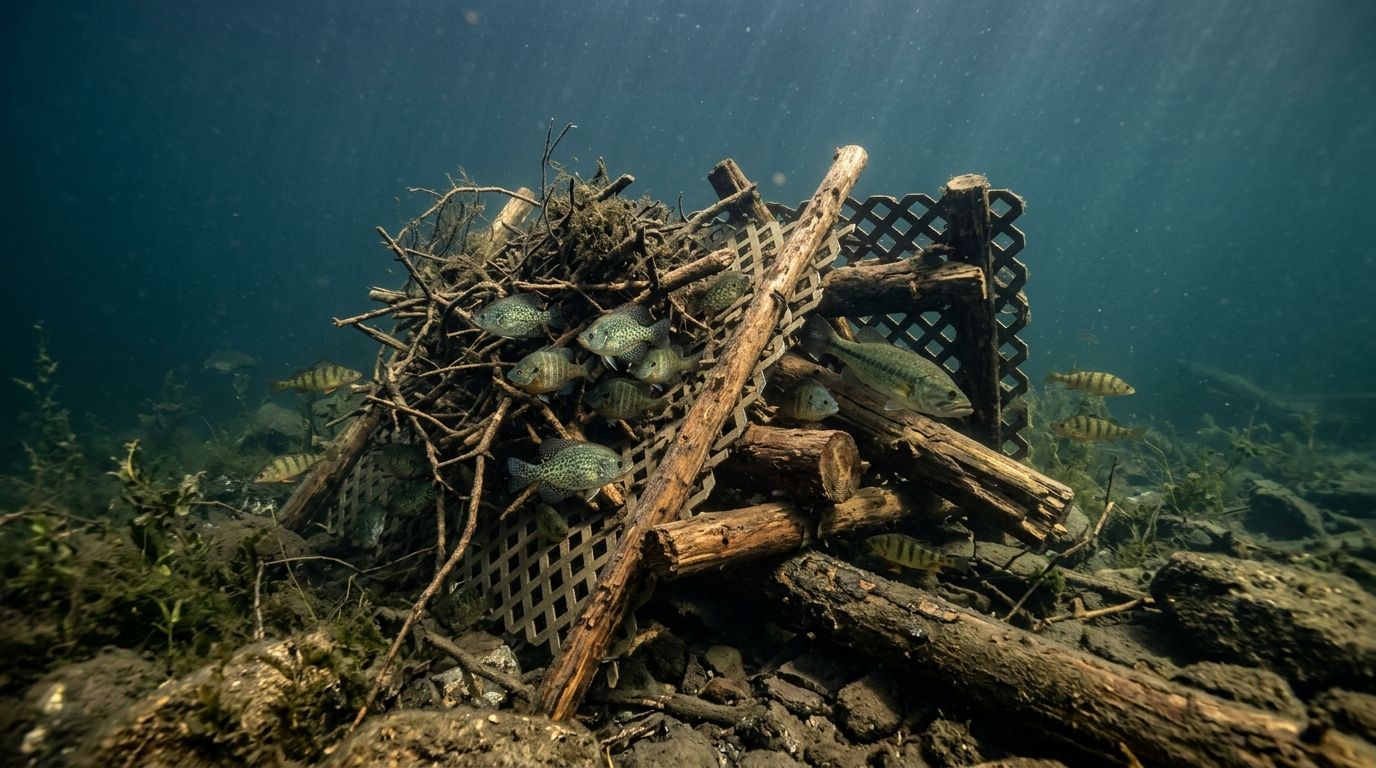
- Material durability — reclaimed PVC resists the rot that takes down wood cribs and brush piles within a few seasons.
- Documented fish use — kits backed by underwater observation carry more confidence than habitat designs never verified in the water.
- Coverage flexibility — component-based kits let you scale coverage as pond acreage and stocking density grow.
Fish attractor kits at a glance
| Kit type | Best for | Standout feature | Key limitation |
|---|---|---|---|
| Preassembled attractor kits | Fast new pond stocking | No assembly, sinks on placement | Less customizable footprint |
| DIY component kits | Budget-conscious builders | Lowest cost per unit of coverage | Requires assembly time and tools |
| Habitat mats | Bluegill and panfish spawning beds | Flat, layered profile mimics natural nesting cover | Limited use for deep-water species |
| Shallow water kits | Newly stocked fry and forage fish | Dense cover in 2 to 6 feet of water | Minimal value once fish outgrow shallow zones |
| Mid-depth kits | Bass and crappie ambush structure | Layered height for column use | Needs boat placement for accurate depth |
| Deep-water kits | Cold-season refuge | Built for 10+ feet, holds up under pressure | Overkill for ponds under 8 feet deep |
1. Preassembled attractor kits: best for fast new pond stocking
These arrive ready to sink, which matters most in the first weeks after stocking when fish have nowhere else to go. You place them, weight them if needed, and they're functional the same day.
Preassembled attractor kits pros:
- No cutting, drilling, or wiring required before placement
- Consistent density and shape every time, since the layout is fixed at build
- Fastest path from delivery to functional habitat in a new pond
Preassembled attractor kits cons:
- Fixed footprint means less flexibility to customize shape for a specific bank or drop-off
- Higher unit cost than raw DIY components for the same coverage area
Best for: pond owners who need habitat in the water within days of stocking, not weeks.
Verdict: Buy for new pond stocking where speed matters more than customization.
2. DIY component kits: best for budget-conscious pond owners
DIY kits ship the reclaimed PVC strands and base components separately, and you assemble the final structure on-site or at home before placement. It takes more hours than a preassembled unit, but it stretches a habitat budget across more acreage.
DIY component kits pros:
- Lower cost per structure than preassembled units
- Customizable density and height to match your specific depth zones
- Good option for owners stocking large acreage in phases
DIY component kits cons:
- Assembly takes real time, which delays habitat availability after stocking
- Requires basic tools and a flat space to build before hauling to the water
Best for: owners with more time than budget, or those covering multiple acres in stages.
Verdict: Buy if you can assemble before the stocking truck shows up.
3. Habitat mats: best for bluegill and panfish spawning bed development
Habitat mats lay flatter than upright attractors, which mimics the kind of nesting cover bluegill and other panfish use during spawning season. Underwater filming over multiple seasons has documented panfish and other freshwater species using this dense, layered cover for shelter and forage.
Habitat mats pros:
- Low profile fits shallow spawning flats without blocking boat traffic
- Dense material gives fry cover immediately after hatching
- Reclaimed PVC holds shape season after season without the rot that takes out natural mats
Habitat mats cons:
- Less structural height means limited use for species that hold in the water column
- Not a substitute for deeper cover once fish move off spawning flats
Best for: new ponds stocked with bluegill, crappie, or other panfish needing spawning-season cover.
Verdict: Buy for any pond stocked with panfish species.
4. Shallow water kits: best for newly stocked fry and forage fish
Fry and small forage fish need cover in 2 to 6 feet of water where they're most vulnerable to predation right after stocking. Shallow kits pack dense PVC strands into that zone specifically.
Shallow water kits pros:
- Matches the exact depth zone where new stockers are most exposed
- Easier to place by hand from a bank or small boat without heavy equipment
- Doubles as forage habitat, drawing insects and small prey that feed young fish
Shallow water kits cons:
- Fish outgrow shallow cover within a season or two and shift deeper
- Limited value in ponds without a true shallow shelf
Best for: ponds stocked with fingerlings or forage species like shad and minnows.
Verdict: Buy as a first-year stocking companion, then add mid-depth structure as fish grow.
5. Mid-depth kits: best for bass and crappie ambush structure
Bass and crappie use mid-depth structure as ambush points, holding near cover and darting out to feed. Mid-depth kits are built taller than shallow units so they occupy more of the water column between 6 and 10 feet.
Mid-depth kits pros:
- Layered height gives predator species both cover and a feeding lane
- Works across multiple seasons as stocked bass and crappie mature
- Dense intricate design documented in underwater footage holding predator and forage species together
Mid-depth kits cons:
- Needs boat access for accurate depth placement in most ponds
- Less useful in ponds under 6 feet deep, where shallow kits already cover the zone
Best for: ponds stocked with largemouth bass, crappie, or a mixed predator-forage plan.
Verdict: Buy once your pond has enough depth to justify a mid-column structure.
6. Deep-water kits: best for cold-season refuge in stocked ponds
When surface temperatures swing hard in winter and late summer, fish move to the deepest available water. Deep-water kits are built to hold up at 10 feet or more, giving stocked fish a refuge zone year-round.
Deep-water kits pros:
- Extends usable habitat through winter when shallow and mid-depth zones go cold
- Reclaimed PVC construction holds up under the pressure and lower light of deep placement
- Reduces winterkill risk in ponds with limited natural deep cover
Deep-water kits cons:
- Not necessary in ponds under 8 feet deep
- Requires more precise placement to hit the target depth without guesswork
Best for: deeper reservoirs and lakes, not shallow farm ponds.
Verdict: Hold off unless your pond actually has water deep enough to need it.
How we ranked these fish attractor kits
Each kit type was weighed against the criteria above: depth match, density, assembly time, material durability, documented fish use, and coverage flexibility. Preassembled and DIY kits split the top spots because they solve the two most common new-pond problems — speed and budget — while mats, shallow, mid, and deep kits each fill a specific depth or life-stage gap the top two don't cover alone.
“A newly stocked pond with no habitat is just feeding fish into open water with nowhere to hide.”
Which fish attractor kit should you choose for new pond stocking?
If you need habitat in the water fast, start with preassembled attractor kits for immediate coverage, then layer in preassembled fish cribs as a mid-depth complement. If your budget is tighter than your timeline, DIY component kits stretch further per dollar. Ponds stocked with panfish should add habitat mats in the first spawning season regardless of which structure type anchors the rest of the pond.
Plan your new pond habitat layout
Browse depth-specific fish habitat options for 2026 stocking plans.
FAQ
What's the best fish attractor kit for new pond stocking in 2026?
Preassembled attractor kits are the best overall choice for new pond stocking because they need no assembly and provide cover the same day they're placed. Pair them with shallow or mid-depth kits once you know how your pond's depth zones break down.
How soon after stocking should I add fish habitat?
Add habitat before or on the same day as stocking whenever possible. Fry and fingerlings are most exposed to predation in the first weeks, so cover needs to be in place before fish go in.
Are DIY fish habitat kits as effective as preassembled ones?
DIY kits use the same reclaimed PVC materials and can match preassembled density once built correctly. The tradeoff is assembly time, not effectiveness in the water.
Do all freshwater fish species use the same type of habitat kit?
Underwater filming over 15-plus years shows all freshwater species use dense, intricate PVC habitat, but placement and depth preference vary by species and life stage. Match kit depth to the species you're stocking for best results.
How many fish attractor kits does a new pond need?
Coverage depends on pond acreage and depth variety, not a fixed count. A pond with distinct shallow, mid, and deep zones benefits from kits matched to each zone rather than one type placed everywhere.
Can fish habitat mats replace natural spawning beds?
Habitat mats mimic the dense, layered cover panfish use for spawning and work well in ponds without established natural beds. They supplement rather than fully replace natural vegetation once it establishes.
Is reclaimed PVC habitat durable enough for long-term pond use?
Reclaimed PVC resists the rot and breakdown that takes down wood cribs and brush piles within a few seasons, making it a longer-lasting option for permanent pond structure.
One last thing
Most new pond owners buy habitat for the fish they're stocking today and forget the fish they'll have in three years. A largemouth bass fingerling stocked into a shallow kit this spring needs mid-depth or deep structure by the time it's a mature predator — plan the depth mix now instead of retrofitting later.