Picking fish structure for a farm pond means choosing between quick brush piles that rot out in two seasons and manufactured PVC units built to hold fish for a decade or more — the right call for best fish structures for farm ponds depends on your budget, your pond's depth, and how much maintenance you want to do every spring.
Best overall: Fishiding PVC Habitat Units. Best for budget DIY: homemade PVC pipe attractors. Best budget option: brush piles.
- Fishiding PVC Habitat Units win overall for farm ponds needing dense, branching cover that lasts past 2026.
- DIY PVC pipe attractors are the best low-cost build for anglers with basic tools and a weekend.
- Brush piles remain the cheapest option but need replacing every 2-4 seasons as wood decays.
- Stake beds and cinder block reefs solve narrow problems: shallow spawning cover and open-basin concentration.
- Manufactured units set on 350-pound bases hold position through ice-out and flood pulses that move loose brush.
Why this matters
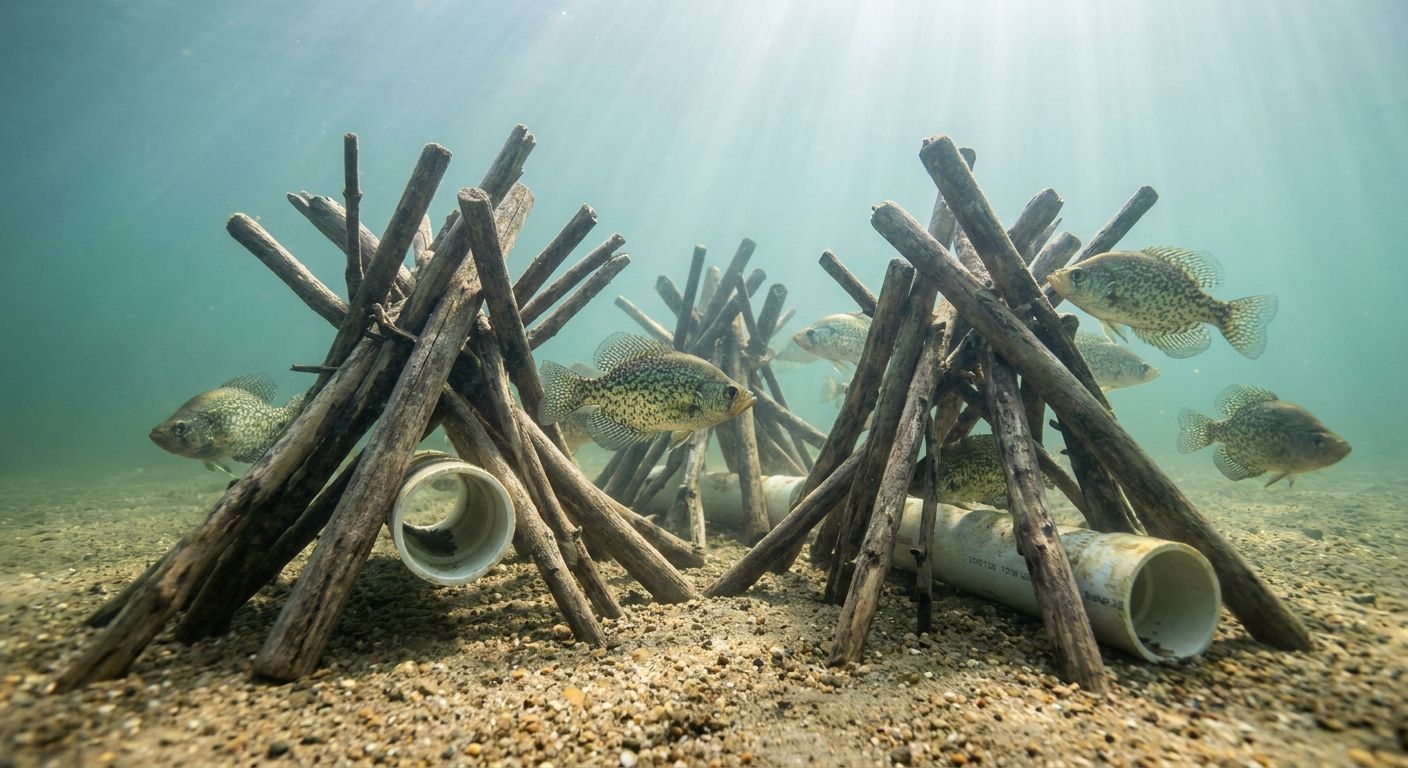
A farm pond without added structure is mostly open water once natural woody debris breaks down, and fish concentrate wherever cover exists — which means whoever controls the structure controls where the fish live and where you catch them. Pond owners who install a mix of shallow and deep structure in 2026 report tighter schooling of crappie and bass around branching cover versus bare bottom, based on years of underwater video documenting how fish stack on dense, textured surfaces rather than smooth or sparse ones.
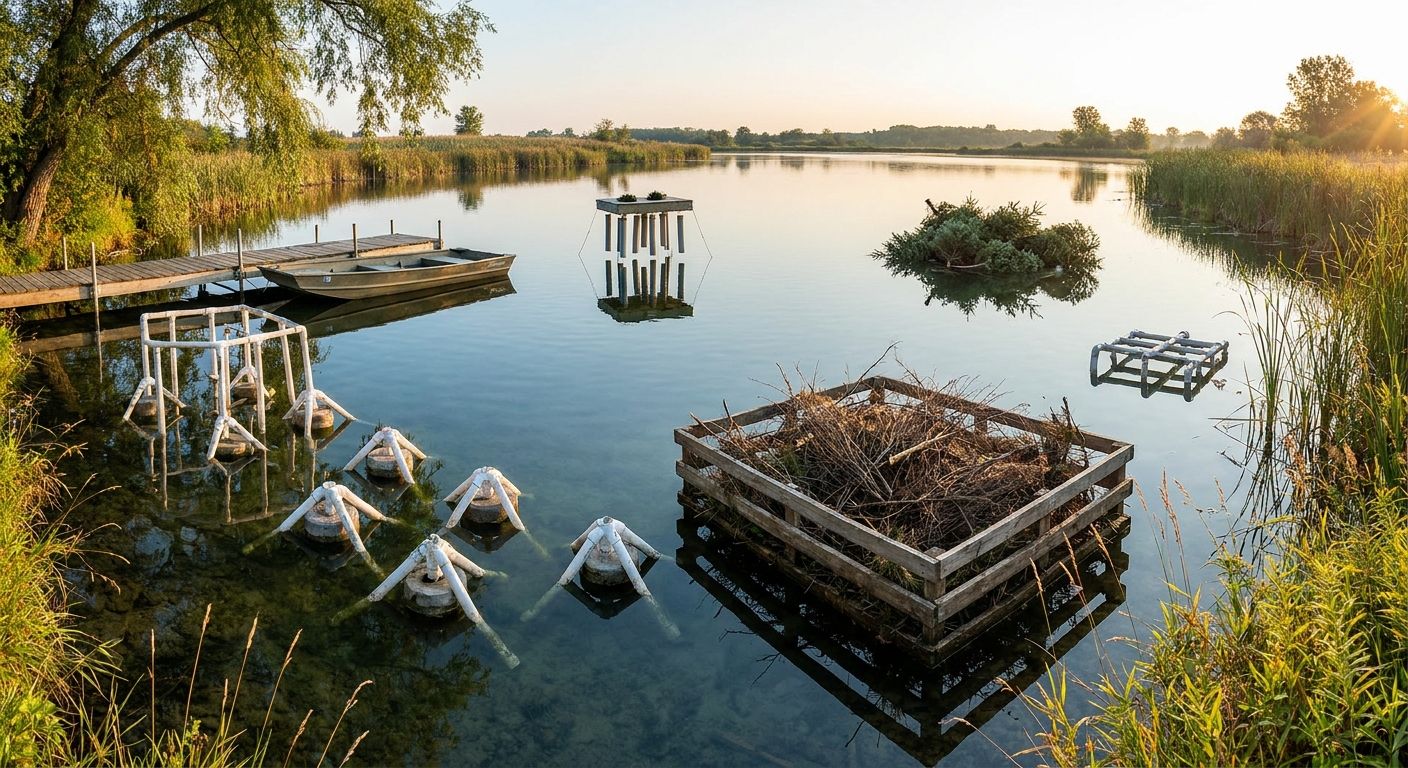
The mistake most farm pond owners make is buying one type of structure and dumping it in one spot. Fish use different cover for spawning, ambush feeding, and thermal refuge — a single brush pile in 8 feet of water won't do all three jobs. You can see the full range of manufactured options on the Fishiding homepage, where structures are built specifically to hold density and branching that loose wood can't match over time.
What makes the best fish structures for farm ponds
- Branching density — more surface edges per cubic foot means more fish holding at once, not just passing through
- Longevity — PVC and reclaimed plastic outlast wood by years; brush and Christmas trees rot within a few seasons
- Anchoring — heavy bases keep tall structure upright through wind, ice, and flood pulses instead of drifting into the dam
- Depth versatility — a good structure lineup covers shallow spawning flats, mid-depth ambush zones, and deep summer refuge
- Install effort — some structures need a boat and winch; others go in by hand from the bank
- Species fit — crappie favor tight vertical branching, bass want ambush edges, bluegill prefer moderate density near spawning flats
Fish structures at a glance
| Structure | Best for | Standout feature | Key limitation |
|---|---|---|---|
| Fishiding PVC Habitat Units | Long-term density across depths | 15-foot spires on 350-lb bases | Higher upfront effort to place tall units |
| DIY PVC pipe attractors | Budget-conscious DIY builders | Full control over shape and density | Time investment to build and assemble |
| Brush piles | Quick, low-cost cover | Uses materials already on the property | Rots out in 2-4 seasons |
| Stake beds | Shallow spawning structure | Simple, cheap, effective for crappie beds | Limited to shallow water only |
| Cinder block reefs | Concentrating fish in open basins | Extremely durable, never decays | No branching, weak ambush cover |
| Christmas tree piles | Seasonal, short-term cover | Free or nearly free material | Collapses fast, needs annual replacement |
| Rock and gravel piles | Spawning substrate | Permanent, supports bluegill and bass beds | Not cover — fish don't hold on bare rock |
1. Fishiding PVC Habitat Units: best fish structure for long-term density across depths
Fishiding builds these units from reclaimed PVC, branching outward from a weighted base so fish get cover at multiple depths in a single footprint. Deep-water models reach spires up to 15 feet tall, set into bases weighing 350 pounds so wind and current don't shift them once placed. Underwater video from ponds using these units shows crappie and bass holding tight to the branching structure rather than scattering to open water.
Fishiding PVC Habitat Units pros:
- Branching density holds fish through all seasons, not just spring
- Reclaimed PVC won't rot, rust, or leach into the water
- Heavy bases keep tall units anchored through ice-out and flood pulses
- Variety of shapes covers shallow flats through deep summer refuge
Fishiding PVC Habitat Units cons:
- Tall spire units need a boat or barge to place in deep water
- Upfront planning takes more thought than tossing in a brush pile
Best for: pond owners who want structure that still works in 2030, not just this season. Verdict: Buy.
2. DIY PVC pipe attractors: best fish structure for budget-conscious builders
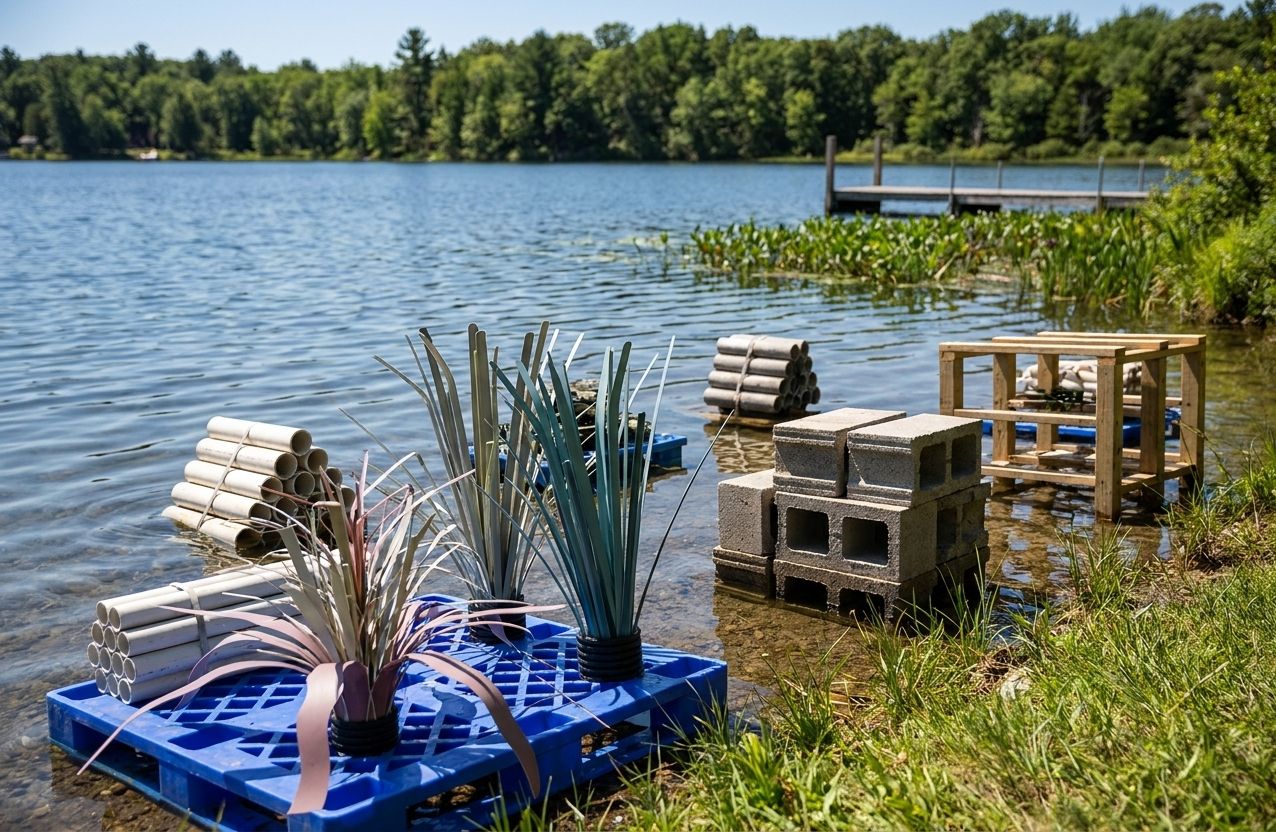
Homemade PVC pipe attractors use standard pipe cut and drilled, then bundled or crossed to create branching cover. Crappie anglers building their own structure like this method because it's flexible — you control the height, density, and footprint based on what pipe you have on hand.
DIY PVC pipe attractors pros:
- Materials are widely available at any hardware store
- Fully customizable density and shape for your pond's depth
- Durable once built — PVC doesn't decay like wood
DIY PVC pipe attractors cons:
- Building enough units for real coverage takes real time
- Without a weighted base, lightweight bundles drift in current
Best for: anglers with a weekend, basic tools, and a clear idea of where structure needs to go. Verdict: Buy.
3. Brush piles: best fish structure for quick, low-cost cover
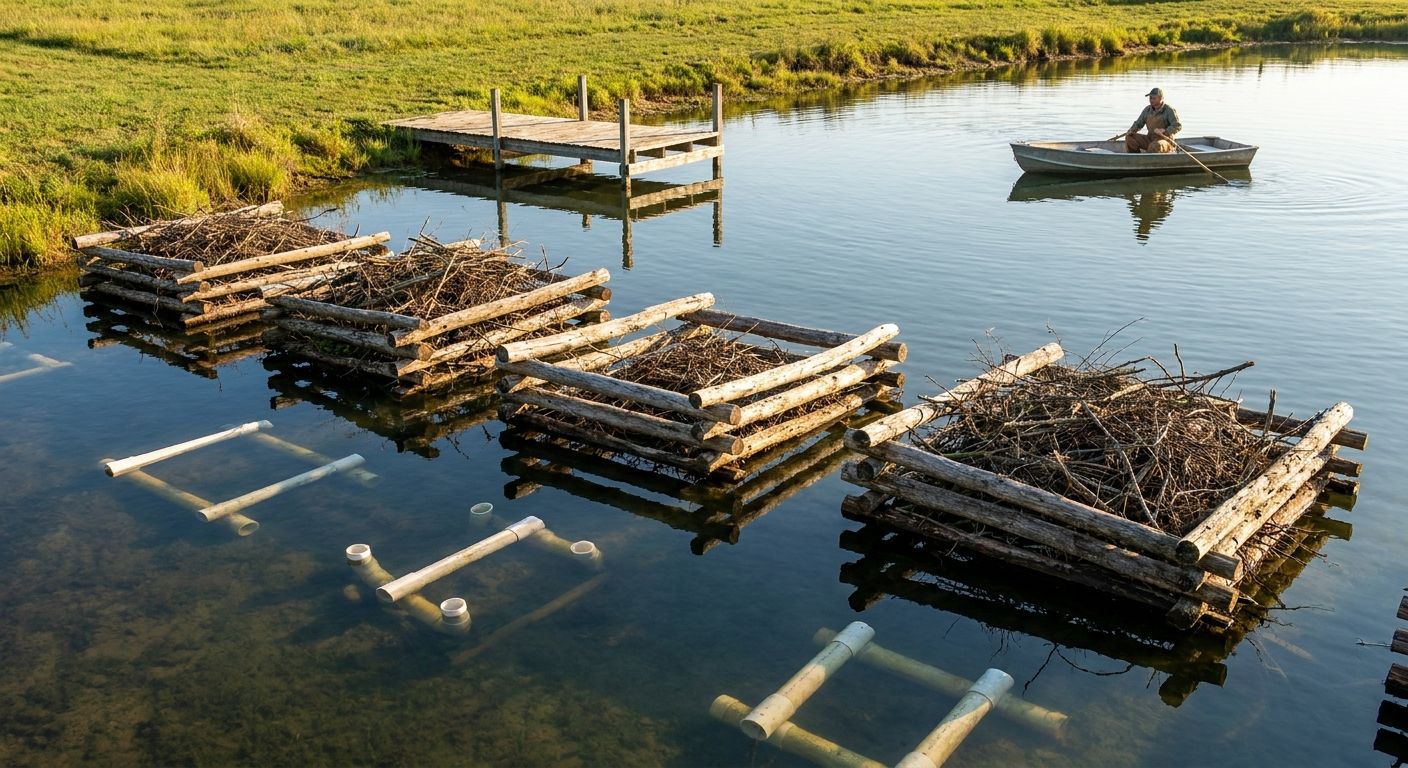
Brush piles are felled trees, limbs, or cut brush sunk with concrete blocks or rebar. They're the oldest trick in pond management and still work — fresh brush holds fish almost immediately after sinking.
Brush piles pros:
- Nearly free if you already have trees or limbs on the property
- No building skill required, just cutting and sinking
- Works immediately after placement
Brush piles cons:
- Wood decays and loses branching density within 2-4 seasons
- Needs regular replacement, meaning repeat labor every few years
Best for: pond owners who want cover this season without spending anything. Verdict: Hold — fine short-term, plan a replacement cycle.
4. Stake beds: best fish structure for shallow spawning cover
Stake beds are rows of wooden or PVC stakes driven into shallow bottom, typically 2-4 feet of water, mimicking the standing timber crappie use for spawning. They're a staple structure for farm pond crappie management.
Stake beds pros:
- Cheap and simple to build with stakes and a mallet
- Mimics natural spawning cover crappie already favor
- Easy to place from a bank or small boat
Stake beds cons:
- Only useful in shallow water, no deep-water application
- Wooden stakes eventually rot and need replacing
Best for: targeting crappie spawning runs in spring. Verdict: Buy for shallow-water programs specifically.
5. Cinder block reefs: best fish structure for concentrating fish in open basins
Stacked cinder blocks create a permanent reef in areas of a pond with no natural cover — deep basins, flat bottoms, or areas cleared for other uses. Blocks never decay, making them the most durable option on this list.
Cinder block reefs pros:
- Permanent — never rots or breaks down
- Cheap per unit if blocks are already available
- Simple to stack and sink without special tools
Cinder block reefs cons:
- No branching means minimal ambush cover for bass
- Fish concentrate less densely here than on wood or PVC branching
Best for: open, featureless basins that need any structure at all. Verdict: Hold — use as a supplement, not the primary structure.
6. Christmas tree piles: best fish structure for seasonal, short-term cover
Sunk Christmas trees, often bundled and weighted, are a common post-holiday structure project for farm pond owners. They provide dense branching immediately but degrade faster than hardwood brush.
Christmas tree piles pros:
- Free or nearly free, especially right after the holidays
- Dense branching provides good cover while fresh
Christmas tree piles cons:
- Needles and small branches break down within a single season
- Requires annual replacement to maintain any density
Best for: a low-cost seasonal boost, not a permanent structure plan. Verdict: Wait — better as a supplement to longer-lasting structure.
7. Rock and gravel piles: best fish structure for spawning substrate
Rock and gravel piles aren't cover in the traditional sense — they're substrate. Bluegill and bass use clean gravel beds for spawning, and a well-placed gravel pile in shallow water can improve spawning success even though it offers no ambush structure.
Rock and gravel piles pros:
- Permanent, never decays or needs replacement
- Supports natural spawning behavior for bluegill and bass
Rock and gravel piles cons:
- Provides no branching or ambush cover for holding fish
- Doesn't replace the need for actual structure elsewhere in the pond
Best for: pairing with real cover to round out a full habitat plan. Verdict: Hold — a supplement, not a standalone structure.
How we ranked these fish structures
Ranking weighted branching density and longevity highest, since a structure that decays in two seasons costs more labor over time than one built to last. Depth versatility and species fit came next — a pond that only has shallow stake beds is missing deep summer refuge, and vice versa. Anchoring and install effort broke ties between structures that scored similarly on density.
Compare Fishiding habitat units
See the full range of shallow and deep-water PVC structures built for farm ponds.
Which fish structure should you choose?
For a farm pond you want to fish for the next decade, Fishiding PVC Habitat Units are the default pick — the branching density and 350-pound anchored bases mean you're not replacing structure every few seasons. Anglers on a tighter budget who want to build their own should start with DIY PVC pipe attractors, adding stake beds for shallow spawning cover. Brush piles are fine as a stopgap for 2026, but budget a replacement cycle into your plan rather than treating them as permanent.
FAQ
What is the best fish structure for a farm pond in 2026?
Fishiding PVC Habitat Units are the best overall choice for farm ponds in 2026 because they combine branching density with 350-pound anchored bases that hold position for years. Budget-focused owners can get similar results with DIY PVC pipe attractors built at home.
Are brush piles better than PVC fish structures?
Brush piles cost less upfront but decay within 2-4 seasons, while PVC structures hold branching density for years without replacement. Brush works as a quick, cheap fix; PVC works as a long-term investment.
How deep should fish structure be placed in a pond?
Place a mix of depths: stake beds in 2-4 feet for spawning, mid-depth brush or PVC units for summer ambush cover, and deep structure up to 15 feet for thermal refuge in hot months. A single depth leaves fish without options in other seasons.
Do cinder blocks work as fish attractors?
Cinder blocks work as permanent, durable structure but offer minimal branching, so they concentrate fewer fish than PVC or brush cover. Use them to supplement featureless basins rather than as your primary structure.
How long do PVC fish habitat structures last?
Reclaimed PVC structures don't rot or rust, so they hold their branching shape for years longer than wood-based cover like brush piles or Christmas trees. That longevity is the main reason they rank as the best fish structures for farm ponds in 2026.
Can I build my own PVC fish attractor?
Yes, PVC pipe cut and bundled into branching shapes makes an effective DIY fish attractor for crappie and bass. Add a weighted base so current or wind doesn't drift the bundle out of position.
Do Christmas trees make good fish structure?
Christmas trees provide dense branching immediately after sinking but break down within a single season, so they work best as a seasonal supplement rather than permanent structure.
What structure is best for crappie in a farm pond?
Stake beds in shallow water work well for spring spawning runs, while dense branching PVC structure in mid-to-deep water holds crappie through summer and winter. Combining both covers the full crappie season.
One last thing
Most farm pond owners install one structure type and stop, but the ponds with the tightest schooling activity on underwater video use at least three depth zones — shallow spawning cover, mid-depth ambush structure, and deep refuge reaching toward that 15-foot range. Density and variety beat any single "perfect" structure every time.