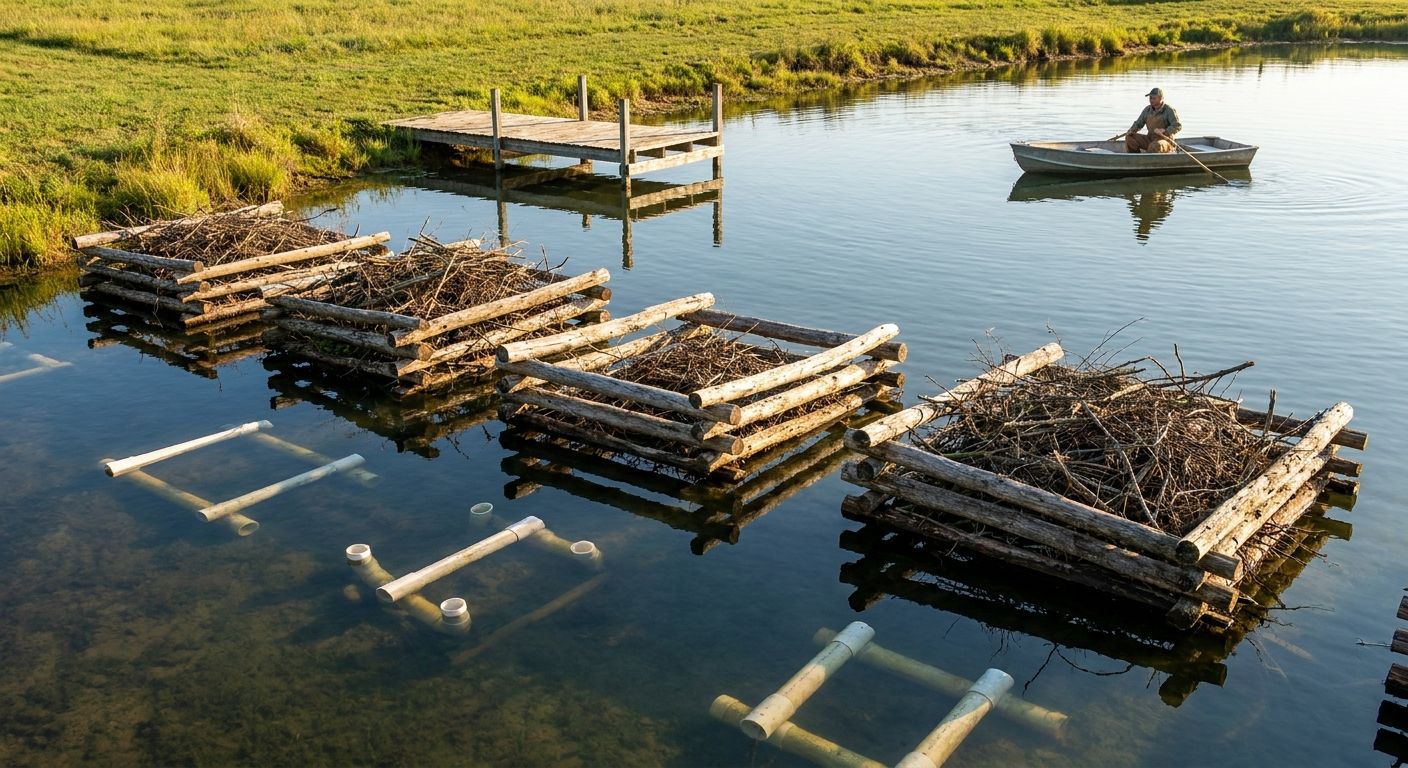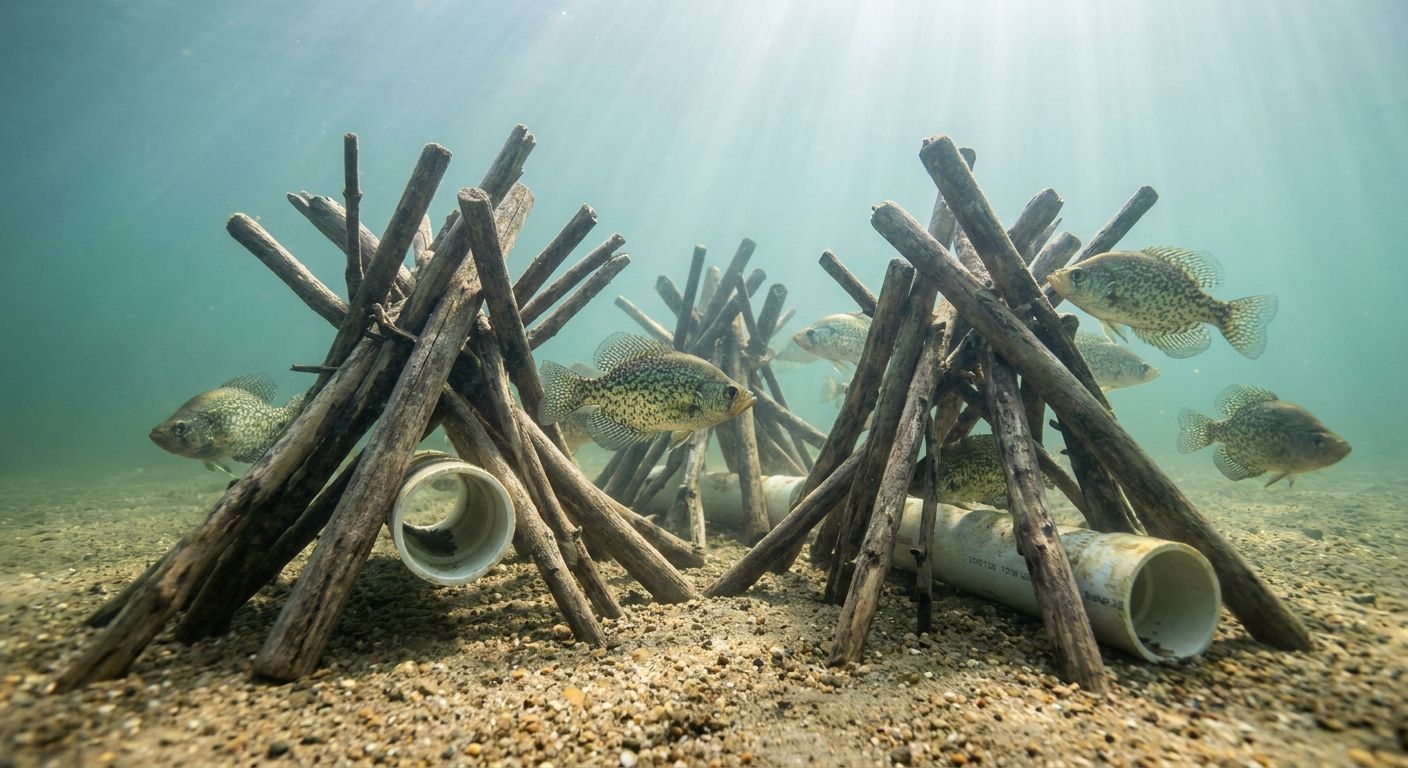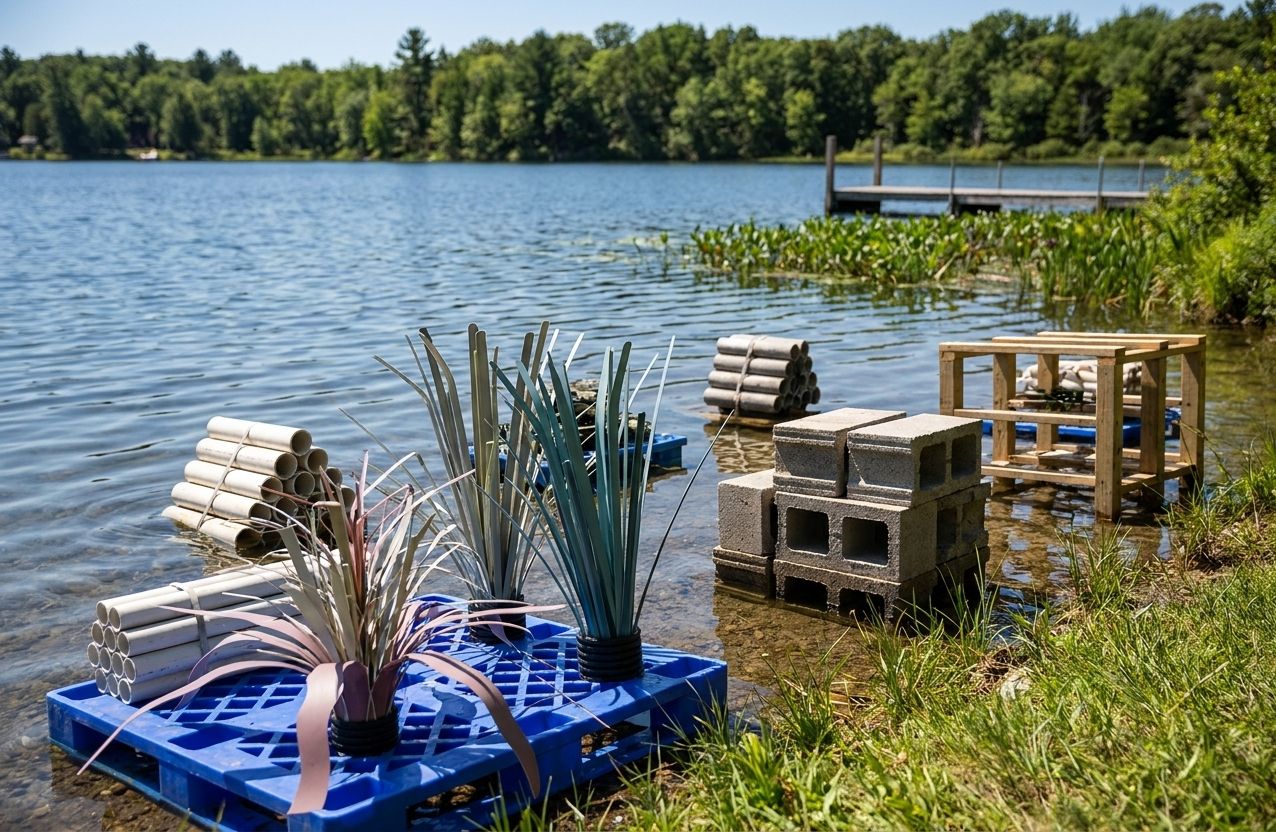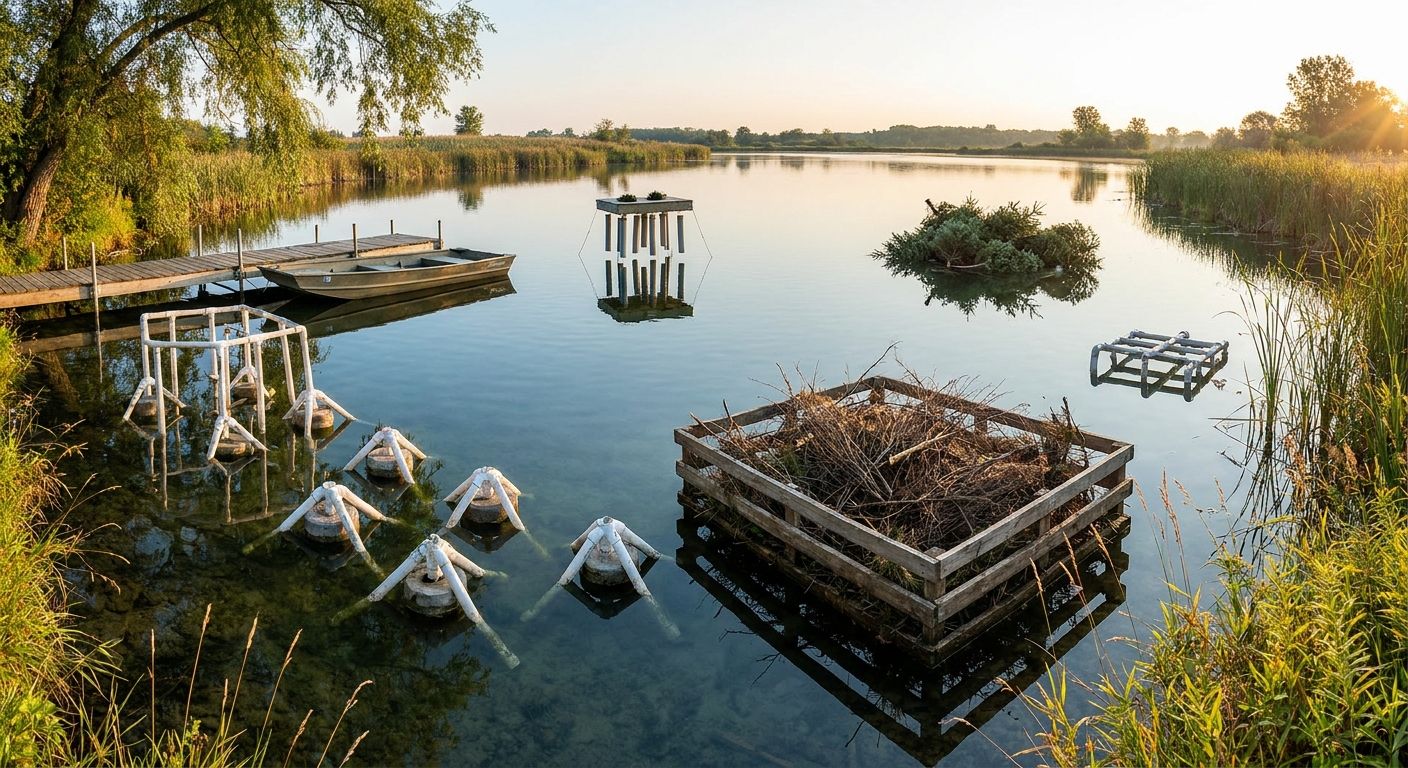
Panfish ponds hold bluegill, crappie, and redear sunfish that need vertical cover to escape bass, avoid sun-bleached shallows, and stack up in predictable spots for anglers. The right attractor concentrates fish fast and holds them for years, not months.
- Fishiding PVC fish habitat structures win overall for panfish ponds in 2026 thanks to density and multi-decade underwater life.
- Stake beds are the best budget DIY attractor for panfish ponds when labor is free and materials are cheap.
- Brush piles deliver the fastest natural cover but break down within a few seasons underwater.
- Concrete spider blocks hold position best in current or deep water where lighter structures drift.
- Gravel and rock piles work as a spawning-substrate add-on, not a standalone attractor.
Why this matters
A pond stocked with panfish but stripped of structure pushes fish into open water where they scatter and stress out. Cover density is the single biggest driver of panfish holding behavior in small waters, more than water clarity or depth in most cases.
The Fishiding approach to fish habitat structures grew out of years of underwater video watching bluegill, crappie, and bass actually use different materials side by side. That footage consistently shows panfish stacking tighter and staying longer around branching PVC than around bare stake beds or decomposing brush, which is why density and branching surface area sit at the top of the criteria below.
Every attractor on this list gets ranked the same way: how much cover it creates per unit placed, how long that cover lasts underwater, and how it performs specifically for panfish rather than bass or catfish.
What makes the best fish attractor for panfish ponds
- Branching density — more limbs and edges per cubic foot means more panfish holding at once
- Underwater longevity — material that resists rot, rust, and UV breakdown for years, not one season
- Installation effort — how much labor, boat time, or equipment it takes to place correctly
- Depth versatility — works in 3 feet of shallow cove water and in 15+ feet near a dam
- Panfish-specific attraction — documented preference by bluegill, crappie, and redear over bass or carp
- Cost per unit of habitat created — not sticker price, but cover generated per structure placed
Best fish attractors for panfish ponds at a glance
| Attractor | Best for | Standout feature | Key limitation |
|---|---|---|---|
| Fishiding PVC structures | Overall panfish pond habitat | 350-lb base holds spires up to 15 feet tall | Higher upfront cost than free brush |
| Stake beds | Budget DIY builds | Materials cost almost nothing | Sparse branching compared to PVC |
| Brush piles | Fast natural cover | Immediate installation, no fabrication | Decomposes within 3-5 years |
| Concrete spider blocks | Current or deep water | Heavy base resists drift and wave action | Little to no branching cover |
| Gravel and rock piles | Spawning substrate | Improves bluegill and redear bedding areas | Provides no vertical cover |
| Modular plastic cribs | Uniform grid stocking | Stackable, consistent shape for mapping | Branching density varies by brand |
| Christmas tree piles | Seasonal low-cost cover | Free or nearly free after the holidays | Sinks flat and decomposes fast |
1. Fishiding PVC structures: best overall attractor for panfish ponds
Fishiding builds reclaimed PVC fish habitat structures designed to sit on a 350-pound patented base with spires reaching up to 15 feet for deeper water, or shorter shallow-water units for coves and flats. The strips are cut and arranged to mimic branching cover, and the material does not rot, rust, or flatten the way wood and mesh do.
Fishiding pros:
- Branching density rivals a mature brush pile from day one
- Underwater life measured in decades, not seasons
- Works from shallow flats to deep basin water with different unit sizes
- Patented base keeps units upright without staking or anchoring
Fishiding cons:
- Costs more per unit than free brush or stakes
- Tall spire units need a boat and two people to place correctly
- Does not carry the initial bark and bug load a fresh-cut tree offers in week one
Best for: pond owners and fisheries managers who want panfish habitat that still works in 2036, not just this season.
Verdict: Buy.
2. Stake beds: best budget DIY attractor for panfish ponds
Stake beds are rows of wooden stakes driven into a frame or directly into the pond bottom, often built from scrap lumber or rebar with wood attached. They're a staple DIY crappie structure because the labor is the only real cost.
Stake bed pros:
- Near-zero material cost if you have scrap wood
- Simple to build in an afternoon
- Effective for crappie suspending at a consistent depth
Stake bed cons:
- Branching density is thin compared to PVC or brush
- Wood stakes rot and loosen within a few years
Best for: owners on a tight budget who can rebuild every few seasons.
Verdict: Hold — fine as a supplement, not a primary structure.
3. Brush piles: best for fast natural cover
Cedar and hardwood brush piles are the oldest fish attractor in the book. Cut a tree, weight the trunk, sink it, done. Panfish move onto fresh brush almost immediately because of the bark, insects, and dense limb structure.
Brush pile pros:
- Installs in minutes with no fabrication
- Free if you have access to cut trees
- Panfish colonize fresh brush fast
Brush pile cons:
- Cedar and hardwood typically break down within 3-5 years underwater
- Needs periodic replacement to keep density up
Best for: filling gaps quickly while a longer-term plan gets built out.
Verdict: Hold — good short-term fix, poor long-term investment.
4. Concrete spider blocks: best for current or deep water
Spider blocks are concrete bases with rebar or PVC legs bolted in, built heavy enough to stay put in current, wave action, or deep basin water where lighter structures drift or tip.
Spider block pros:
- Heavy base resists movement in current or wind-driven waves
- Works well in deeper water where lighter units shift
Spider block cons:
- Branching cover is minimal without added material
- Concrete and rebar are heavy and awkward to transport and place
Best for: ponds and small lakes with noticeable current or wave exposure.
Verdict: Wait — pair with brush or PVC branching rather than using alone.
5. Gravel and rock piles: best for spawning habitat enhancement
Gravel beds aren't cover attractors, they're spawning substrate. Bluegill and redear sunfish bed on clean gravel and rock in the shallows, and a well-placed pile can concentrate spawning activity in a spot anglers can find.
Gravel pile pros:
- Improves bedding conditions for bluegill and redear
- Concentrates spawning activity for predictable spring fishing
Gravel pile cons:
- Provides zero vertical cover for holding fish outside spawn
- Needs to sit in shallow water with adequate light penetration
Best for: ponds already covered elsewhere that need a spawning boost.
Verdict: Skip as a standalone; use as a supplement.
6. Modular plastic crib structures: best for uniform grid stocking
Generic modular plastic cribs from various manufacturers stack into repeatable shapes, which makes them easy to place on a grid and map with GPS for consistent coverage across a larger lake.
Modular crib pros:
- Consistent, stackable shape simplifies planning
- Lightweight compared to concrete
Modular crib cons:
- Branching density varies widely by manufacturer and product line
- Uniform shape can mean uniform, predictable cover that fish spread thin across
Best for: managers stocking a large reservoir on a fixed grid pattern.
Verdict: Hold — check branching density before ordering in bulk.
7. Christmas tree piles: best for seasonal, low-cost cover
Recycled Christmas trees, sunk in bundles after the holidays, are the cheapest attractor on this list and a common community pond project every January.
Christmas tree pile pros:
- Free or nearly free depending on local collection programs
- Easy annual replenishment cycle
Christmas tree pile cons:
- Needles and small branches break down within a single season
- Trees flatten and lose branching structure faster than cut hardwood
Best for: community ponds running an annual low-cost habitat drive.
Verdict: Wait — treat as disposable, seasonal cover only.
Plan your 2026 panfish habitat layout
See structure sizes and base options for shallow coves through deep basins.
How we ranked these fish attractors
Each attractor gets scored against the six criteria above: branching density, underwater longevity, installation effort, depth versatility, panfish-specific attraction, and cost per unit of habitat. Fishiding PVC structures and brush piles score highest on density and panfish attraction; stake beds and concrete spider blocks score lowest on density but win on cost or stability. For a wider side-by-side across seven structure types, the full breakdown lives in Best 7 Artificial Fish Habitat Structures in 2026.
“If a brush pile has decomposed down to bare branches, the panfish have already moved on to something denser.”
Which fish attractor should you choose for your panfish pond?
For a pond owner planning habitat that still holds panfish in 2030 and beyond, Fishiding PVC structures are the default pick — the 350-pound base and branching density outperform anything that decomposes or flattens within a few seasons. Budget-limited builders should start with stake beds and brush piles to get cover in the water this year, then phase in PVC structures as funds allow. Managers working a large reservoir grid should evaluate modular plastic cribs by branching density before committing to volume orders in 2026.
FAQ
What are the best fish attractors for panfish ponds in 2026?
Fishiding PVC fish habitat structures rank highest overall for branching density and underwater longevity in 2026, with stake beds and brush piles as budget or fast-cover alternatives. Concrete spider blocks and gravel piles serve narrower roles like current resistance or spawning substrate.
Are PVC fish attractors better than brush piles?
PVC fish attractors outlast brush piles by years, since cedar and hardwood brush typically breaks down within 3-5 years underwater while PVC structures hold their shape for decades. Brush piles still win on speed and cost for immediate, short-term cover.
How long do brush piles last underwater?
Cedar and hardwood brush piles typically decompose within 3-5 years submerged, losing branches and density well before that. Ponds relying on brush need a replacement cycle built into their habitat plan.
Do stake beds work for crappie and bluegill?
Stake beds work for crappie suspending at a consistent depth and for bluegill holding near structure, but their branching density is thin compared to brush or PVC. They work best as a budget supplement rather than a pond's only structure.
How deep should fish attractors be placed in a pond?
Panfish attractors work from 3 feet in shallow coves up to 15+ feet near dams or deep basins, depending on the species and season. Shallow units suit spring spawning activity while deeper units hold fish during summer and winter.
Can you build DIY PVC fish habitat structures at home?
Yes, DIY PVC fish habitat structures are a common project using PVC pipe and strips cut and arranged for branching cover. They require more assembly time than a premade unit but cost less in materials.
How many fish attractors does a panfish pond need?
There's no fixed number, but density matters more than count: a few dense PVC or brush structures placed at varying depths outperform a large number of sparse stake beds. Spread structures across shallow, mid, and deep zones for year-round coverage.
Do concrete or plastic structures attract more panfish?
Plastic and PVC structures with branching cover attract more panfish than bare concrete, since panfish respond to limb density more than base material. Concrete spider blocks work best when paired with brush or PVC branching rather than used alone.
One last thing
Underwater video consistently shows panfish choosing branching density over depth or shade first, which is why a single dense PVC structure often out-fishes three sparse stake beds placed in the same cove. Build for density before you build for count in 2026.