Picking artificial fish habitat structures in 2026 comes down to matching the material and shape to your water body, target species, and how much maintenance you're willing to do. Best overall: Fishiding PVC fish habitat units. Best for natural lakes on a budget: cedar and oak tree drops. Best budget pond structure: cinder block reefs.
- Fishiding PVC fish habitat units rank best overall for density, longevity, and documented use by bass, crappie, and panfish.
- Cinder block reefs remain the cheapest DIY option but break down fast without maintenance.
- Stake beds still win for shallow crappie spawning cover in 2026 pond builds.
- Tree drops work in natural lakes but rot out within a few open-water seasons.
- Modular plastic units set into weighted bases outlast wood and concrete builds by years.
Why this matters
Most pond and lake structure projects fail for one reason: the material rots, rusts, or collapses before fish ever settle into it. Wood brush piles and cedar drops look great the first season, then turn to mush by year three or four.
The best artificial fish habitat structures in 2026 solve that with materials that hold their shape underwater indefinitely and branch density that actually shelters fry, not just adult fish. Fishiding's PVC fish habitat units set the bar here, built from reclaimed PVC pipe formed into branching structures anchored to heavy bases so they stay put through ice-out and drawdowns.
What makes the best artificial fish habitat structure
- Material longevity — does it survive 10+ years submerged without breaking down
- Branch density and variety — enough surface area and gaps to shelter fry through adult fish
- Anchoring stability — stays put through current, wind, and winter ice movement
- Ease of deployment — one person can place it without heavy equipment
- Species coverage — works for bass, crappie, panfish, and forage fish, not just one species
- Documented use — verified by underwater video or fisheries observation, not just marketing claims
Artificial fish habitat structures at a glance
| Structure | Best For | Standout Feature | Key Limitation |
|---|---|---|---|
| Fishiding PVC habitat units | All-around pond and lake stocking | Reusable, rot-proof PVC branches on weighted bases | Requires purchase, not scrap-built |
| Cedar/oak tree drops | Natural lakes on a tight budget | Free or low-cost material, instant cover | Breaks down within 3-5 seasons |
| Cinder block reefs | Budget bass structure in ponds | Cheap, heavy, easy to stack | Little branch density, algae-prone |
| Stake beds | Shallow crappie spawning cover | Simple build, mimics flooded timber | Wood stakes rot, needs rebuilding |
| DIY PVC pipe pyramids | Hobbyist builders wanting custom shapes | Full control over size and shape | Time-intensive to build correctly |
| Mud/gravel spawning reefs | Panfish and bass spawning habitat | Improves natural reproduction directly | Doesn't provide adult cover |
| Rock piles and reef balls | Deep-water staging for walleye/bass | Extremely durable, holds bottom structure | Heavy, needs boat and hoist to place |
1. Fishiding PVC habitat units: best artificial fish habitat structure overall
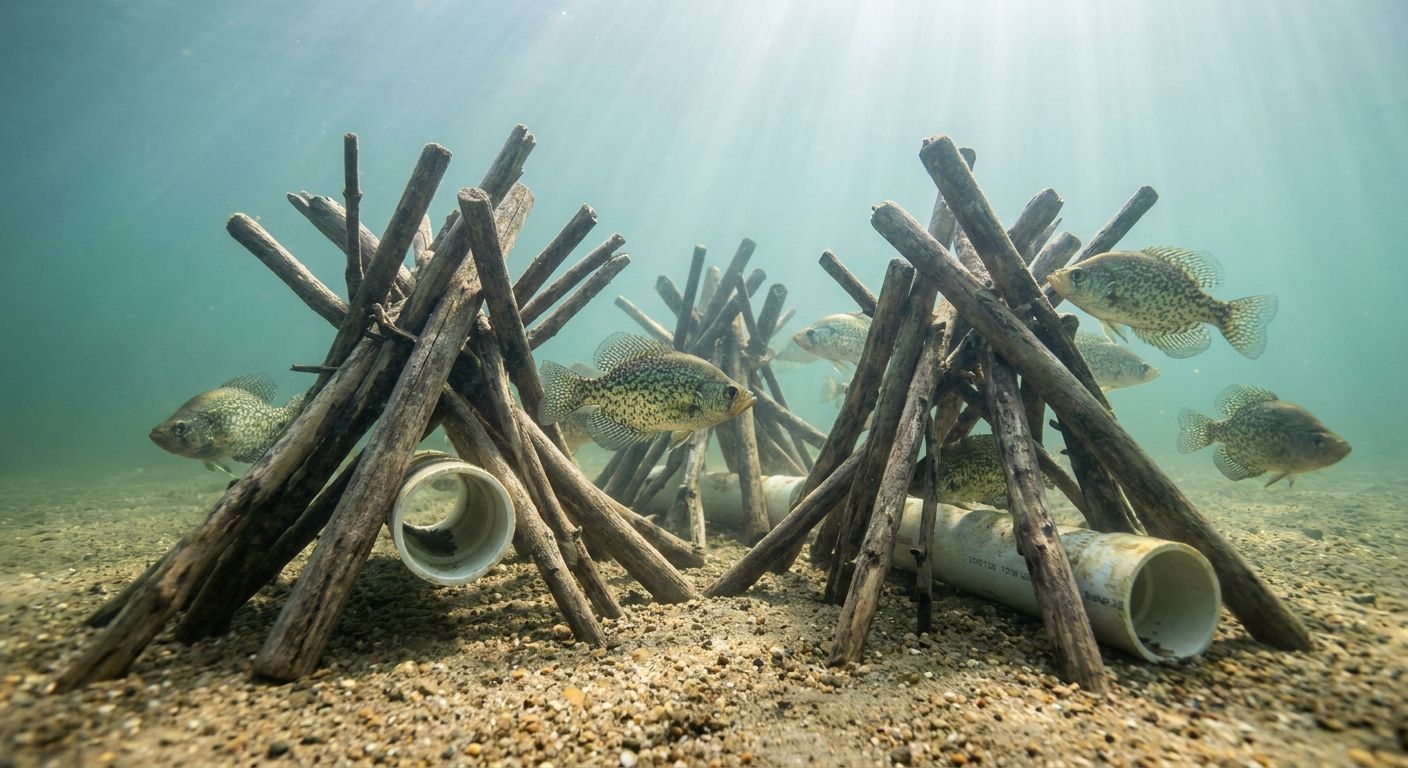
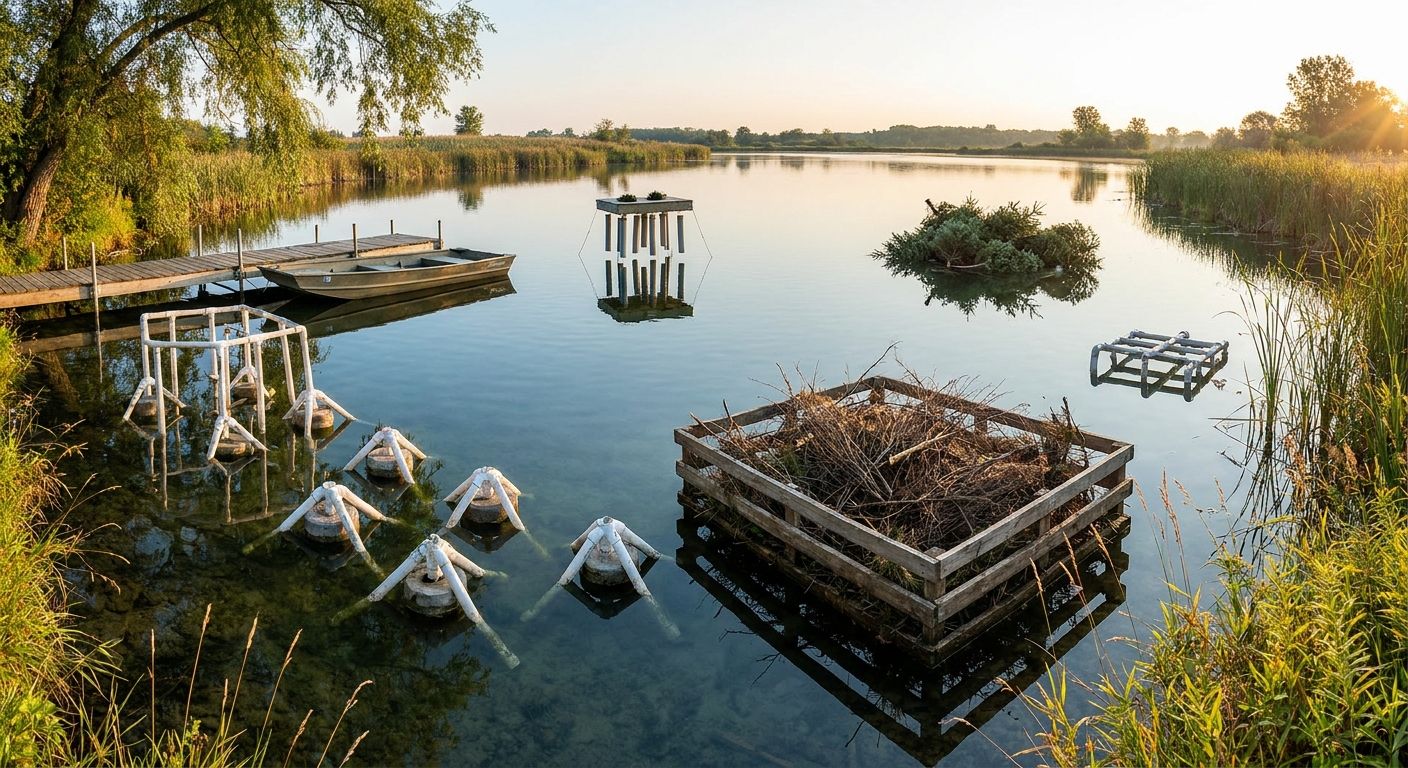
Fishiding builds its fish habitat structures from reclaimed PVC pipe, cut and formed into branching units set into bases weighing up to 350 lbs, with spires reaching 15 feet in taller deep-water models. The branching design is meant to mimic flooded brush without the rot, and hundreds of hours of underwater video document bass, crappie, bluegill, and forage fish using the units across all depths and seasons.
Fishiding pros:
- Doesn't break down in water — no annual rebuild
- Branch density and variety shelter fry through adult fish in the same unit
- Weighted bases hold position through ice, current, and drawdowns
- Documented use across multiple species via underwater video
Fishiding cons:
- Costs more upfront than scrap-built wood or block structure
- Larger deep-water units need a boat or dock to deploy
Fishiding pricing: varies by unit size and base weight — check current configurations on the site.
Best for: pond owners and fisheries managers who want structure that outlasts a single stocking cycle. Verdict: Buy.
2. Cedar and oak tree drops: best for natural lakes on a budget
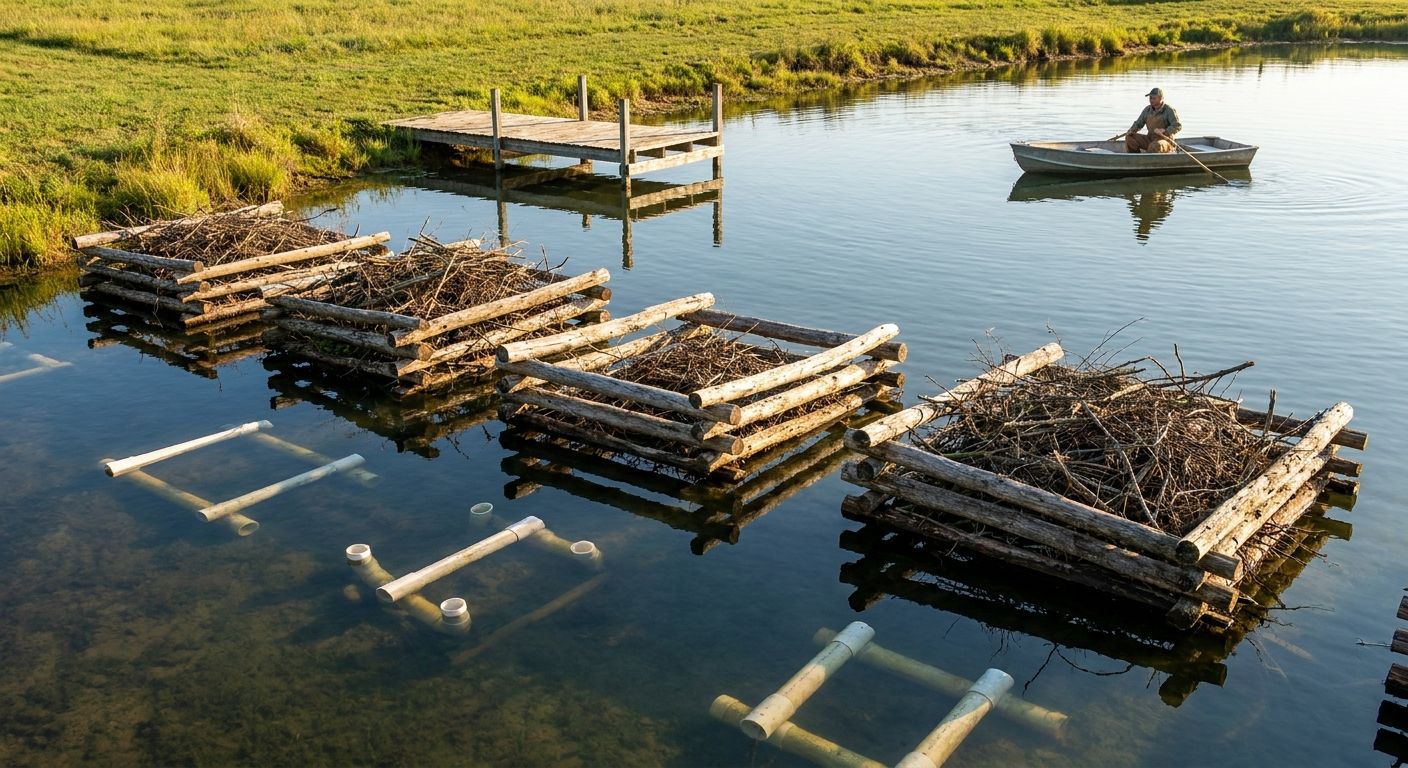
Dropping cedar or hardwood trees into a lake at ice-out is the oldest trick in fisheries management, and it still works the first season a tree hits the water. Fish key in on the fine branch structure almost immediately, especially crappie and panfish looking for shallow cover.
Tree drop pros:
- Free or nearly free if you have access to trees
- Fine branching attracts fish fast, often within weeks
- No manufacturing or purchase required
Tree drop cons:
- Needles and small branches rot within 1-2 years, structure within 3-5
- Anchoring is inconsistent — trees drift or roll in current
- Requires repeat drops every few years to maintain cover
Best for: landowners on natural lakes who want cover this season and don't mind rebuilding later. Verdict: Hold — fine as a stopgap, not a long-term plan for 2026 and beyond.
3. Cinder block reefs: best budget bass structure for ponds
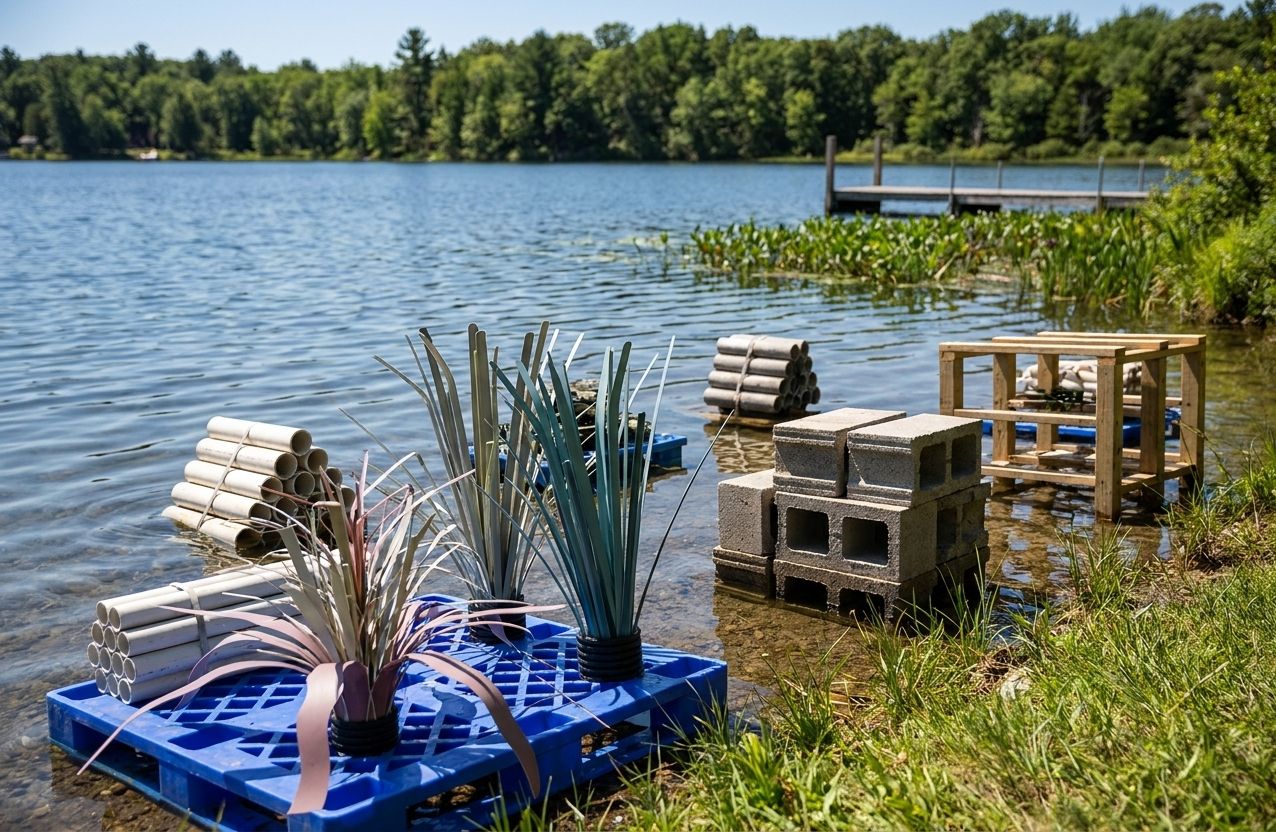
Stacking cinder blocks into small reefs is a common first project for new pond owners. It's cheap, it's heavy enough to stay put, and it gives bass something to relate to in an otherwise featureless pond bottom.
Cinder block pros:
- Lowest material cost of any option on this list
- Heavy enough to resist movement without separate anchoring
- Easy to source at any hardware store
Cinder block cons:
- Minimal branch density — fish relate to the edges, not the interior
- Algae and sediment coat flat surfaces fast
- Doesn't shelter fry the way branching structure does
Best for: new pond owners testing structure placement before investing further. Verdict: Hold — a starting point, not a finished habitat plan.
4. Stake beds: best for shallow crappie spawning cover
Stake beds are rows of wood stakes driven into pond or lake bottom in shallow water, usually 3-6 feet deep, built to mimic flooded timber for spring crappie spawning. They're a staple of crappie management on managed lakes.
Stake bed pros:
- Simple to build with basic tools and untreated lumber
- Mimics natural flooded timber crappie already relate to
- Works well clustered in groups for spawning season
Stake bed cons:
- Wood stakes rot at the waterline within a few seasons
- Limited to shallow water — doesn't help deep-water fish
- Needs periodic rebuilding to stay effective
Best for: crappie-focused ponds needing spring spawning structure. Verdict: Buy — cheap and effective if you're prepared to rebuild every few years.
5. DIY PVC pipe pyramids: best for hobbyist builders
Building your own PVC pipe pyramids or cribs is a common DIY route for anglers who want a rot-proof structure without buying a manufactured unit. Cut pipe into lengths, drill and zip-tie into a pyramid or crib shape, and weight the base with concrete.
DIY PVC pros:
- Full control over size, shape, and placement depth
- PVC itself doesn't rot or rust
- Materials are widely available at any hardware store
DIY PVC cons:
- Time-intensive — cutting, drilling, and assembling takes hours per unit
- Branch density is usually lower than manufactured units built specifically for it
- Base weighting is easy to underestimate, leading to drift
Best for: anglers who enjoy building and have time to make several units. Verdict: Buy — solid if you're willing to put in the shop time.
6. Mud/gravel spawning reefs: best for improving natural reproduction
Spawning reefs are shallow beds of clean gravel or mixed substrate placed in areas with hard bottom access, built specifically to give bass and panfish clean spawning surfaces rather than adult cover.
Spawning reef pros:
- Directly improves natural reproduction rates in the pond
- Low-maintenance once placed correctly
- Works alongside any other structure type on this list
Spawning reef cons:
- Provides no cover for adult fish or fry after spawning
- Needs the right substrate mix to avoid silting over
- Limited to specific depth and bottom conditions
Best for: fisheries managers focused on reproduction, not shelter. Verdict: Buy as a supplement, not a standalone habitat plan.
7. Rock piles and reef balls: best for deep-water staging
Rock piles and molded reef balls give deep-water fish like walleye and staging bass a hard structure to relate to when they move off shallow cover in summer and winter.
Rock pile pros:
- Extremely durable — decades of use without breaking down
- Holds bottom position through any current or ice movement
- Works in depths other structure types can't reach
Rock pile cons:
- Heavy — placement usually requires a boat, barge, or hoist
- Little to no branch density for fry or forage fish
- Higher labor cost to place than any other option here
Best for: managers targeting deep-water staging areas for walleye and big bass. Verdict: Buy if you have deep structure gaps and the equipment to place it.
How this list was ranked
Each structure was scored against the six criteria above — material longevity, branch density, anchoring stability, ease of deployment, species coverage, and documented use. Fishiding's PVC units land at the top because they're the only option here that scores well on all six at once rather than trading durability for cost or density for ease of placement.
“Structure that rots or rusts out in three years isn't habitat, it's a temporary fix you'll rebuild every spring.”
Which artificial fish habitat structure should you choose?
If you're stocking a pond or managing a lake fishery in 2026 and want structure that doesn't need rebuilding, Fishiding's PVC habitat units are the default pick — the density and longevity cover bass, crappie, and panfish in one placement. If budget is the only constraint, stake beds and cinder block reefs get you started cheap, but plan on rebuilding within a few seasons. For deep-water staging gaps, rock piles or reef balls fill a role nothing else on this list covers.
Compare Fishiding habitat units
See branch density and base sizing options for ponds and lakes.
FAQ
What's the best artificial fish habitat structure for a small pond?
For small ponds, Fishiding PVC habitat units or stake beds work best because they fit tight spaces and don't require heavy equipment to place. Stake beds are cheaper but need rebuilding every few seasons.
Are PVC fish habitat structures better than brush piles?
PVC structures outlast brush piles by years because PVC doesn't rot underwater, while brush and tree drops break down within 3-5 seasons. Brush piles attract fish faster initially but need constant replacement.
How much does artificial fish habitat cost in 2026?
Cost varies widely by material and size — cinder blocks and stakes cost little upfront but need rebuilding, while manufactured PVC units cost more initially but last far longer. Check current configurations directly with the manufacturer for exact figures.
Do fish actually use artificial habitat structures?
Yes — underwater video documentation from manufacturers like Fishiding shows bass, crappie, bluegill, and forage fish using branching PVC structures across seasons and depths. Fish key in on branch density more than material type.
How deep should fish habitat structures be placed?
Shallow structure like stake beds works best in 3-6 feet for spring spawning, while deep-water units and rock piles suit staging areas 10-15 feet or deeper. Depth should match the species and season you're targeting.
Can I build my own PVC fish habitat instead of buying one?
Yes, DIY PVC pyramids and cribs are a viable option if you have time to cut, drill, and weight the pipe yourself. Manufactured units typically pack more branch density into the same footprint.
How many fish habitat structures does a pond need?
There's no fixed number — fisheries managers generally cluster multiple units at varying depths rather than placing one large structure, since density and variety matter more than a single big piece. Spread structure across shallow, mid, and deep zones for full coverage.
One last thing
The detail most pond owners miss in 2026: fry and forage fish need the same structure as adult bass and crappie, just finer branching within reach of the same unit. A single Fishiding unit built with graduated branch density from base to spire shelters that whole food chain in one placement, which is exactly why the underwater video documentation shows multiple species and size classes using the same structure at once.