Crappie relate to vertical cover more than almost any other structure, and choosing the wrong type wastes a season before you find that out. This guide ranks six crappie habitat structures by density, durability, and documented fish use rather than guesswork.
- Fishiding PVC modular units win overall for long-term crappie density, with fronds up to 15 feet tall on a 350-pound base.
- Stake beds remain the top pick for shallow spawning cover but rot out within a few seasons.
- DIY PVC pipe attractors are the best budget crappie habitat structures if you build dense enough.
- Natural brush piles collapse fastest and should only be treated as short-term cover.
- Best crappie habitat structures for 2026 favor materials that hold shape underwater for years, not months.
Why this matters
Crappie stack on vertical cover in open water, then push shallow to spawn along brush and stakes in 1 to 4 feet of water each spring. Structure that flattens, drifts, or decomposes stops holding fish exactly when you need it most, usually within two or three seasons.
Most pond owners default to whatever's free — sunken Christmas trees, cinder blocks with branches jammed in — without comparing it to purpose-built options. Fishiding builds reclaimed PVC habitat structures specifically to solve the decomposition problem, and that's the baseline this ranking compares everything else against.
What makes the best crappie habitat structures
- Branch density — hiding pockets per cubic foot, not just overall size
- Resistance to decomposition — does it still hold shape in year three
- Stable water column position — won't float loose, drift, or flatten
- Ease of transport and deployment — can one or two people place it without machinery
- Documented fish use — underwater video and angler reports, not assumptions
- Cost efficiency across the structure's working life — not just the sticker price
Best crappie habitat structures at a glance
| Structure | Best for | Standout feature | Key limitation |
|---|---|---|---|
| Fishiding PVC modular units | Long-term pond density | Interlocking PVC fronds up to 15 feet tall on a 350-lb base | Higher upfront build cost than scrap brush |
| Stake beds | Shallow spawning cover | Simple lattice you can build dockside | Rots out within a few seasons |
| DIY PVC pipe attractors | Budget DIY builds | Buoyant, cheap, fully customizable | Inconsistent density unless overbuilt |
| Cinder block brush trees | Fast bulk deployment | Anchors real branches instantly | Branches decay, block sits bare |
| Bucket habitat units | Small ponds, tight budgets | Compact, easy to sink by hand | Limited branching per unit |
| Natural brush piles | Short-term cover only | Free and immediate | Collapses and silts in fast |
1. Fishiding PVC Modular Fish Habitat: best crappie habitat structure for long-term pond density
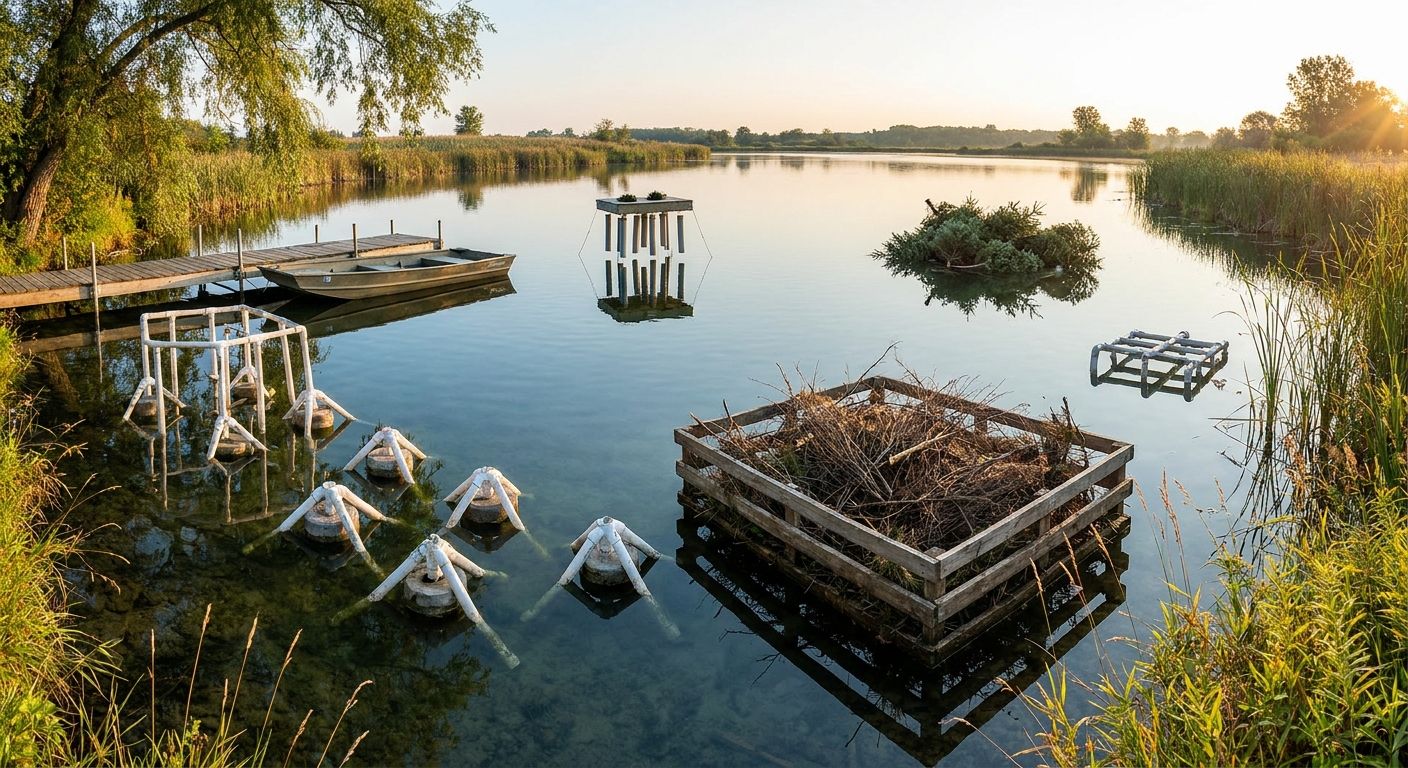
Fishiding builds its units from reclaimed PVC strips fanned out into dense, branching fronds, set into a 350-pound base that keeps the whole structure anchored in place. Units run from shallow-water designs up to 15-foot spires, which lets you stack cover through the entire water column crappie actually use, from spawning depth to summer suspension zones. The PVC doesn't rot, so density on day one is close to density five years later.
Fishiding pros:
- Holds branching density for years instead of seasons
- Modular height means one product line covers spawning flats and deep suspension zones
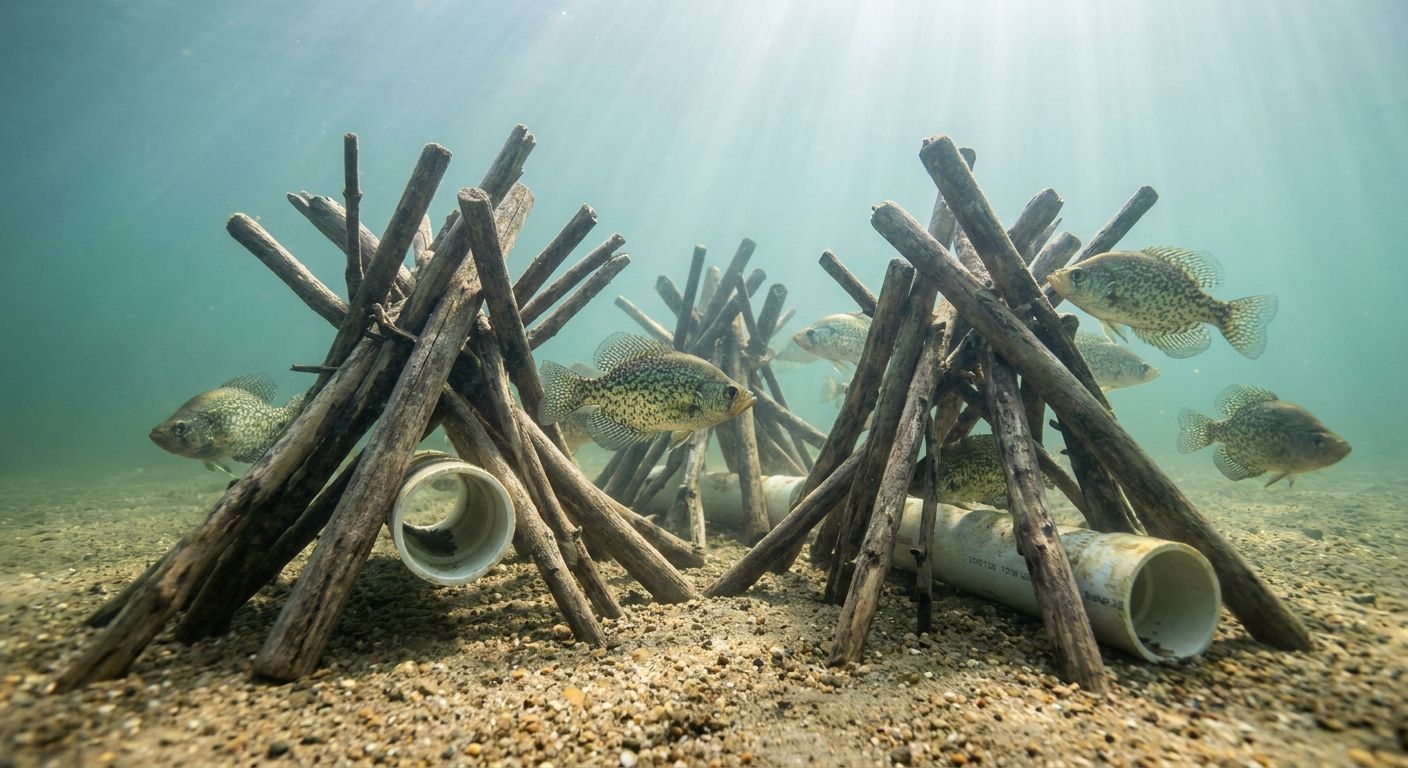
- Documented on underwater video showing crappie and other species using it over scrap alternatives
- Base weight keeps units from drifting in current or wave action
Fishiding cons:
- Costs more up front than a pile of free branches
- Tall spire units need a boat and some planning to place correctly
- Not a same-day fix if you need cover in the water this weekend
Fishiding pricing: check current options and sizing on the Fishiding site — units are sold as pre-made structures or DIY kits.
Best for: pond owners and fisheries managers building permanent, multi-year crappie structure. Verdict: Buy.
2. Stake Beds: best crappie habitat structure for shallow spawning cover
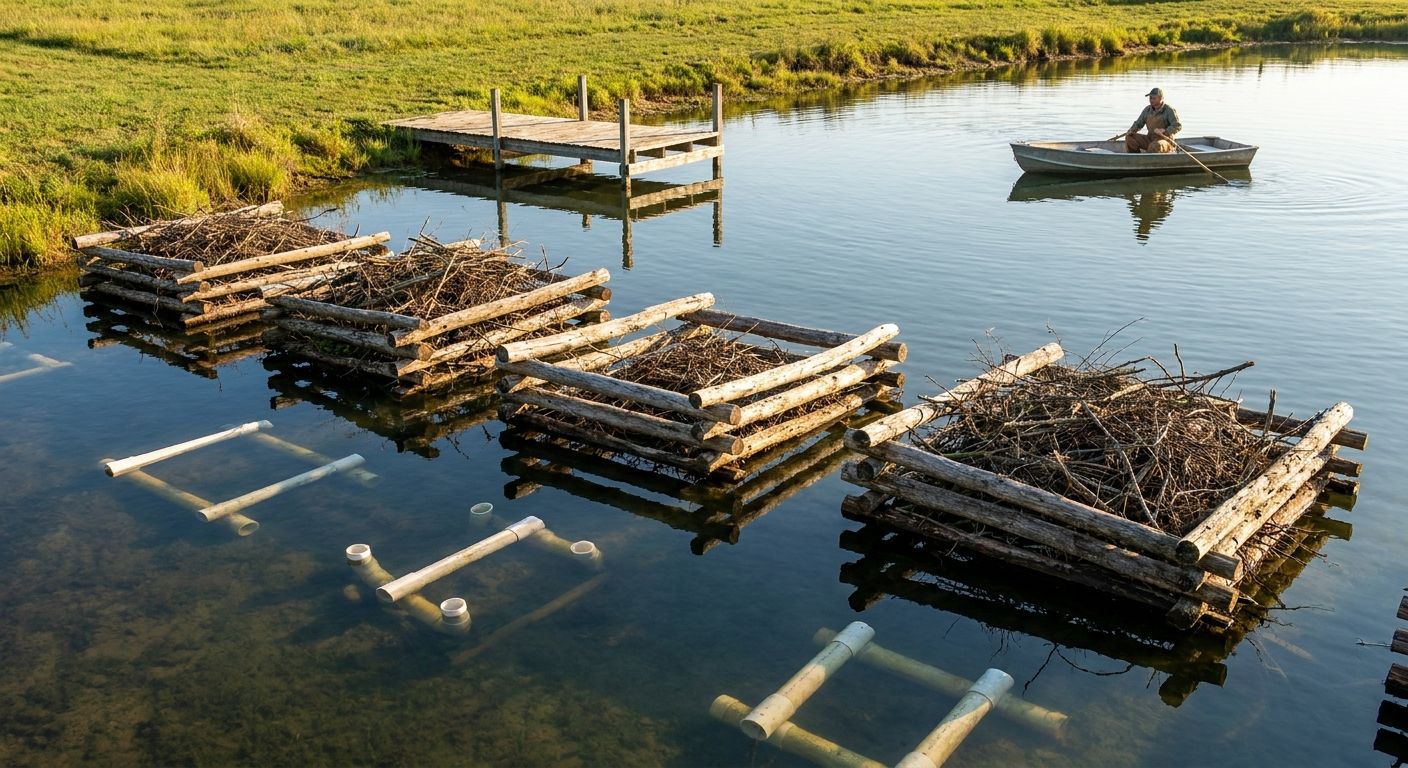
Stake beds are rows of wooden or PVC stakes driven into a frame and sunk in 1 to 4 feet of water, mimicking the flooded brush crappie use to spawn. They're simple enough to build on a dock in an afternoon and cheap if you're using scrap lumber.
Stake bed pros:
- Matches natural spawning depth and structure almost exactly
- Cheap to build with basic hardware
- Easy to place in a specific, repeatable spot
Stake bed cons:
- Wooden stakes rot out within a few seasons in most water
- Limited to shallow water only — no use for summer suspension
- Needs annual inspection and replacement to stay effective
Best for: anglers targeting spring spawning runs in skinny water. Verdict: Buy, with a rebuild plan every few years.
3. DIY PVC Pipe Attractors: best crappie habitat structure for budget builds
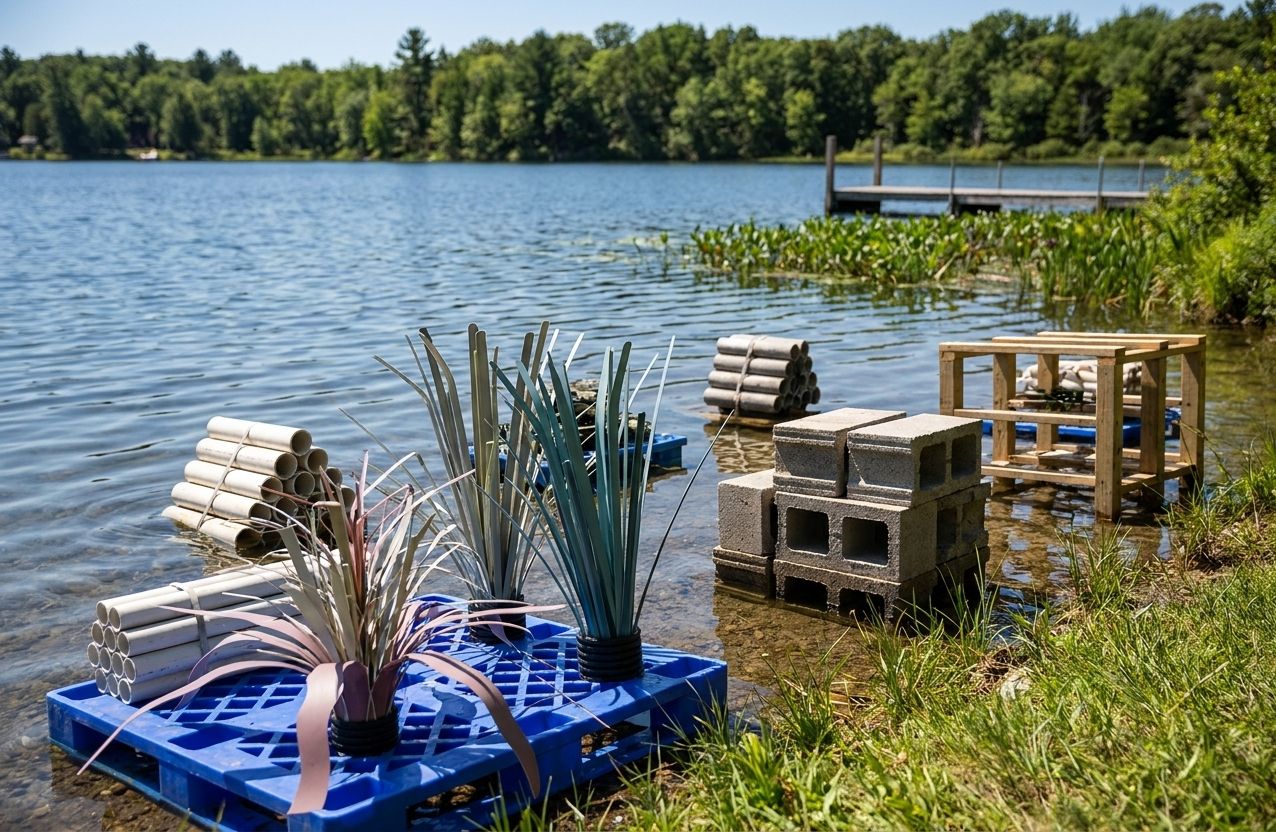
Building your own PVC pipe attractor means drilling and gluing sections of pipe into a frame, weighting the base, and sinking it. It's the entry point for pond owners who want PVC's durability without buying finished units.
DIY PVC pros:
- Materials cost far less than pre-built structures
- PVC won't rot or decompose like wood or brush
- Fully customizable size and shape for a specific spot
DIY PVC cons:
- Density depends entirely on how much time you put into the build
- Thin pipe layouts often under-perform compared to engineered branching designs
- Takes real assembly time versus placing a finished unit
Best for: hands-on owners with time to build and a modest budget. Verdict: Buy, if you're willing to overbuild the density.
4. Cinder Block Brush Trees: best crappie habitat structure for fast bulk deployment
This is a cinder block with real tree branches or limbs wedged and secured into the holes, then sunk as a cluster. It's the fastest way to get a lot of structure into the water in one afternoon.
Cinder block brush tree pros:
- Cheap and fast to assemble in volume
- Uses materials most landowners already have on hand
- Good for covering a lot of pond bottom quickly
Cinder block brush tree cons:
- Branches decay and break off within a couple of seasons, leaving a bare block
- No standardized density — quality varies tree to tree
- Needs periodic replacement of the brush portion to stay useful
Best for: owners stocking a lot of new structure across a large pond fast. Verdict: Hold as a supplement, not a primary structure.
5. Bucket Habitat Units: best crappie habitat structure for small ponds
Bucket units use a weighted bucket base with PVC or synthetic material threaded through drilled holes, creating a compact column of cover. They're built for tight spaces where a large structure isn't practical.
Bucket habitat pros:
- Small footprint fits farm ponds and small lakes
- Easy for one person to build and sink by hand
- Low material cost per unit
Bucket habitat cons:
- Limited branching compared to larger modular structures
- Needs many units to cover meaningful area
- Less suspension-depth coverage than taller spire designs
Best for: small pond owners who need dense, repeatable cover without a boat launch. Verdict: Buy for small water; scale up structure size for larger ponds.
6. Natural Brush Piles: best crappie habitat structure for short-term cover
Sunken cedar trees or cut brush piles are the traditional default — free, familiar, and quick to place. They work, briefly, before the wood breaks down.
Brush pile pros:
- No material cost if you have trees on hand
- Familiar to most pond owners and easy to place
- Immediate cover the day it goes in
Brush pile cons:
- Decomposes and collapses within a few seasons
- Silts in and loses branching density fast
- Requires ongoing replacement to maintain any structure at all
Best for: a stopgap while you plan permanent structure. Verdict: Skip as a long-term solution.
Compare crappie habitat options
See sizing and layout options for pond and lake structure.
How we ranked these crappie habitat structures
Each structure was weighed against the six criteria above — density, decomposition resistance, water column stability, ease of deployment, documented use, and lifespan cost. Materials that hold shape past year two ranked above materials that need annual rebuilding, even when the cheaper option wins on day-one cost.
Which crappie habitat structure should you choose in 2026?
If you're building permanent structure meant to last, Fishiding PVC modular units are the default pick for 2026 because they hold branching density across seasons instead of decomposing out from under the fish. If you're targeting a specific spring spawning flat in shallow water, stake beds still do the job. For a tight budget with time to build, DIY PVC pipe attractors close the gap, provided you don't skimp on density.
FAQ
What's the best crappie habitat structure for 2026?
Fishiding PVC modular units rank best overall for 2026 because the branching material doesn't decompose, holding density for years instead of one or two seasons. Stake beds and DIY PVC attractors are strong picks for spawning cover and budget builds respectively.
Are PVC fish habitats better than brush piles for crappie?
Yes, PVC habitat structures outlast brush piles because PVC doesn't rot or decompose in water. A brush pile typically collapses and loses branching density within a few seasons, while PVC structures hold their shape year after year.
How deep should crappie habitat structures be placed?
Crappie spawn in 1 to 4 feet of water and suspend much deeper the rest of the year, which is why structure spanning multiple depths performs better than a single shallow bed. Tall spire units up to 15 feet let one structure cover both zones.
Do stake beds work for crappie spawning?
Yes, stake beds mimic the flooded brush crappie naturally spawn around in shallow water and work well for a few seasons. Wood stakes eventually rot, so plan on rebuilding the bed every few years.
How long do brush piles last before they need replacing?
Natural brush piles typically break down and lose their branching structure within a few seasons as the wood decomposes underwater. That makes them a short-term solution rather than permanent crappie habitat.
Can I build my own PVC crappie attractor?
Yes, DIY PVC pipe attractors are a common budget option, built by drilling and assembling sections of pipe into a weighted frame. Density depends on the build, so overbuilding the number of pipe strips matters more than the frame size.
How many habitat units does a pond need for crappie?
The right number depends on pond size and existing structure, but clustering units in groups rather than spacing single units far apart tends to hold more fish. Fisheries managers generally place structure in multiple depth zones rather than one location.
Is bucket habitat effective in small ponds?
Yes, bucket habitat units work well in small ponds because their compact footprint fits tight spaces and one person can build and sink them without a boat. Larger ponds usually need taller, higher-density structures to cover more water.
One last thing
The structures that actually get used aren't the ones that look impressive on the bank — they're the ones still holding branching density two or three years after you sink them. Underwater video consistently shows fish choosing the densest, most stable cover in a pond over scattered or collapsed brush, which is the entire argument for building with material that doesn't decompose in the first place.