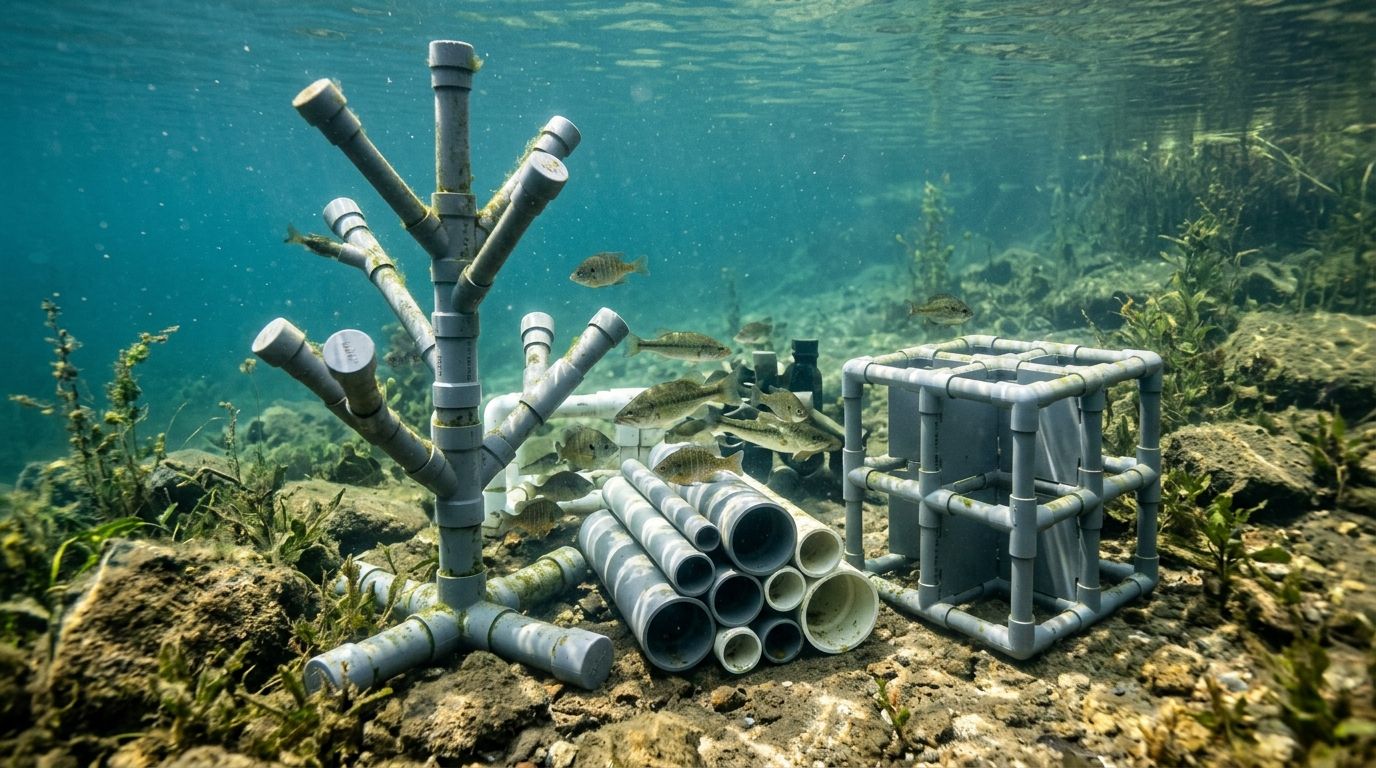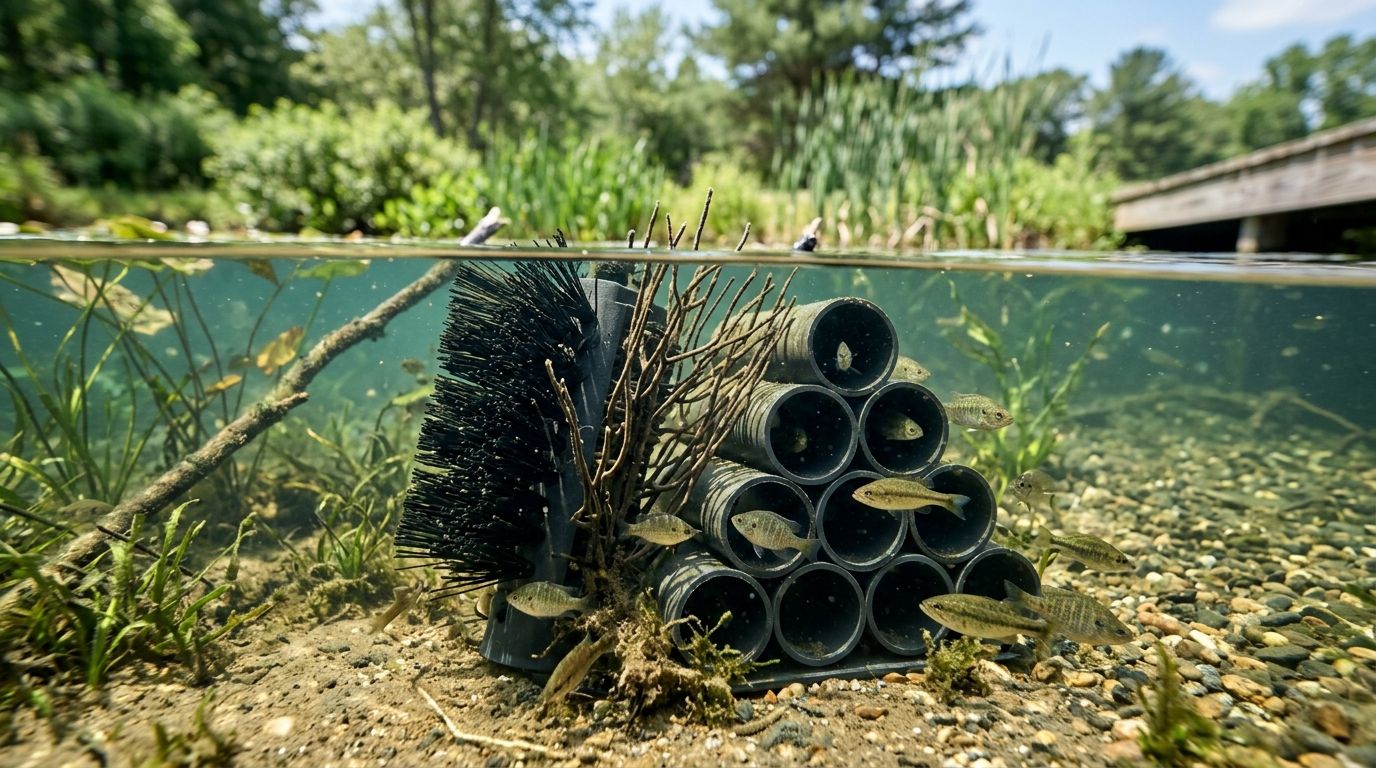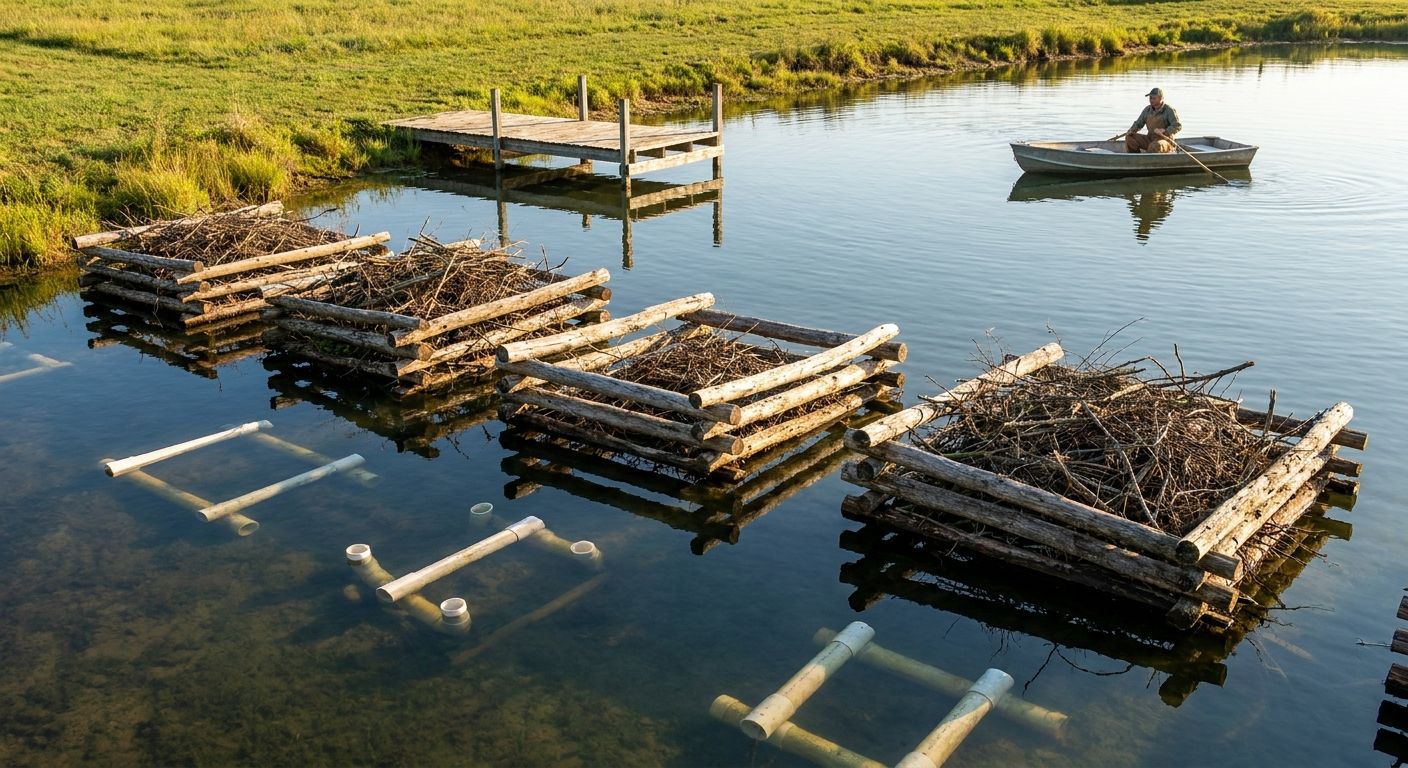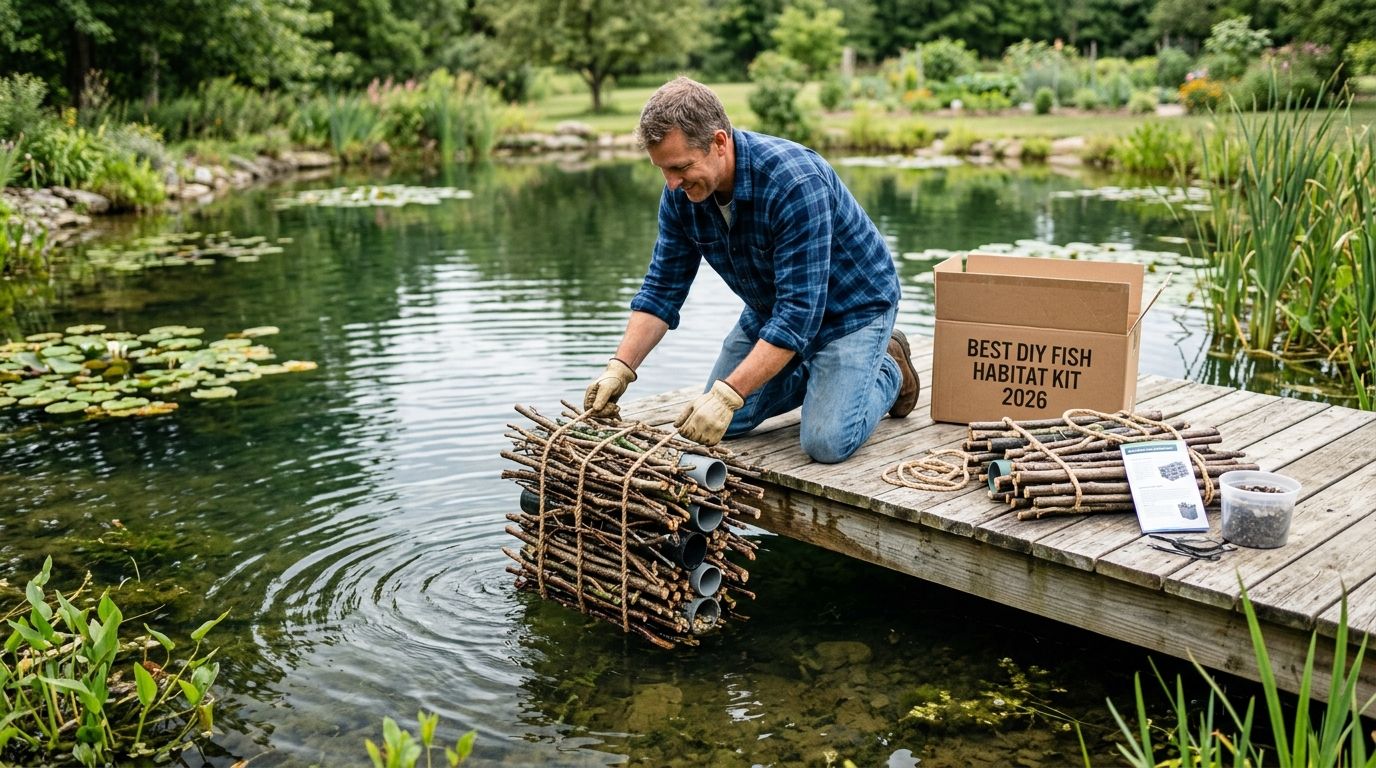
Building your own fish habitat from a kit beats dumping a brush pile in the shallows, but only if you match the kit to the right depth zone and pond type. The best overall pick for most pond owners in 2026 is a mid-depth DIY kit, built for crappie suspension structure between 6 and 15 feet. The best pick for panfish and spawning cover is a shallow water DIY kit under 6 feet, and the best budget-flexible option is a raw DIY component pack you assemble yourself.
- Mid-depth DIY kits (6-15 ft) win overall for crappie and bass suspension structure in 2026.
- Shallow water DIY kits under 6 ft are the best diy fish habitat kits for panfish and spawning cover.
- Deep water kits need extra ballast to hold position past 15 feet in reservoirs.
- Habitat mats work best for shoreline and bank-building projects, not open-water placement.
- Preassembled attractors and cribs skip assembly time but limit how you customize density.
Why this matters
A pond with only one depth zone of cover pushes every species into the same 3-foot band, and that crowding hurts forage and predator balance alike. Fishiding's DIY habitat kits exist because reclaimed PVC holds up underwater far longer than wood brush, and dense, intricate branching gives fish and forage species places to hide at different points in the water column.
More than 15 years of underwater filming backs a simple claim: every freshwater species observed uses this kind of dense habitat, from bluegill fry to mature bass. That does not mean every species uses it the same way. Placement, depth, and life stage still change how fish interact with a given structure, which is exactly why kit selection by zone matters more than picking the biggest box.
What makes the best DIY fish habitat kit
- Depth-zone match — shallow, mid, and deep water kits are built for different fish behavior, not interchangeable
- Material density and branching — more intricate limbs mean more shelter surface per cubic foot
- Assembly time — how many hours and what tools a kit needs before it goes in the water
- Stability underwater — whether the kit holds position without drifting or tipping in current
- Species versatility — how many life stages and species use the same structure
- Reclaimed material sourcing — PVC pulled from landfill-bound stock instead of new plastic
Best DIY fish habitat kits at a glance
| Kit type | Best for | Standout feature | Key limitation |
|---|---|---|---|
| Shallow water DIY kit | Panfish and spawning cover | Dense branching in 0-6 ft | Sun and ice can stress structure in far north climates |
| Mid-depth DIY kit | Crappie and bass suspension | Balanced height for 6-15 ft column | Needs a boat or kayak to place accurately |
| Deep water DIY kit | Reservoir and deep lake structure | Built for 15+ ft placement | Needs added ballast to stay upright |
| Habitat mat | Shoreline and bank building | Flexible, low-profile footprint | Limited to bank-accessible water |
| DIY component packs | Custom, large-acreage builds | Full control over shape and density | Requires the most assembly hours |
| Preassembled attractors and cribs | No-build convenience | Ready to place same day | Fixed design, no customizing density |
1. Shallow water DIY kit: best diy fish habitat kit for panfish and spawning cover
Shallow water kits sit in the 0 to 6 foot zone where bluegill, crappie fry, and other panfish spawn and forage in spring and early summer. The reclaimed PVC strips branch out in multiple directions, giving fry a place to escape predators while still feeding close to the surface.
Shallow water DIY kit pros:
- Fastest to place — no deep-water ballast needed
- Matches spawning behavior for panfish and pond bass
- Underwater footage shows fry using the branching within days of placement
Shallow water DIY kit cons:
- More exposed to sun degradation over multiple seasons in shallow, clear water
- Can freeze in or shift in ponds that ice over hard each winter
- Not enough depth coverage on its own for larger predator fish
Best for: ponds under 5 acres with panfish spawning goals. Verdict: Buy for any pond owner prioritizing panfish recruitment.
2. Mid-depth DIY kit: best diy fish habitat kit for crappie suspension structure
Crappie suspend at specific depths depending on water temperature and forage location, and a mid-depth kit gives them a column of cover to hold in rather than a single flat layer. This is the zone where crappie habitat structures do the most work, since crappie move up and down the water column daily.
Mid-depth DIY kit pros:
- Covers the 6-15 ft band where crappie and bass suspend most of the season
- Dense branching supports both forage fish and the predators chasing them
- Works in ponds, lakes, and reservoirs without major modification
Mid-depth DIY kit cons:
- Requires a boat, kayak, or dock access to place at the right depth
- Takes more assembly time than a preassembled unit
- Placement accuracy matters more here than in shallow water
Best for: pond and small lake owners targeting crappie and bass together. Verdict: Buy — this is the default pick for most freshwater ponds in 2026.
3. Deep water DIY kit: best diy fish habitat kit for reservoirs and deep lakes
Past 15 feet, water temperature and oxygen levels shift with the seasons, and fish move deeper to find stable conditions in summer and winter. A deep water kit needs enough weight and a low profile to stay put through wind, current, and thermocline shifts.
Deep water DIY kit pros:
- Extends habitat into zones fish use during seasonal temperature swings
- Reclaimed PVC does not rot or waterlog like sunken brush at depth
- Underwater filming has documented use across multiple seasons at these depths
Deep water DIY kit cons:
- Needs added ballast weight to stay upright in deep, moving water
- Harder to inspect or reposition once placed
- Overkill for shallow ponds under 8 feet deep
Best for: reservoirs and lakes with real depth and seasonal turnover. Verdict: Buy if your water body has a true deep zone; Skip for shallow farm ponds.
4. Habitat mat: best diy fish habitat kit for shoreline and bank-building projects
Habitat mats lay flatter than freestanding cribs and work well where you build from the bank or a shallow shelf rather than dropping structure from a boat. They give forage fish and fry a low, wide shelter zone right along the shoreline.
Habitat mat pros:
- Easiest option to build and place from shore
- Low profile works well on gradually sloping banks
- Good complement to taller mid-depth or deep water kits
Habitat mat cons:
- Limited to areas you can physically access from the bank
- Less vertical cover than a crib-style structure
- Not a standalone solution for deeper water zones
Best for: owners building habitat by hand near the shoreline. Verdict: Buy as a shallow-zone complement, not a whole-pond solution.
5. DIY component packs: best diy fish habitat kit for custom, large-acreage builds
Raw component packs give you the reclaimed PVC strips and connectors without a fixed design, so you decide the density, shape, and height for each unit. Fisheries managers covering large acreage often prefer this route because it scales without buying dozens of identical premade units.
DIY component pack pros:
- Full control over branching density and structure height
- Scales efficiently across large ponds or multiple stocking zones
- Uses the same reclaimed PVC sourcing as the preassembled line
DIY component pack cons:
- Requires the most assembly time of any option on this list
- Needs basic tools and a flat workspace to build correctly
- Inconsistent builds if instructions aren't followed closely
Best for: fisheries managers and larger properties building at scale. Verdict: Buy if you have the time and space to assemble in volume.
6. Preassembled attractors and cribs: best diy fish habitat kit alternative for no-build convenience
Not every pond owner wants to assemble anything, and preassembled attractors and cribs solve that by shipping ready to place. They use the same dense, intricate reclaimed PVC branching as the DIY line, just in a fixed configuration.
Preassembled attractor pros:
- No assembly time — place it and you're done
- Consistent build quality every time
- Good entry point for first-time habitat buyers
Preassembled attractor cons:
- No control over density or shape once built
- Less flexible for custom depth-zone layouts
- Doesn't scale as efficiently across large acreage as component packs
Best for: owners who want habitat without a build project. Verdict: Buy if convenience matters more than customization.
How we ranked these DIY fish habitat kits
Each kit type gets scored against the six criteria above: depth-zone match, density and branching, assembly time, underwater stability, species versatility, and reclaimed material sourcing. Mid-depth kits rank highest overall because crappie and bass suspension covers the widest range of common pond and small-lake goals. Shallow and deep water kits round out a full-column strategy, and the 7 best artificial fish habitat structures roundup breaks down individual structure types in more detail if you're comparing beyond kit format alone.
Underwater filming going back more than 15 years is the tiebreaker for any close call — a kit type only ranks well here if fish use has actually been observed in that zone, not just assumed from design specs.
Map your pond's depth zones first
Match kit type to shallow, mid, and deep water before you buy.
Which DIY fish habitat kit should you choose?
For most pond owners going into 2026, start with a mid-depth kit, add a shallow water kit for spawning season, and skip deep water kits unless your pond actually holds water past 15 feet. Fisheries managers covering larger acreage get more value from DIY component packs, since they scale without buying repeat units. If building isn't something you want to take on, preassembled attractors and cribs use the same reclaimed PVC and dense branching without the assembly time.
“One flat brush pile covers one depth. Three kit types across shallow, mid, and deep water cover the whole pond.”
FAQ
What's the best diy fish habitat kit for a small farm pond?
A mid-depth DIY kit paired with a shallow water kit covers spawning and suspension needs in most farm ponds under 10 acres. Deep water kits only make sense if the pond holds water past 15 feet.
How deep should DIY fish habitat be placed?
Shallow kits go in 0-6 feet for spawning and panfish, mid-depth kits in 6-15 feet for crappie and bass suspension, and deep water kits past 15 feet for reservoirs with seasonal thermocline shifts. Match the kit to the depth your pond or lake actually reaches.
Do bass and crappie use the same fish habitat structure?
Underwater observations show both species use dense, intricate branching structure, though they hold at different depths and times of year. A mid-depth kit covers both, but placement and season still shift how each species uses it.
Is reclaimed PVC safe for fish habitat in ponds and lakes?
Reclaimed PVC used in freshwater fish habitat kits is sourced from material otherwise headed to landfills and does not rot or waterlog like sunken wood brush. Fishiding does not claim it as maintenance-free or permanent, since service life still varies by water body and depth.
How many DIY habitat kits does a pond need?
Coverage depends on pond size, existing cover, and forage base rather than a fixed number per acre. Spreading kits across multiple depth zones works better than clustering several units in one spot.
Can I build fish habitat from materials I already have instead of a kit?
You can build brush piles or DIY structure from scratch, but reclaimed PVC kits hold up longer underwater than wood brush and pack denser branching per unit. A DIY component pack gives you build flexibility with material already proven to withstand freshwater conditions.
Do preassembled fish attractors work as well as DIY kits?
Preassembled attractors and cribs use the same reclaimed PVC and dense branching as the DIY line, just in a fixed design. They work well for owners who want habitat without a build project, but they don't offer the density customization a component pack does.
How long does DIY PVC fish habitat last underwater?
Exact service life varies by water body, depth, and installation, but reclaimed PVC resists the rot and collapse common with wood brush piles. Underwater filming spanning more than 15 years has documented continued fish use of PVC structure across multiple seasons.
One last thing
The most overlooked mistake pond owners make in 2026 isn't picking the wrong kit — it's placing every kit at the same depth. Underwater filming consistently shows different species and life stages using different zones of the water column at different times of year, so a pond with only shallow cover is missing the fish that move deeper by mid-summer. Spread your kits across at least two depth zones before you add more units to any single spot.