Small ponds under an acre lose fish-holding structure fast — cattails die back, a few brush piles rot out, and bass or bluegill end up circling bare mud with nowhere to ambush or shelter. The best artificial fish habitat for small ponds in 2026 is Fishiding's preassembled attractors and cribs, backed by habitat mats for forage shelter and DIY PVC kits for owners who want to build their own depth zones.
- Fishiding preassembled attractors and cribs win overall for small ponds needing fast, no-assembly shallow-to-mid cover.
- Fishiding habitat mats are the best artificial fish habitat for small ponds stocked with panfish fry and forage.
- Fishiding DIY PVC kits suit owners who want to customize density and depth for under an acre of water.
- Brush piles and stake beds still work but rot out or silt in within a few seasons.
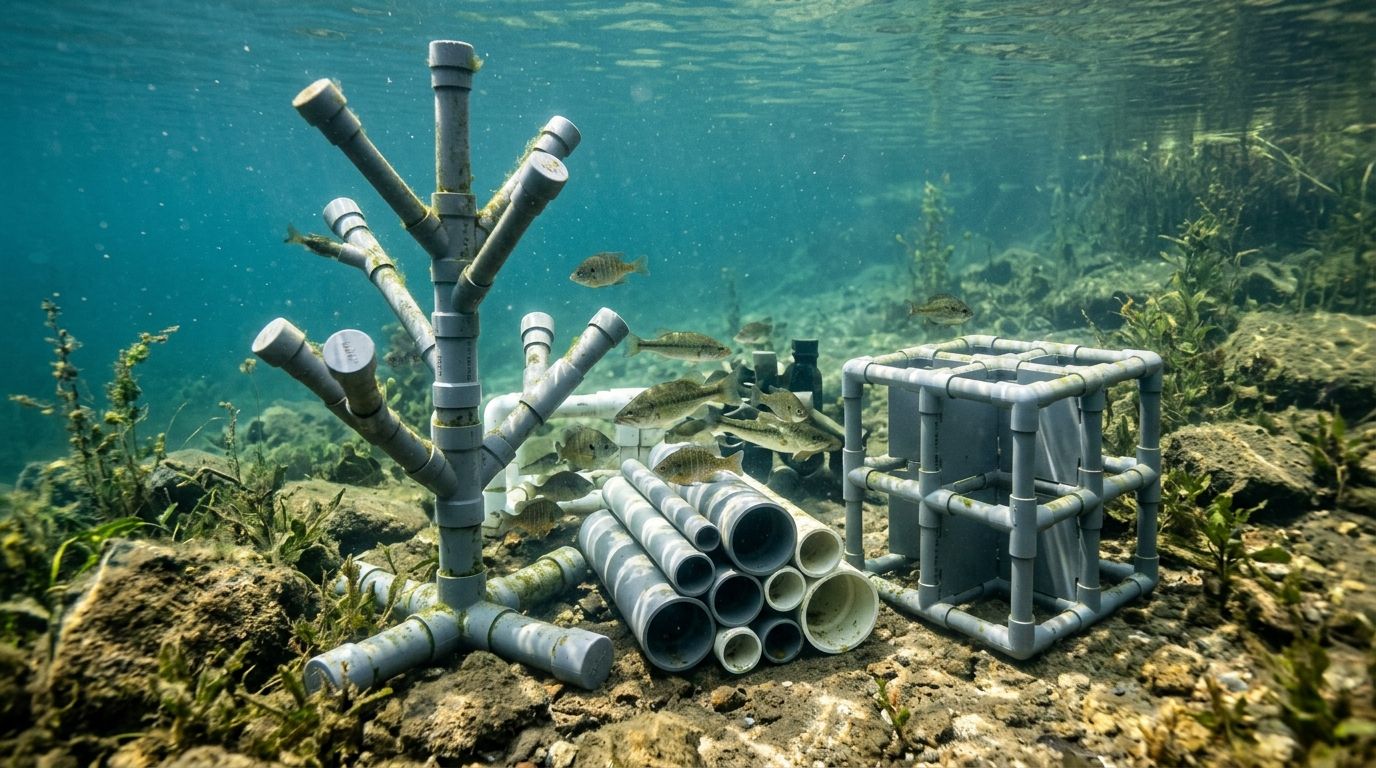
- Underwater footage collected over 15+ years shows all freshwater species using dense, intricate PVC structure.
Why this matters for a small pond
A half-acre or one-acre pond doesn't have the volume to absorb bad habitat decisions the way a 40-acre reservoir does. Every structure you sink either concentrates fish where anglers and predators can find them, or it sits empty because it's too sparse, too shallow, or in the wrong depth zone.
Fishiding's underwater footage, collected over more than 15 years across freshwater lakes and ponds, shows bass, bluegill, crappie, and forage species all using dense, branching structure — not just cruising past it. That's the baseline for judging any product on this list: does it hold fish, or does it just sit on the bottom looking like habitat?
Check the full Fishiding lineup of preassembled units, mats, and DIY components before you commit to a layout, since small ponds usually need a mix of depths rather than one product repeated across the whole basin.
What makes the best artificial fish habitat for small ponds
- Density and branching — thin, sparse structure gets swum past; dense, intricate models give fish somewhere to actually hide and ambush from.
- Depth zone match — shallow cover for spawning and fry, mid-depth for panfish and bass, deep cover for summer thermocline refuge.
- Material durability — reclaimed PVC holds its shape for years; cut brush and cedar limbs break down within a few seasons.
- Ease of placement — a small pond usually means no barge or crane, so weight and assembly matter as much as design.
- Variety of shelter sizes — forage fish, fry, and adult predators all need different gap widths within the same structure.
- Documented fish use — underwater video evidence beats a manufacturer's claim with no observation behind it.
Artificial fish habitat for small ponds at a glance
| Item | Best for | Standout feature | Key limitation |
|---|---|---|---|
| Fishiding preassembled attractors and cribs | Fast, no-assembly cover | Dense reclaimed PVC branching, ready to sink | Heavier per unit than loose brush |
| Fishiding habitat mats | Forage fish and fry shelter | Low-profile, covers wide bottom area | Best paired with taller structure nearby |
| Fishiding DIY PVC kits | Custom-built depth zones | Owner controls density and shape | Requires assembly time before sinking |
| Traditional brush piles | Owners with free cut wood on hand | Zero material cost if wood is available | Breaks down in 2-4 seasons |
| Stake beds and cinder block structures | Tight-budget shallow placement | Simple, cheap materials | Loses branching density fast |
| Natural shoreline cover | Ponds with existing timber or rock | No installation needed | Can't be repositioned or added to easily |
1. Fishiding preassembled attractors and cribs: best artificial fish habitat for small ponds overall
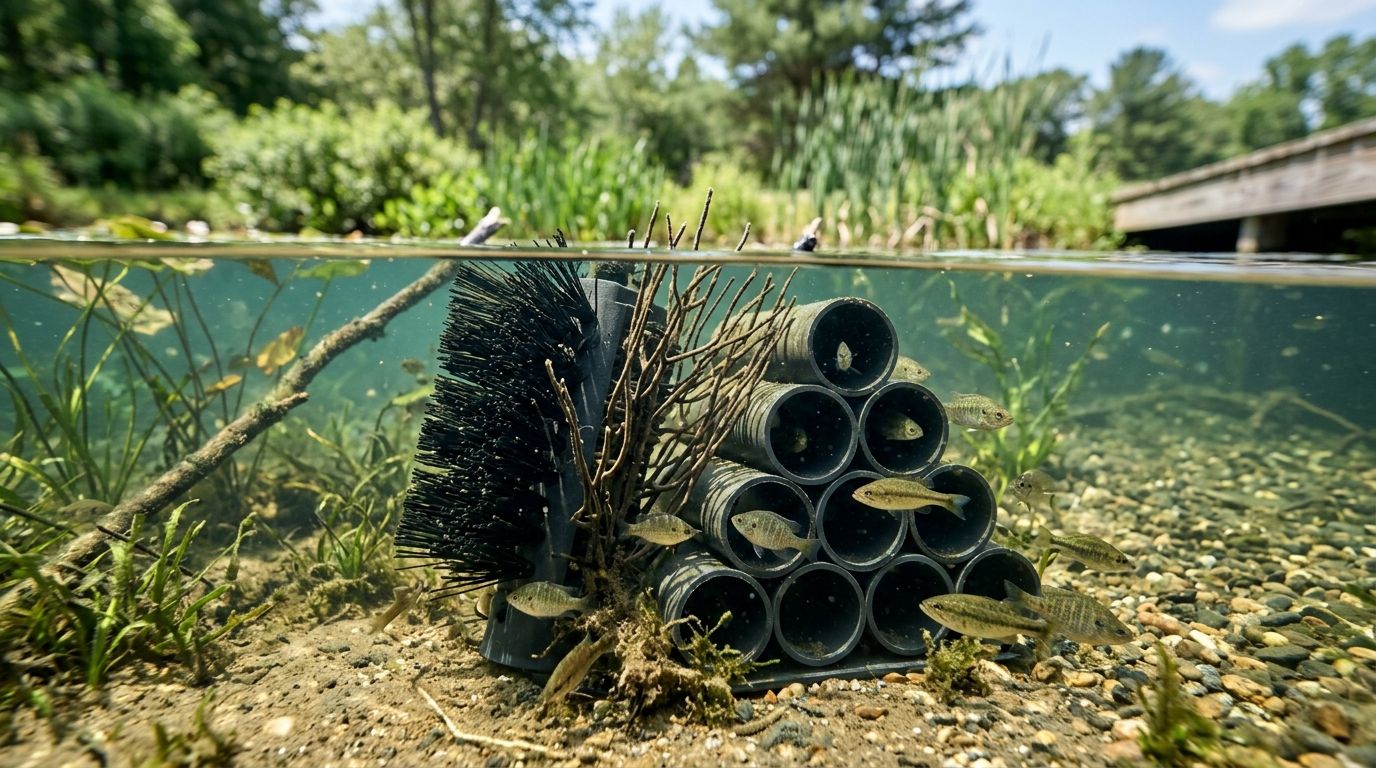
These units arrive built from reclaimed PVC strips woven into a dense, intricate crib shape, ready to sink without cutting or assembly. For a pond under an acre, that means you can place several units across shallow and mid-depth zones in an afternoon instead of a weekend build.
Underwater footage from Fishiding's 15-plus-year observation record shows bass, bluegill, and crappie moving through and holding inside this branching structure across seasons, not just passing by it.
Fishiding attractor and crib pros:
- No assembly required before placement
- Dense branching that holds up across multiple seasons
- Reclaimed PVC material that was headed to a landfill
- Documented use by multiple freshwater species in underwater video
Fishiding attractor and crib cons:
- Costs more upfront per unit than cutting your own brush
- Heavier to transport by hand than loose branches
Best for: small pond owners who want proven cover placed fast, without a build weekend. Verdict: Buy — this is the default pick for most small pond layouts in 2026.
2. Fishiding habitat mats: best artificial fish habitat for small pond forage and fry shelter
Habitat mats lay flatter and wider than the crib-style attractors, giving forage fish, fry, and smaller panfish a low-profile place to shelter across a broad section of bottom. In a small pond that's stocked or managed for panfish, that forage base matters as much as predator cover.
They work best placed near — not instead of — taller structure, since fry need shallow, dense cover close to nursery areas while adult bass and crappie use taller mid-depth attractors nearby. Anyone building out a small panfish pond should look at the placement approach in best fish attractors for panfish ponds before laying mats across the whole basin.
Fishiding habitat mat pros:
- Covers wide bottom area per unit
- Low profile suits shallow spawning and nursery zones
- Reclaimed PVC construction, same durability as the attractors
Fishiding habitat mat cons:
- Doesn't provide the vertical cover taller predators use
- Works best paired with crib-style structure, not alone
Best for: ponds managed for panfish reproduction and forage fish survival. Verdict: Buy — pair with taller structure rather than relying on mats alone.
3. Fishiding DIY PVC kits: best artificial fish habitat for small ponds on a custom budget
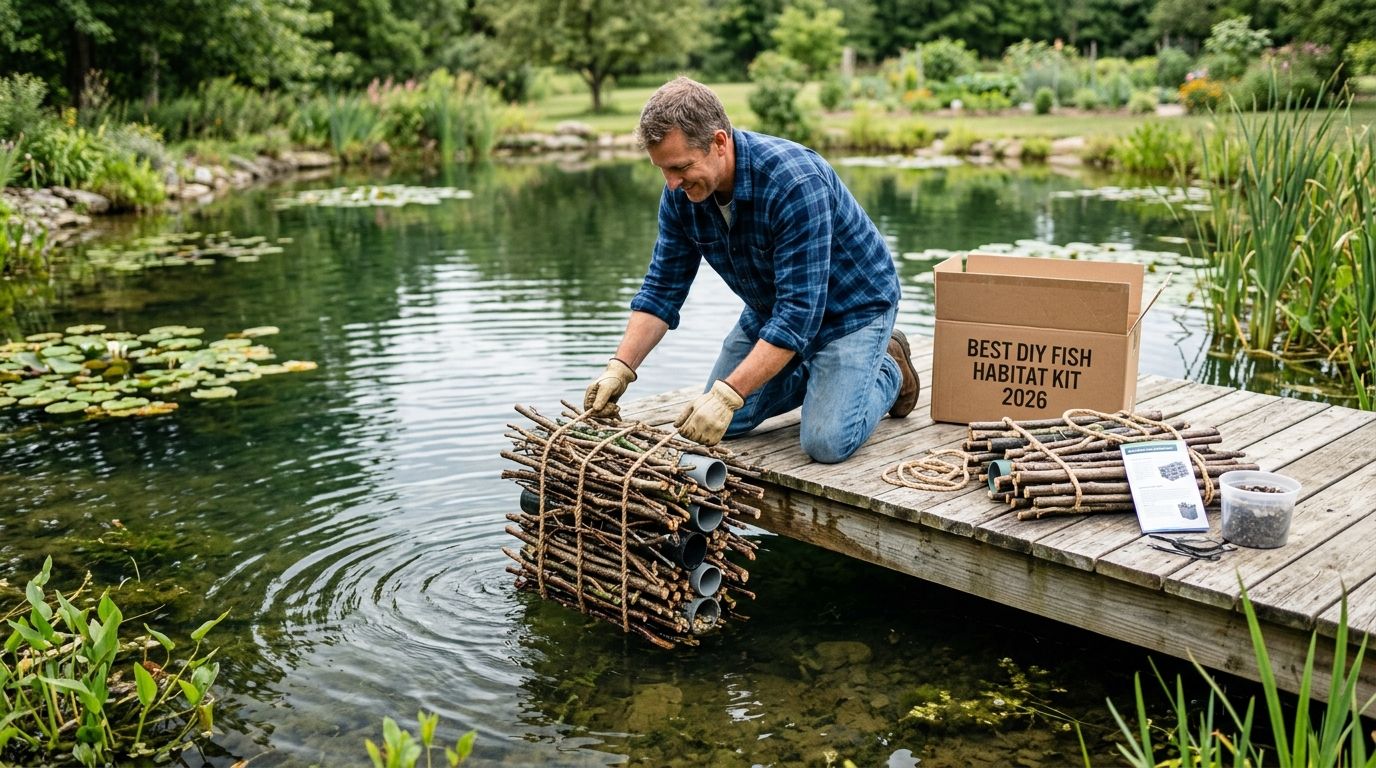
DIY kits give you the same reclaimed PVC material Fishiding uses in its preassembled units, but you control the density, shape, and final size. For an owner with a specific depth zone or an odd-shaped pond corner, that flexibility beats a one-size unit.
The tradeoff is time: you're weaving and assembling the structure yourself before it goes in the water, which takes longer than unboxing a finished crib.
Fishiding DIY kit pros:
- Full control over final density and shape
- Same reclaimed PVC durability as preassembled units
- Works for shallow, mid, or deep water depending on how you build it
Fishiding DIY kit cons:
- Requires assembly time before you can sink it
- Less consistent branching density than factory-built units if rushed
Best for: owners who want a custom layout and don't mind a build session. Verdict: Buy — a solid option if you're mapping a full-pond layout across multiple depth zones. Review the range of structure types in best 7 artificial fish habitat structures to see how DIY kits compare to preassembled cribs.
4. Traditional brush piles: best for owners with free cut wood on hand
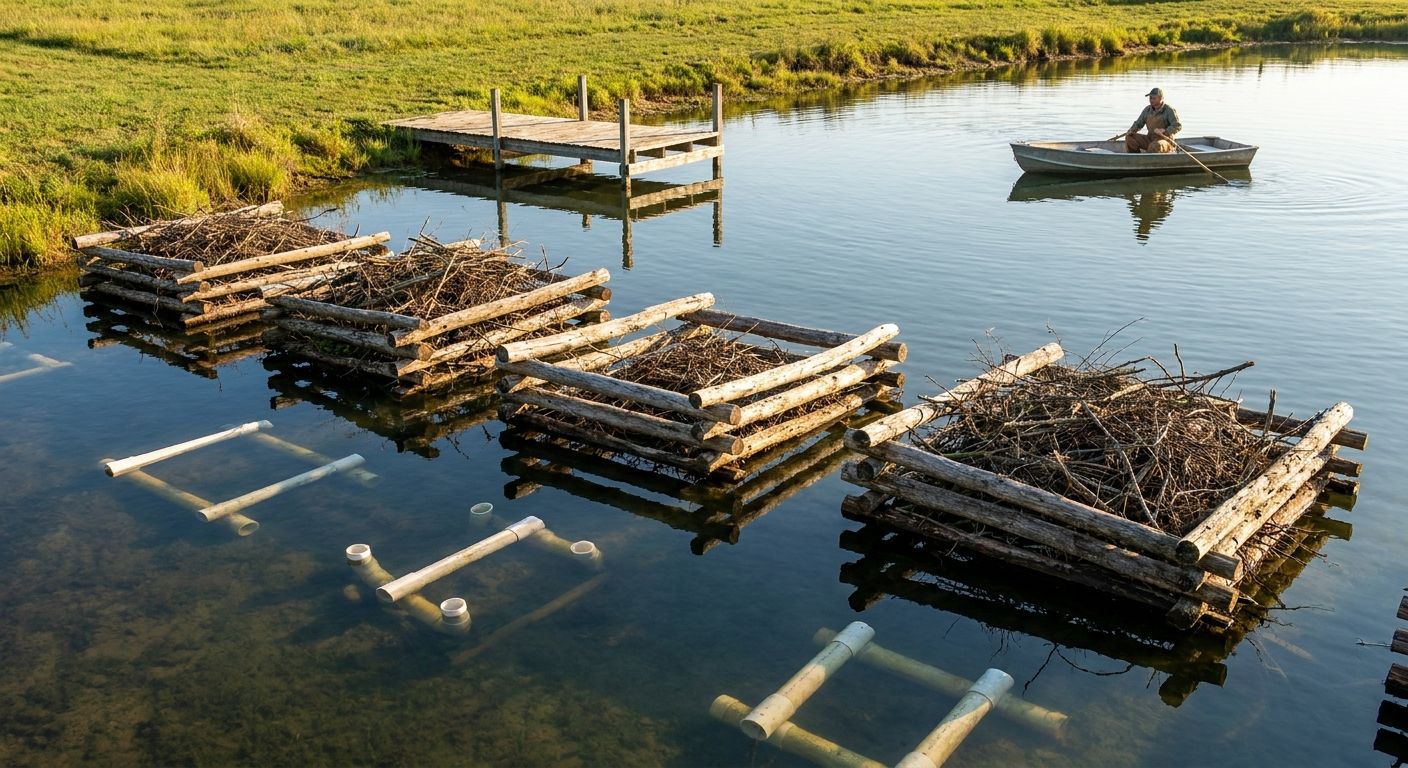
Brush piles built from cut cedar, oak limbs, or discarded Christmas trees still hold fish, especially in the first year or two after sinking. If you've already got wood available, the material cost is zero.
The problem is longevity. Cut wood loses its bark and small branches within a season or two, and by year three most brush piles have collapsed into a low pile with little of the original branching left.
Brush pile pros:
- No material cost if wood is already on hand
- Familiar, easy to build with basic tools
- Sinks fast with cinder blocks or a weighted base
Brush pile cons:
- Breaks down within 2-4 seasons depending on species of wood
- Density and branching quality vary a lot pile to pile
- Needs replacing more often than PVC-based structure
Best for: owners testing a placement spot before investing in permanent structure. Verdict: Hold — fine as a short-term or supplemental option, not a long-term small pond plan.
5. Stake beds and cinder block structures: best for tight-budget shallow placement
Stake beds — wood stakes driven into a cinder block base — are one of the cheapest DIY structures available for shallow water placement. They're common in farm ponds where the owner wants quick cover along a bank without much material cost.
The drawback matches brush piles: branching density drops fast as stakes weather and snap off, leaving a bare block within a couple of seasons. For farm pond owners weighing this against denser options, best fish structures for farm ponds covers the full range of budget and permanent choices.
Stake bed pros:
- Very low material cost
- Simple to assemble with basic hand tools
- Works well in shallow bank placement
Stake bed cons:
- Loses density fast as stakes weather
- Limited to shallow water use
- Needs periodic rebuilding
Best for: shallow bank cover on a strict budget. Verdict: Hold — usable as a stopgap, not a multi-year solution.
6. Natural shoreline cover: best for ponds with existing timber
Fallen trees, exposed root balls, and rock piles along the shoreline are the original fish habitat, and they still work where they already exist. If your small pond has standing dead timber in the water, leave it — it's already dense and it's already being used.
What natural cover can't do is scale. You can't add more of it on demand, reposition it into a bare section of pond, or control its density the way you can with a manufactured structure.
Natural cover pros:
- No installation cost or labor
- Already established and used by resident fish
- Provides genuine structural complexity where it exists
Natural cover cons:
- Can't be added to bare areas of the pond
- Impossible to control density or depth placement
- Continues to decompose over time with no way to renew it
Best for: ponds that already have standing timber or rock structure in place. Verdict: Hold — protect what's there, but don't count on it to cover a whole small pond.
How this list was ranked
Each entry was weighed against the six criteria above: density and branching, depth zone match, material durability, ease of placement, shelter variety, and documented fish use. Fishiding's preassembled attractors and cribs score highest because they combine dense PVC branching with no-assembly placement and a multi-species underwater observation record going back more than 15 years. Brush piles, stake beds, and natural cover remain viable but lose points on durability and scalability for a small pond that needs consistent coverage across depth zones.
“Thin, sparse structure gets swum past — dense, intricate models give fish somewhere to actually hide and ambush from.”
Which artificial fish habitat should you choose for a small pond?
If you want proven, fast-to-place structure and don't want a build weekend, Fishiding's preassembled attractors and cribs are the default pick for 2026. If your pond is managed for panfish reproduction, pair habitat mats with taller structure rather than relying on mats alone. If you want full control over depth and shape and don't mind assembly time, the DIY PVC kits are the better fit. Brush piles, stake beds, and natural cover all still hold fish — they just won't last as long or scale as easily across a small pond's limited water.
Map your pond's habitat layout
Review shallow, mid, and deep water options before you order.
FAQ
What is the best artificial fish habitat for small ponds in 2026?
Fishiding's preassembled attractors and cribs are the best artificial fish habitat for small ponds in 2026 because they arrive dense and ready to sink without assembly. Habitat mats and DIY PVC kits round out coverage for forage fish and custom depth zones.
How many artificial habitat units does a small pond need?
Coverage depends on pond shape and depth zones, but most small ponds under an acre benefit from spreading units across shallow, mid, and deep sections rather than clustering them in one spot. Map your bank access and depth changes before ordering.
Do brush piles work as well as manufactured fish habitat?
Brush piles hold fish in the first year or two, but cut wood breaks down within 2-4 seasons and loses branching density. Reclaimed PVC structure holds its shape far longer than cut brush.
Is artificial habitat better than natural shoreline cover?
Natural cover works where it already exists, but it can't be added to bare areas or repositioned into a specific depth zone. Manufactured habitat lets you fill gaps natural cover can't reach.
Do all freshwater fish species use artificial habitat structure?
Underwater footage collected over more than 15 years shows bass, bluegill, crappie, and forage species all using dense, intricate PVC habitat, though placement and use vary by species, life stage, and season.
Where should I place fish habitat in a small pond?
Place shallow cover near spawning and nursery areas, mid-depth attractors where predators forage, and deep cover for summer thermocline refuge if your pond stratifies. Most small ponds need a mix of all three zones.
Can I build my own PVC fish habitat instead of buying preassembled units?
Yes, DIY PVC kits use the same reclaimed material as preassembled attractors and let you control density and shape, but they take assembly time before you can sink them.
Does artificial fish habitat need to be replaced over time?
Reclaimed PVC structure holds its density far longer than brush piles or stake beds, which typically need rebuilding within a few seasons. Reclaimed PVC is not maintenance-free or permanent, but it outlasts cut wood by design.
One last thing
The detail most small pond owners miss: density matters more than total volume of structure. Two dense, intricate units placed in the right depth zones outperform a dozen sparse brush piles scattered across the bottom, because fish need tight branching to actually hide in, not just something to swim near.