PVC fish habitat structures range from preassembled attractors you drop and forget to reclaimed-material kits you build at the dock. This guide ranks six structure types by depth zone, density, and documented fish use so you can match habitat to your pond, lake, or reservoir in 2026.
- Fishiding preassembled attractors and cribs win overall among PVC fish habitat structures for turnkey, same-day installation.
- Habitat mats cover the most bottom acreage per unit for stocked ponds and community lakes.
- DIY PVC components and kits fit tight budgets and let you build custom fish cribs on-site.
- Shallow kits target panfish spawning; deep-water kits hold structure on reservoir main-lake points.
- Brush piles cost nothing upfront but decompose within a few seasons, unlike reclaimed PVC.
Why this matters
Ponds, lakes, and reservoirs lose natural cover every year. Docks get pulled, dead trees rot out, and drought drawdowns strand brush piles above the waterline. PVC fish habitat structures fill that gap with reclaimed material that doesn't decompose the way wood does, and dense, intricate branching gives fish and forage species places to shelter at every depth.
Fisheries managers and pond owners searching for artificial fish habitat structures usually land on the same question: build it yourself, buy it preassembled, or lay mats across the bottom. The answer depends on your water body's size, its depth zones, and how much install time you have in 2026.
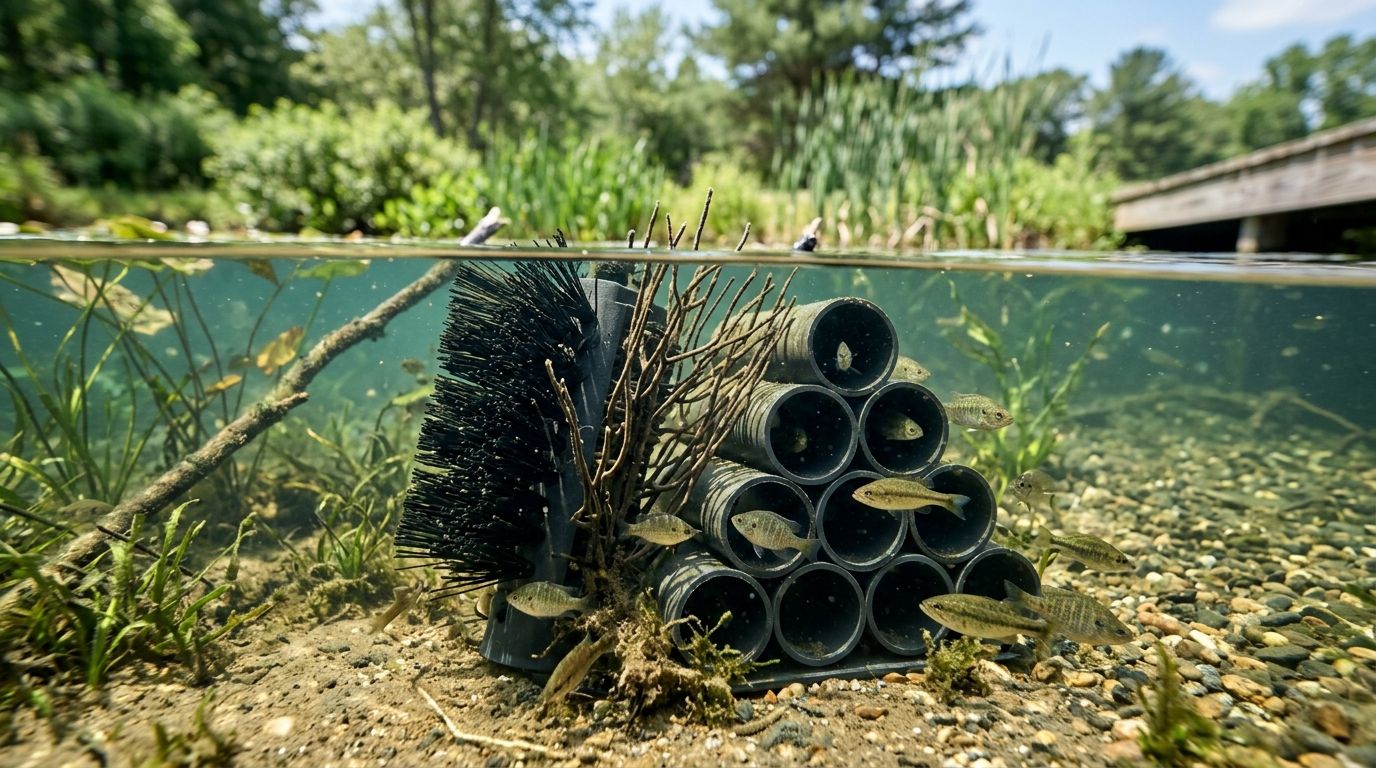
Depth matters as much as density. A structure built for a 3-foot spawning flat behaves differently underwater than one built for a 20-foot reservoir point, so matching the structure type to the zone is the first decision, not an afterthought. Fishiding's underwater footage, filmed over 15+ years and thousands of hours across freshwater lakes, documents largemouth bass, bluegill, crappie, and walleye all holding on the same dense PVC structures at different times of day and season. That's the evidence base behind the rankings below.
The verdict on PVC fish habitat structures
Best overall: Fishiding preassembled attractors and cribs — no assembly, drop and sink the same day. Best for large-scale coverage: Fishiding habitat mats — the fastest way to add bottom structure across a stocked pond or community lake. Best budget option: Fishiding DIY PVC components and kits — build your own fish cribs from reclaimed material at the lowest cost per structure.
What makes the best PVC fish habitat structure
- Density and branching — more limbs and layers per unit means more shelter for fry, forage fish, and predators alike.
- Depth-zone match — shallow, mid-depth, and deep-water habitat serve different life stages and species.
- Stability once submerged — a structure that shifts, floats, or tips over loses its value fast.
- Reclaimed material sourcing — PVC pulled from the landfill stream instead of virgin plastic.
- Documented fish use — underwater footage showing which species actually hold on the structure, not just marketing claims.
- Installation effort — how much boat time, labor, and tools the structure demands before it's in the water.
Run any PVC fish habitat structure through those six checkpoints before you compare it to the next option. The table below scores each type on the criteria that matter most once the structure is actually submerged.
PVC fish habitat structures at a glance
| Structure type | Best for | Standout feature | Key limitation |
|---|---|---|---|
| Fishiding preassembled attractors and cribs | Turnkey installation | Ready to sink same day | Bulkier to transport per boat load |
| Fishiding habitat mats | Covering pond and lake bottoms at scale | Broad bottom coverage per unit | Lower vertical profile than a full crib |
| Fishiding DIY PVC components and kits | Custom builds on a budget | Lowest cost per structure | Requires assembly time and tools |
| Fishiding shallow-water kits | Panfish spawning and forage cover | Matches shallow-zone branching density | Exposed to ice movement in northern winters |
| Fishiding deep-water kits | Reservoir main-lake structure | Built for depth and current | Needs a depth finder for accurate placement |
| Brush piles and natural cover | Zero-cost quick fix | No material cost | Decomposes within a few seasons |
1. Fishiding preassembled attractors and cribs: best PVC fish habitat structure for turnkey installation
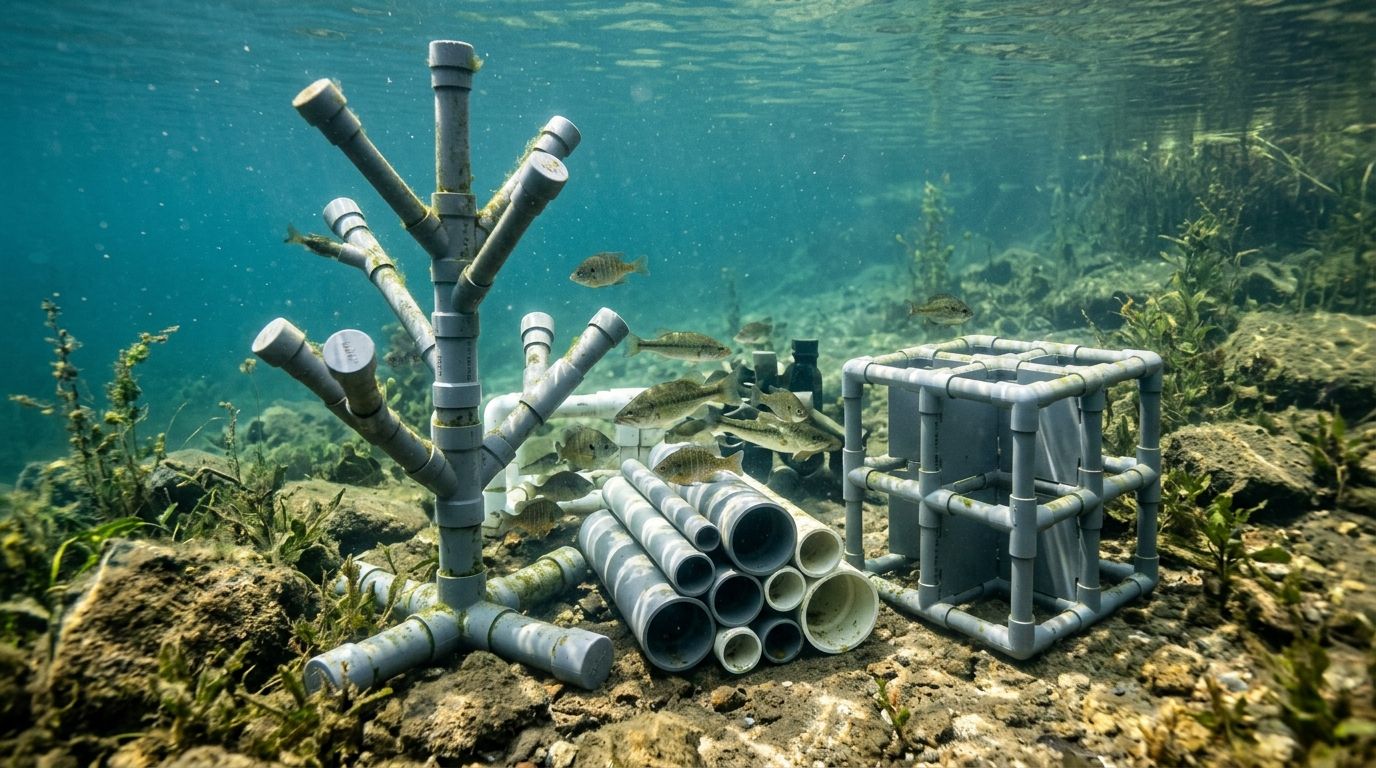
These arrive built and ready to sink, so there's no cutting, drilling, or zip-tying at the ramp. Each unit is dense and intricate by design, stacking multiple layers of reclaimed PVC limbs to create shelter at more than one depth inside a single footprint. Underwater footage shows fish holding tight to the layered branching within days of placement, and that consistency is why this category tops the list for 2026.
Fishiding preassembled attractors and cribs pros:
- No assembly required before deployment
- Consistent density and branching from unit to unit
- Documented fish use across multiple species in underwater footage
Fishiding preassembled attractors and cribs cons:
- Bulkier to haul than flat-packed DIY components, so a boat holds fewer per trip
- Less flexible if you want a custom shape for a specific drop-off or point
Best for: pond and lake owners who want structure in the water this season, not next spring. Verdict: Buy if speed and consistency matter more than customizing the shape.
2. Fishiding habitat mats: best for covering pond and lake bottoms at scale
Habitat mats lay across the bottom and spread branching horizontally instead of stacking it vertically. That makes them efficient for stocked ponds and community lakes where the goal is broad coverage rather than one tall attractor. They still use the same reclaimed PVC and intricate detailing that draws forage fish and fry into cover, and multiple mats grouped together build the kind of varied habitat a single crib can't cover alone.
Fishiding habitat mats pros:
- Covers more bottom area per unit than a single crib
- Works well layered near spawning flats and forage zones
- Reclaimed PVC material, same durability profile as other Fishiding products
Fishiding habitat mats cons:
- Lower vertical profile means less mid-water column structure on its own
- Best paired with a crib or attractor nearby for full-depth coverage
Best for: fisheries managers stocking or restoring habitat across acres, not just single hot spots. Verdict: Buy for large water bodies; Hold if you only need one or two structures.
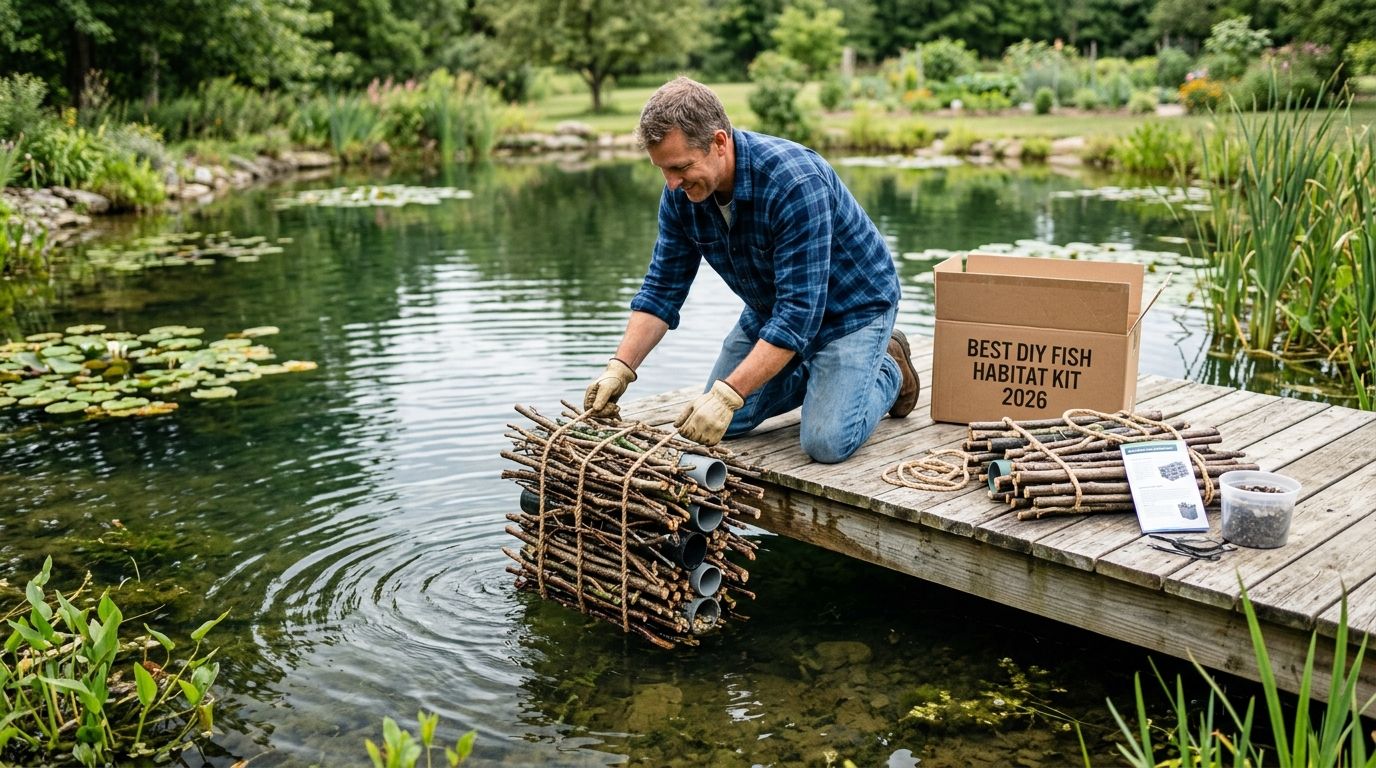
3. Fishiding DIY PVC components and kits: best for custom builds on a budget
DIY kits ship the reclaimed PVC components and let you build the crib shape, height, and density yourself. That control matters if you're targeting a specific drop-off, dock piling, or channel edge that a preassembled unit won't fit. It takes longer at the workbench, but the material cost per structure is the lowest in this lineup, and building your own teaches you exactly how density and branching affect fish use.
Fishiding DIY PVC components and kits pros:
- Lowest cost per finished structure in the lineup
- Full control over height, shape, and density
- Same reclaimed-material sourcing as preassembled units
Fishiding DIY PVC components and kits cons:
- Requires assembly time, basic tools, and zip ties or fasteners
- Results vary with builder attention to density and branching
Best for: anglers and pond owners building several structures at once and willing to spend an afternoon assembling them. Verdict: Buy if you have the time; Skip if you need habitat in the water this weekend.
4. Fishiding shallow-water kits: best for panfish spawning and forage cover
Shallow kits are built with denser, lower branching that matches how bluegill, crappie, and other panfish use skinny water for spawning and forage. Anglers running panfish pond attractors place these near flats and shoreline drop-offs where fry and forage species already concentrate, and underwater footage shows fry moving into the branching within the same week as placement.
Fishiding shallow-water kits pros:
- Branching density matches panfish spawning and forage behavior
- Easier to place by hand or from shore in skinny water
- Draws fry and forage fish quickly after placement
Fishiding shallow-water kits cons:
- Exposed to ice movement and drawdown damage in northern climates
- Not built for main-lake depth or current
Best for: panfish-focused ponds and shallow coves where spawning habitat is the priority. Verdict: Buy for panfish-heavy water; Wait on ice-prone shallow flats until you've mapped ice movement patterns.
5. Fishiding deep-water kits: best for reservoir main-lake structure
Deep-water kits carry more weight and denser branching built to hold shape against current and depth pressure on reservoir points, humps, and creek channels. Placement takes more planning since you're working with a depth finder instead of eyeballing the shoreline. Underwater footage from deep placements shows suspended baitfish and predator species using the same structure at different times of day, which supports building density into deep zones instead of leaving them bare.
Fishiding deep-water kits pros:
- Built for depth and current, not just calm shallow water
- Holds structure and density on main-lake points and channels
- Documented use by suspended baitfish and larger predator species
Fishiding deep-water kits cons:
- Requires a boat, depth finder, and marked waypoints for accurate placement
- Harder to inspect or adjust once submerged
Best for: reservoir managers and anglers targeting main-lake structure rather than shoreline cover. Verdict: Buy if you fish or manage open water; Skip for small, shallow ponds.
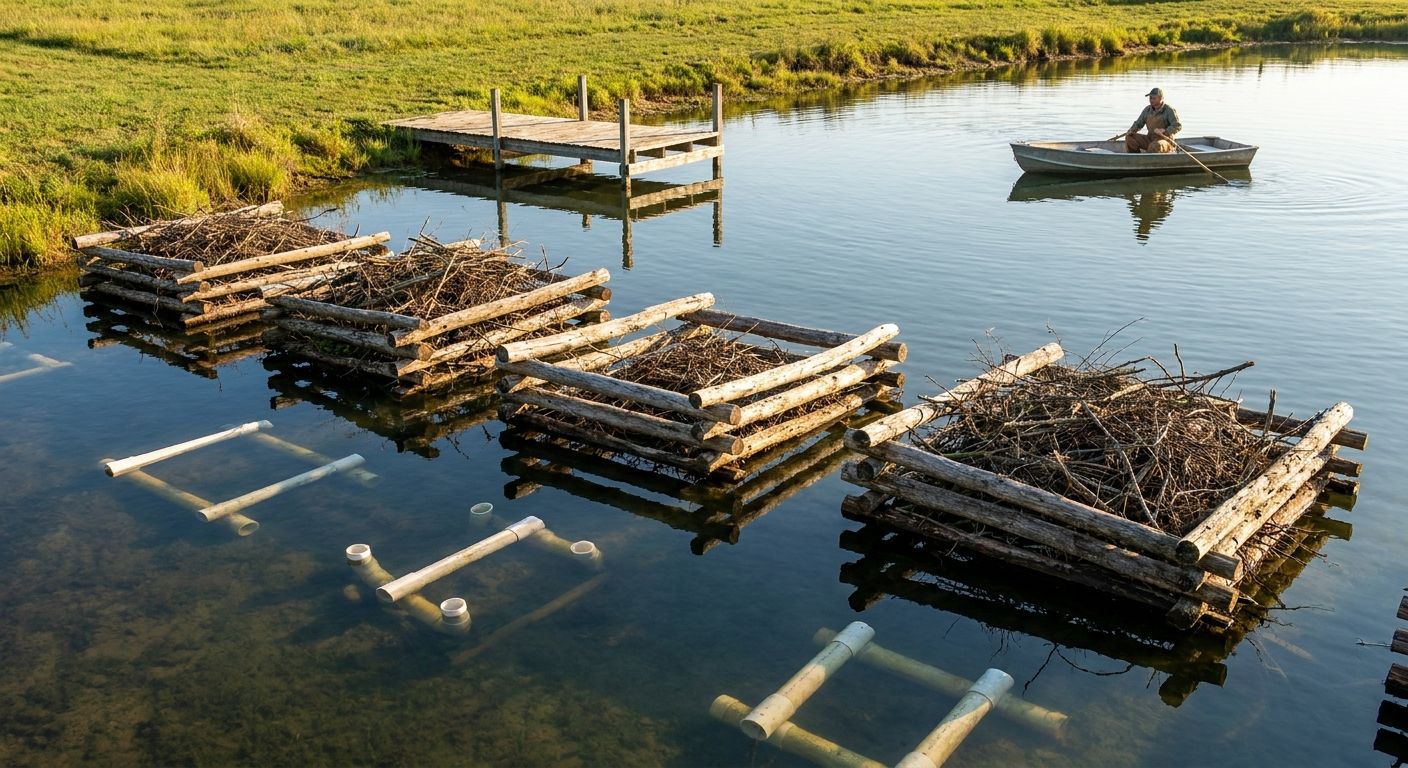
6. Brush piles and natural cover: best for a zero-cost quick fix
Cut trees, stake beds, and sunken brush are the traditional alternative to any manufactured PVC fish habitat structure, and they cost nothing but labor if you already have material on hand. Fish will use them immediately, but wood in freshwater decomposes, and branching thins out season by season until the pile stops holding fish the way it did the first year.
Brush piles and natural cover pros:
- No material cost if trees or brush are already available
- Familiar to build for anyone who has run a chainsaw
- Immediate fish use once sunk
Brush piles and natural cover cons:
- Decomposes within a few seasons, unlike reclaimed PVC
- Density and branching thin out over time instead of holding steady
- Labor-intensive to cut, haul, and sink compared to a preassembled unit
Best for: landowners with existing timber and no budget for manufactured habitat. Verdict: Hold as a supplement; Skip as your only long-term habitat plan.
How we ranked these PVC fish habitat structures
Each entry was scored against the six criteria above: density, depth-zone match, stability, reclaimed sourcing, documented fish use, and installation effort. Fishiding's underwater footage library, built over 15+ years and thousands of hours in freshwater lakes, was the primary evidence source for the "documented fish use" criterion — no other habitat manufacturer has published a comparable long-term visual record. Structure types that only look good on paper but lack observed fish use were ranked lower, even where the material and build quality were solid.
Plan your fish habitat layout
Browse preassembled attractors, mats, and DIY kits by depth zone.
Which PVC fish habitat structure should you choose?
If you manage one water body and want fish holding on structure before the season ends, start with a preassembled attractor or crib — it's in the water the same day you get it. Add habitat mats once you're ready to cover more bottom acreage, and layer in shallow or deep-water kits to match the depth zones your fish actually use. Browse the full range at Fishiding to match structures to your depth zones before you buy.
Landowners with existing timber can supplement with brush piles, but don't rely on wood alone if you want habitat that holds its density past a few seasons. The safest 2026 default for most pond and lake owners is a mix of one or two preassembled cribs plus a mat section in the shallows, expanded with shallow or deep kits as budget and boat time allow.
FAQ
What are PVC fish habitat structures made from?
Fishiding builds its PVC fish habitat structures from reclaimed PVC material that was destined for landfills, not virgin plastic. The dense, intricate branching is designed to shelter fish at multiple depths in a single unit.
Are PVC fish habitat structures better than brush piles?
PVC fish habitat structures hold their density longer than brush piles, which decompose within a few seasons in freshwater. Brush piles cost less upfront but need regular replacement to keep working.
How deep should I place a PVC fish habitat structure?
Match the structure to the zone: shallow kits work spawning flats and coves, mid-depth structures cover transition zones, and deep-water kits hold on reservoir points and channels. Placing the wrong depth type in the wrong zone wastes the structure's design.
Do all freshwater fish species use PVC fish habitat structures?
Underwater observations over 15+ years show that all freshwater fish species documented use dense, intricate PVC habitat, though which species dominates a given structure varies by depth, season, and life stage.
How long do PVC fish habitat structures last compared to brush?
Reclaimed PVC does not decompose the way wood brush does, so density and branching hold steadier over time than a natural brush pile. Placement conditions and water chemistry still affect any submerged structure.
What's the best PVC fish habitat structure for a small pond?
A single preassembled attractor or crib is the fastest option for a small pond, since it needs no assembly and drops into the water the same day. Add a shallow-water kit near spawning flats if panfish are the target species.
Can I build my own PVC fish habitat structure?
Yes, DIY PVC components and kits let you build your own fish cribs from reclaimed material at a lower cost per structure than preassembled units. Building your own takes assembly time, basic tools, and attention to density.
How much PVC fish habitat structure do I need per acre?
Coverage needs vary by water body size, target species, and existing natural cover, so there's no single fixed ratio per acre. Most pond and lake owners build density gradually, starting with one or two structures per key zone and adding more based on observed fish use.
One last thing
The most repeated observation across Fishiding's underwater footage isn't which species shows up first — it's that predator and forage species share the same dense PVC structure at different times of day, not separate ones. That's the practical case for building density and variety into a single structure instead of spreading thin, sparse cover across a wide area in 2026.