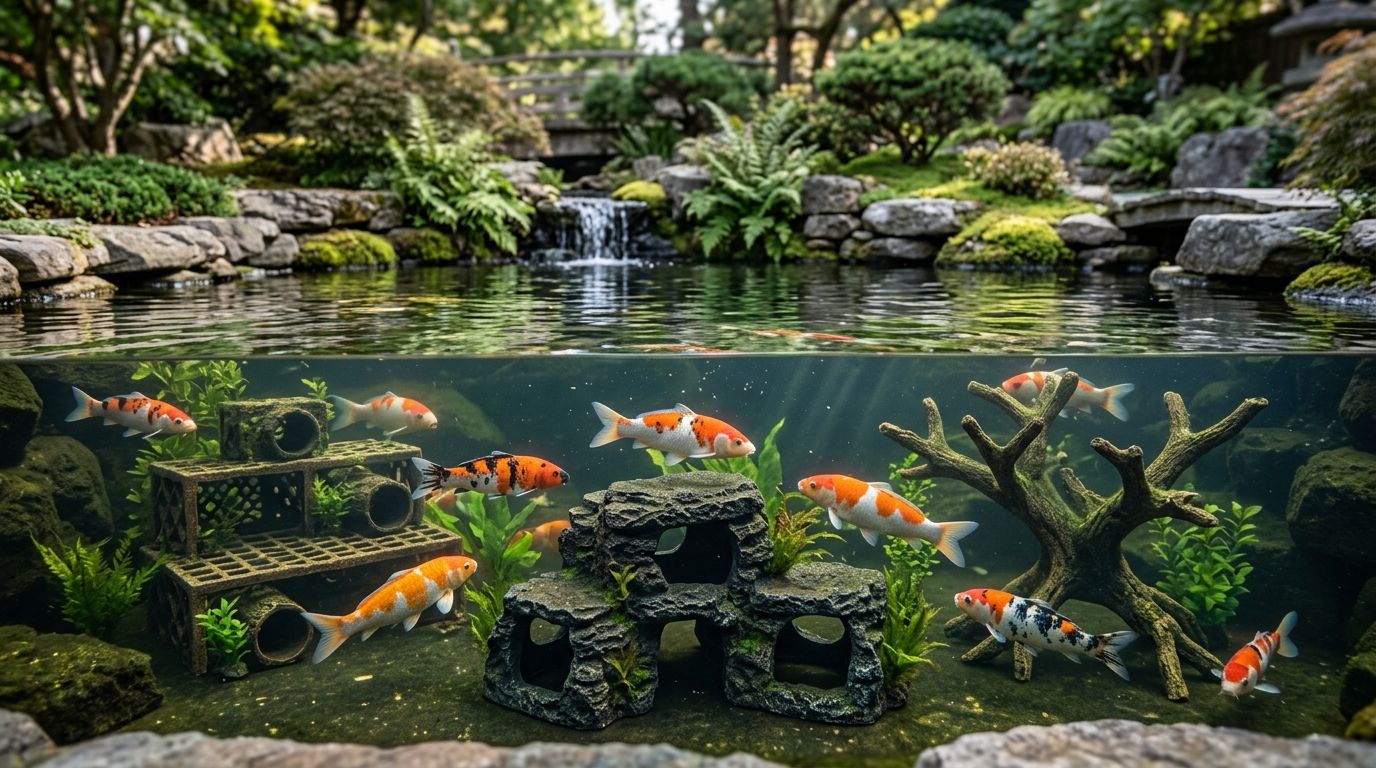
Koi ponds aren't bass ponds, and a fish structure kit built for panfish forage doesn't automatically solve a koi owner's problem: fry get eaten by adults, herons pick off exposed fish, and summer heat pushes koi toward whatever shade or cover exists. The right kit depends on your pond's depth, bottom type, and whether you're protecting fry, adults, or both.
- Shallow water habitat kits win overall among the best fish structure kits for koi ponds needing fry shelter in 2026.
- Habitat mats cover soft-mud pond bottoms without stakes or anchors -- fastest install of any kit type.
- DIY component kits cost less upfront but demand the most assembly time and tools.
- Preassembled attractor cribs go in the water same-day for owners who want zero build time.
- Mid-depth and deep-water kits matter most in ponds over 4 feet, especially through cold winters.
Why this matters
Koi are omnivorous and social, but fry survival drops fast without cover dense enough to break sightlines from larger fish. Fishiding has logged more than 15 years and thousands of hours of underwater footage in freshwater ponds and lakes, and that footage documents that all freshwater fish species -- koi included -- use dense, intricate habitat models, not just open water or bare liner.
Most koi ponds run 3 to 6 feet deep, with some owners digging an 8-foot refuge zone in colder climates so fish can ride out winter below the ice line. That depth variation is exactly why one kit type doesn't fit every koi pond: a mat that works on a 2-foot shelf does nothing for a 6-foot winter zone, and a deep-water crib is wasted in a 3-foot backyard pond.
Best overall: shallow water habitat kits. Best for turnkey installation: preassembled attractor cribs. Best budget option: DIY component kits.
What makes the best fish structure kit for a koi pond
- Depth-zone match -- the kit sits in the zone where your koi actually need cover, not just wherever it's easiest to drop
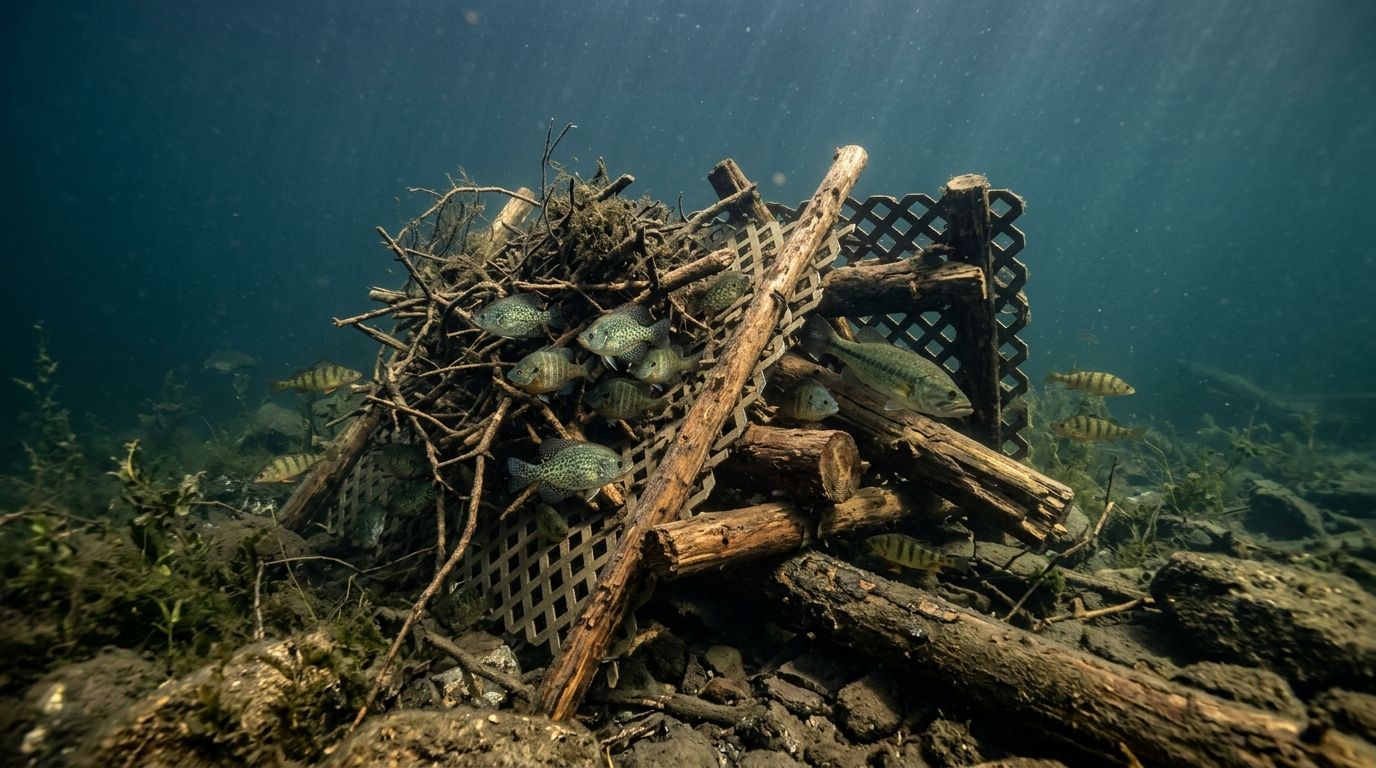
- Density and complexity -- tighter, more intricate limb patterns block predator sightlines better than open frames
- Material durability -- reclaimed PVC holds shape underwater for years; untreated wood and brush break down in a season or two
- Stability on the bottom -- soft koi pond substrate needs either weight or footprint, not a structure that drifts
- Ease of installation -- some owners want to build, others want to sink and walk away
- Coverage footprint -- how much bottom or column space one unit actually shelters
Fish structure kits for koi ponds at a glance
| Kit type | Best for | Standout feature | Key limitation |
|---|---|---|---|
| Shallow water habitat kits | Koi fry shelter and spawning cover | Dense limb structure in the top 2-4 ft | Limited protection in ponds deeper than 4 ft |
| Habitat mats | Soft-mud koi pond bottoms | Lays flat without stakes or anchors | Less vertical cover for adult-size koi |
| Preassembled attractor cribs | Turnkey installation, no build time | Ready to sink the day it arrives | Higher cost per cubic foot of cover |
| DIY component kits | Budget-conscious, custom-sized builds | Reclaimed PVC pieces cut to your pond | Assembly time and basic tools required |
| Mid-depth kits | Adult koi shade and thermal refuge | Positioned 4-6 ft for stable temperatures | Needs a weighted base in wind-driven ponds |
| Deep water kits | Winter refuge in cold-climate ponds | Built for zones past 6 ft | Wasted investment in ponds under 4 ft |
1. Shallow water habitat kits: best fish structure kit for koi fry and spawning cover
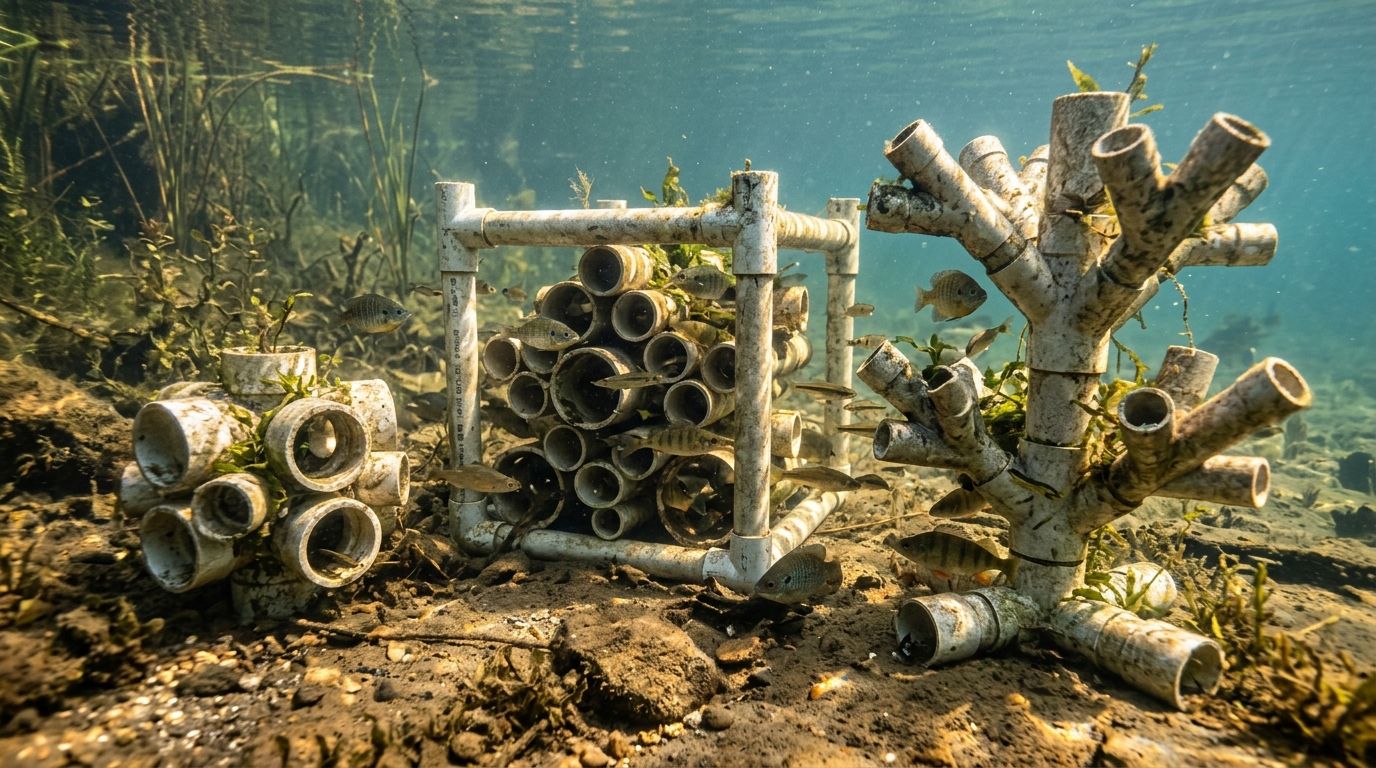
Shallow water habitat kits place dense, branching PVC structure in the top 2 to 4 feet of the pond, right where koi fry hide from adults and where spawning fish look for cover to lay on. The intricate limb pattern breaks up open water so small fish aren't visible from every angle, which underwater footage across multiple ponds has shown reduces exposure compared to bare liner or a single log.
Shallow water habitat kits pros:
- Placed in the zone where fry protection matters most
- Dense branching gives spawning fish substrate to use
- Reclaimed PVC won't rot or waterlog like brush
- Works in nearly any koi pond regardless of overall depth
Shallow water habitat kits cons:
- Offers no thermal refuge if summer heat drives fish deeper
- Needs enough footprint to matter -- one small unit in a large pond does little
Best for: koi ponds prioritizing fry survival and spawning success. Buy.
2. Habitat mats: best fish structure kit for soft-mud koi pond bottoms
Fish habitat mats lie flat on the pond floor instead of standing upright, which matters in koi ponds with soft silt or mud bottoms where a staked crib can sink or tip. The mat format spreads reclaimed PVC strands across a wide footprint, giving small fish and invertebrates cover without any anchoring hardware.
Habitat mats pros:
- No stakes, anchors, or weights needed on soft bottoms
- Wide, low-profile footprint covers more bottom area per unit
- Fast to place -- roll out and sink
- Reclaimed PVC construction holds up in mud and silt long-term
Habitat mats cons:
- Less vertical structure for adult koi looking for mid-water shade
- Can be covered by heavy sediment buildup over multiple seasons
Best for: koi ponds with soft or muddy bottoms that can't hold a staked structure. Buy.
3. Preassembled attractor cribs: best fish structure kit for same-day installation
Preassembled cribs arrive built and ready to sink, which suits koi pond owners who want structure in the water without cutting, assembling, or weighting anything themselves. The crib format packs multiple limb sections into one dense unit, giving concentrated cover in a single footprint.
Preassembled attractor cribs pros:
- No assembly -- unbox and place
- Dense, concentrated cover in one unit
- Consistent structure quality since it ships built
- Good option for owners without tools or time
Preassembled attractor cribs cons:
- Costs more per cubic foot of cover than DIY components
- Fixed size and shape -- can't customize to an odd-shaped pond corner
Best for: owners who want habitat placed the same day it arrives. Buy.
4. DIY component kits: best fish structure kit for custom, budget builds
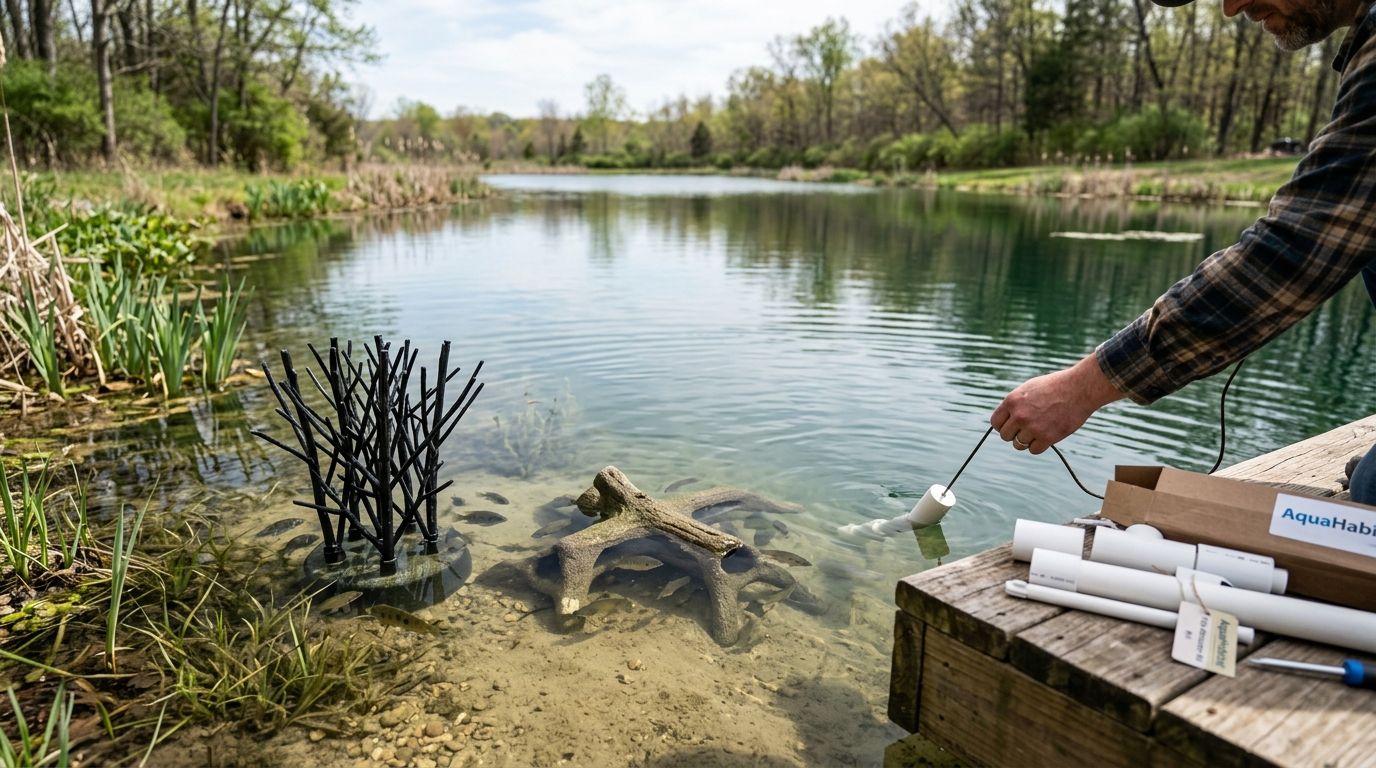
DIY fish habitat kits ship as reclaimed PVC components -- strips, bases, and connectors -- that you assemble and size to your own pond. This route costs less per unit of cover and lets you match structure size to an unusual pond shape or a specific corner that needs shelter.
DIY component kits pros:
- Lower cost per unit of cover than preassembled options
- Fully customizable size and shape
- Good project for pond owners who want hands-on involvement
- Same reclaimed PVC durability as preassembled units
DIY component kits cons:
- Requires assembly time and basic tools
- Inconsistent results if components aren't weighted or spaced correctly
Best for: budget-conscious owners willing to build. Hold -- solid choice if you have the time; skip it if you want structure in the water this weekend.
5. Mid-depth kits: best fish structure kit for adult koi shade and thermal refuge
Mid-depth kits sit in the 4 to 6 foot zone, where water temperature stays more stable through summer heat and adult koi retreat when surface temperatures spike. This zone also gives larger fish cover from aerial predators without competing with the fry-focused shallow zone.
Mid-depth kits pros:
- Gives adult koi thermal refuge separate from the fry zone
- Reduces heron and raccoon predation on larger fish
- Complements shallow kits rather than duplicating their function
- Reclaimed PVC structure holds position at depth
Mid-depth kits cons:
- Needs a weighted or anchored base in ponds with current or wave action
- Only useful in ponds actually built to 4 feet or deeper
Best for: koi ponds 4 feet or deeper looking to protect adult fish. Buy for qualifying pond depths.
6. Deep water kits: best fish structure kit for winter refuge in cold climates
Deep water kits are built for zones past 6 feet, and their main job in a koi pond is winter survival -- giving fish a place to hold below the ice line when surface water gets too cold. In climates with hard freezes, this zone can matter more than any summer shade structure.
Deep water kits pros:
- Purpose-built for winter refuge below the freeze line
- Dense structure gives koi cover during their lowest-activity months
- Reclaimed PVC doesn't degrade in cold water the way brush does
Deep water kits cons:
- Wasted investment in ponds under 4 feet deep
- Only relevant in regions with sustained winter freezes
Best for: cold-climate koi ponds with a dedicated deep zone. Skip if your pond runs shallower than 4 feet; Buy if you're building or already have a winter refuge zone.
How this ranking works
The order above weighs depth-zone match first, then material durability and installation effort -- criteria drawn from documented underwater observations across freshwater ponds and lakes over more than 15 years. A kit that sits in the wrong depth zone doesn't help your koi no matter how dense the structure is, which is why shallow water kits rank first for the fry-and-spawning problem most koi owners actually have in 2026.
Compare koi pond habitat options
Review Fishiding's shallow, mid, and deep water kit types before you order.
Which fish structure kit should you choose?
Start with shallow water fish structures if you're stocking fry or want spawning cover -- that's the default for most backyard koi ponds in 2026. Add habitat mats if your bottom is soft mud that won't hold a staked crib. Move to mid-depth or deep water kits only once your pond is actually built to those depths; buying a deep-water kit for a 3-foot pond wastes the investment.
FAQ
What are the best fish structure kits for koi ponds in 2026?
Shallow water habitat kits rank best overall for fry shelter and spawning cover, with habitat mats best for soft-mud bottoms and preassembled cribs best for same-day installation.
Do koi need artificial fish habitat the way bass or panfish do?
Yes -- documented underwater observations show koi and other freshwater species use dense, intricate habitat structure the same way gamefish do, mainly for cover from predators and shelter for fry.
How deep should fish structure kits be placed in a koi pond?
Match the kit to your pond's actual depth: shallow kits belong in the top 2-4 feet, mid-depth kits in 4-6 feet, and deep water kits past 6 feet for winter refuge.
Are habitat mats better than staked structures for koi ponds?
Habitat mats work better on soft, muddy pond bottoms because they need no stakes or anchors, while staked cribs give more vertical cover on firmer substrate.
Can I build my own koi pond fish structure instead of buying a preassembled kit?
Yes -- DIY component kits use reclaimed PVC pieces you assemble and size to your pond, costing less per unit of cover but requiring build time and basic tools.
Does reclaimed PVC habitat affect koi or water quality?
Fishiding's habitat products use reclaimed PVC that was destined for landfills, built specifically for freshwater ponds, lakes, and reservoirs; check product specifications for your exact setup.
How many fish structure kits does a koi pond need?
Coverage depends on pond size and depth zones you're protecting -- most owners start with shallow water kits for fry cover and add mid-depth or mat coverage as the pond's needs become clear.
Is a preassembled crib better than a DIY kit for a small koi pond?
Preassembled cribs save time since they ship built and ready to sink, while DIY kits cost less and let you size the structure to a small or oddly shaped pond.
One last thing
The most overlooked detail in koi pond habitat planning isn't the kit type -- it's the assumption that koi behave differently underwater than bass or panfish. Fishiding's underwater footage across 15-plus years shows the opposite: every freshwater species documented, koi included, gravitates toward the same dense, intricate structure, which is why the criteria for ranking these kits are depth zone, density, and durability, not species-specific design.