Picking fish structures for shallow water ponds comes down to matching density, depth, and durability to a zone that usually runs 2 to 8 feet deep. Best overall: Fishiding preassembled shallow water attractors. Best for spawning cover: Fishiding habitat mats. Best budget option: Fishiding DIY PVC kits. Crappie stake beds and cut brush piles round out the field as supplemental or short-term options.
- Fishiding preassembled attractors are the top pick for fish structures for shallow water ponds in 2026 because they arrive dense and ready to sink.
- Fishiding habitat mats work best for bluegill and bass spawning cover in water under 4 feet.
- DIY PVC kits cost less per unit and let you set your own density, but take a weekend to build.
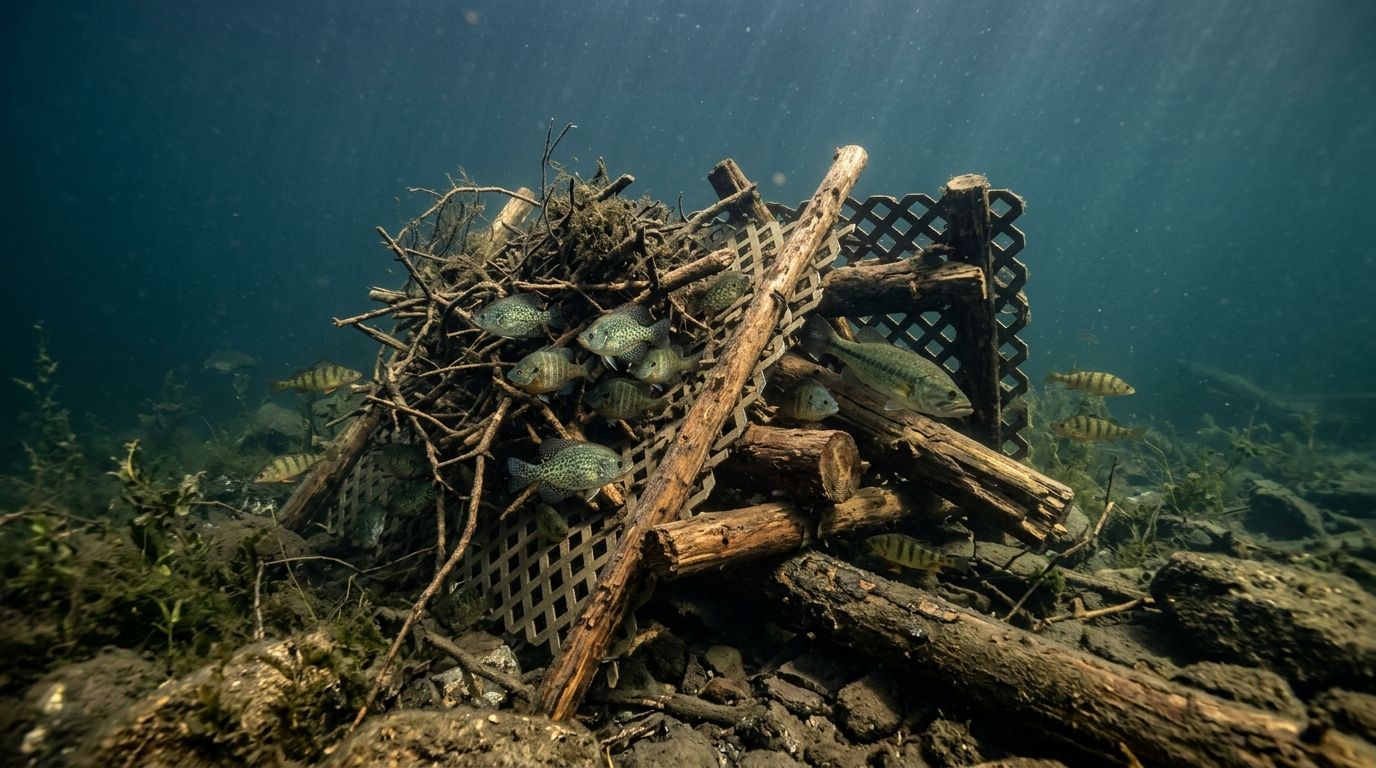
- Wood stake beds and brush piles are cheap short-term fixes that break down within 2 to 4 years.
Why this matters
Shallow water in a pond or small lake does double duty: it's where bluegill and bass spawn, where fry hide from predators, and where forage fish stack up in warmer months. Structure placed there needs to hold its shape and stay dense enough to shelter fish at multiple sizes, not just look good the first season.
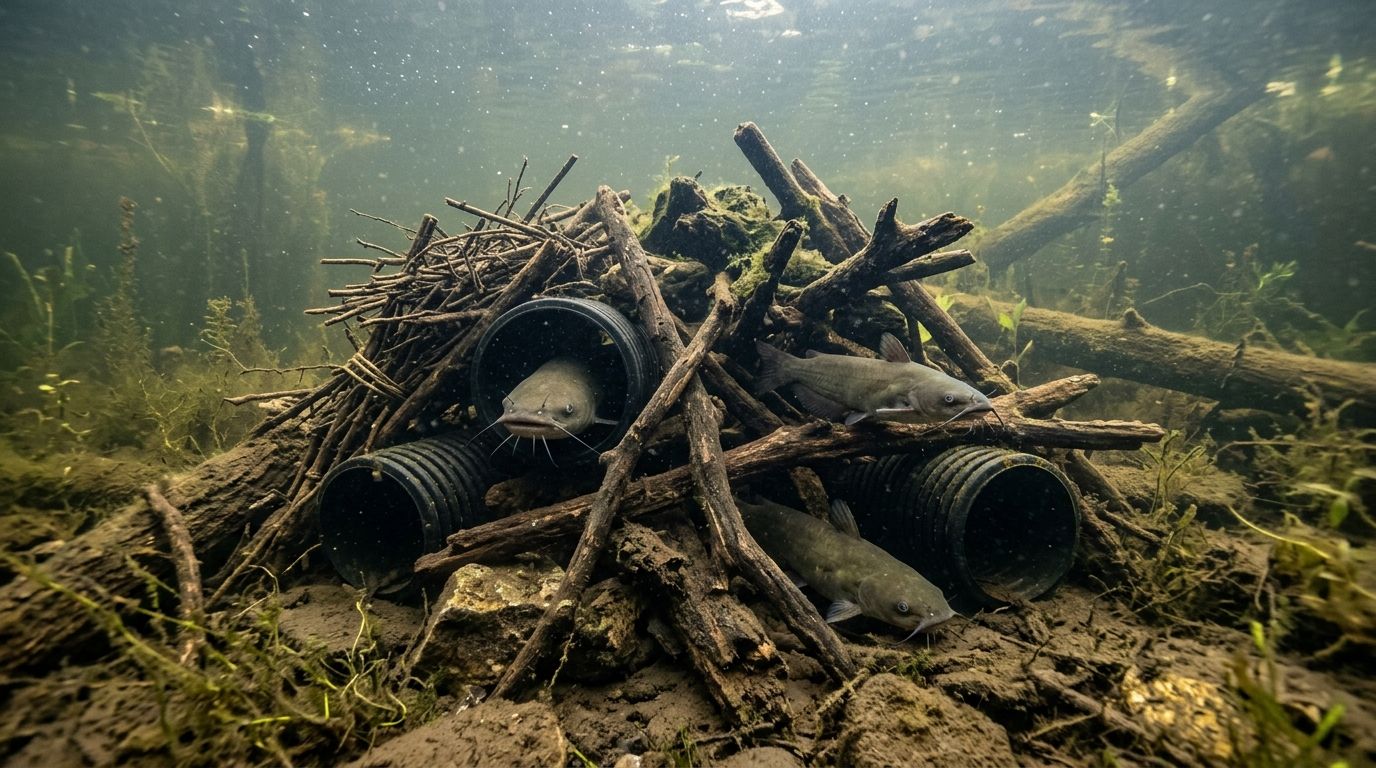
Fishiding builds its shallow, mid, and deep water lines from reclaimed PVC that was headed for a landfill, and more than 15 years of underwater filming shows how bluegill, bass, crappie, and other freshwater species actually use the dense, branching material. That footage is the evidence base behind this ranking, not a guess about what looks like good cover on paper.
What makes the best fish structures for shallow water ponds
- Density and branching variety — a single flat panel does less than a structure with layered limbs at different heights.
- Depth accuracy — shallow water structure needs to sit correctly in 2 to 8 feet without breaching the surface or lying flat.
- Material durability — reclaimed PVC holds its shape for years; wood and cut brush degrade on a faster clock.
- Stability once placed — structure that shifts in wind or current loses its value as cover.
- Installation effort — turnkey units save time; DIY components trade time for lower cost and custom spacing.
- Fit for the target species and life stage — spawning beds, fry cover, and adult ambush cover aren't the same job.
Fish structures for shallow water ponds at a glance
| Structure type | Best for | Standout feature | Key limitation |
|---|---|---|---|
| Fishiding preassembled shallow water attractors | Fast, turnkey installation | Dense, intricate reclaimed PVC documented in years of underwater footage | Heavier per unit; easiest to place from a boat or dock |
| Fishiding habitat mats | Bluegill and bass spawning cover | Low-profile mat holds fry and forage close to bottom | Not built for suspending in the water column |
| Fishiding DIY PVC kits | Budget builds, custom density | You set the size, weight, and spacing per site | Requires assembly time and basic tools |
| Crappie stake beds | Vertical cover in small stocked ponds | Simple, cheap vertical profile crappie relate to | Wood versions degrade within a couple seasons |
| Brush piles (cut trees) | Zero-cost, fast cover | Free material if you have trees on hand | Loses branching detail and breaks down in 2 to 4 years |
Row order below matches this table, starting with the highest overall pick and moving toward supplemental options.
1. Fishiding preassembled shallow water attractors: best for turnkey installation under 8 feet
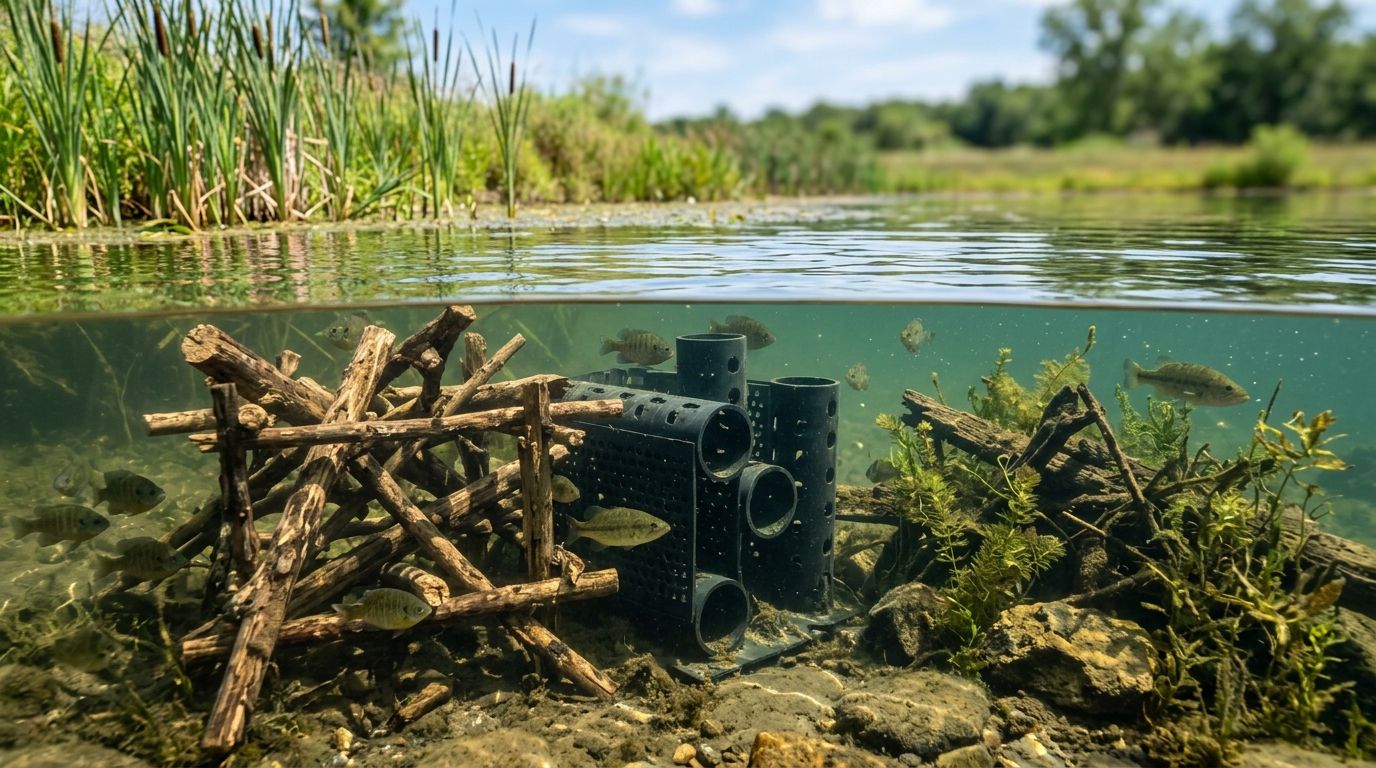
These arrive built and ready to sink, with dense, layered reclaimed PVC fronds sized for the shallow zone. Fishiding documents species use of this exact structure style across thousands of hours of underwater footage collected since before 2011.
Fishiding preassembled attractors pros:
- Arrive ready to place, no build time
- Dense, intricate branching that documented footage shows bluegill, bass, and crappie using at different sizes
- Reclaimed PVC holds shape season after season instead of flattening or rotting
Fishiding preassembled attractors cons:
- Full-size units are heavier to transport than raw components
- Best placed from a boat or dock rather than a shoreline toss
Best for: pond owners who want proven shallow water cover without a build project.
Verdict: Buy.
2. Fishiding habitat mats: best for bluegill and bass spawning cover
Fishiding habitat mats sit low and wide, covering bottom area rather than rising through the water column. That makes them a fit for spawning beds and fry cover in the shallowest part of a pond, typically under 4 feet.
Fishiding habitat mats pros:
- Covers a wide bottom footprint per unit
- Holds fry and forage fish close to bottom, out of open water
- Layers well alongside preassembled attractors for mixed structure
Fishiding habitat mats cons:
- Not designed to give fish a mid-depth column presence
- Works best paired with taller structure rather than standing alone
Best for: pond owners building or protecting a spawning area.
Verdict: Buy.
3. Fishiding DIY PVC kits: best for custom density on a budget
Fishiding DIY PVC kits give you the reclaimed PVC components and let you set the spacing, height, and weight yourself. This is the option for pond owners who want to place more units across more spots without paying for a preassembled unit at every location.
Fishiding DIY PVC kits pros:
- Lower cost per unit than preassembled structure
- Full control over density and placement pattern
- Same reclaimed PVC material base as the preassembled line
Fishiding DIY PVC kits cons:
- Requires a weekend or more of assembly time
- Needs basic tools and a placement plan before you start
Best for: hands-on pond owners covering multiple shallow zones on a budget.
Verdict: Buy for owners with build time; Hold if you need cover in the water this week.
4. Crappie stake beds: best for vertical cover in small stocked ponds
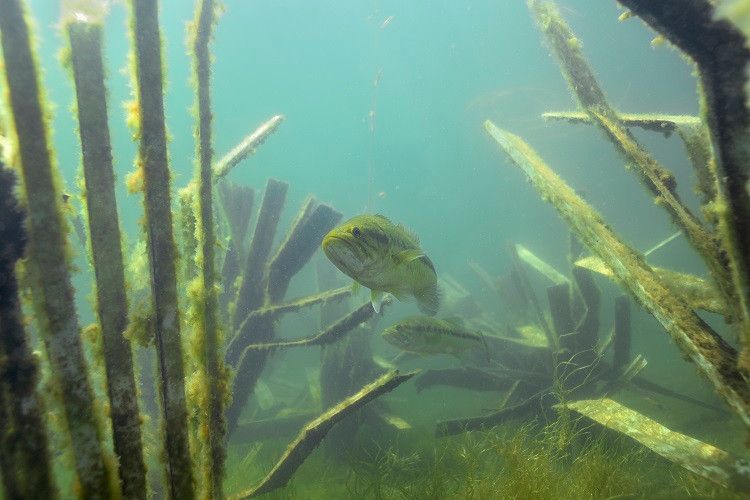
Crappie stake beds are bundles of stakes driven into the bottom to give crappie a vertical profile to relate to. They're a long-standing DIY approach and still show up in small stocked ponds across the Midwest and South.
Crappie stake beds pros:
- Cheap and simple to build with basic materials
- Familiar vertical structure crappie key on
- Fast to install in shallow water
Crappie stake beds cons:
- Wood stakes degrade within a couple seasons and need replacing
- Lacks the branching density other species use for shelter
Best for: supplementing an existing shallow water plan in a stocked crappie pond.
Verdict: Hold. Fine as an add-on, not a standalone shallow water strategy.
5. Brush piles: best for zero-cost cover this season
Cut cedar or hardwood sunk with weights is the oldest trick in pond management, and it still works for a season or two. The tradeoff shows up fast: branches thin out and the pile loses its shelter value well before a reclaimed PVC structure would.
Brush pile pros:
- Free if you have trees to cut
- Fast to place with no assembly
Brush pile cons:
- Breaks down in roughly 2 to 4 years depending on wood type and water temperature
- Needs annual monitoring and eventual replacement
- Loses branching detail as it decays, cutting shelter value over time
Best for: a stopgap while you plan a longer-term shallow water structure program.
Verdict: Skip as a long-term plan; Hold as a short-term fix.
Map your shallow water depth zones
Match habitat density and mat placement to your pond's actual depth profile.
How we ranked these fish structures
Each entry was weighed against the criteria above: density and branching variety, depth accuracy for shallow water, material durability, placement stability, installation effort, and fit for a specific species or life stage. Reclaimed PVC structures rank ahead of wood-based options on durability alone — they don't rot or lose branching detail the way stakes and brush do over a few seasons. DIY kits and preassembled units split the top slots because they solve different problems: time versus cost.
Which fish structure should you choose?
For most pond and small lake owners in 2026, Fishiding preassembled shallow water attractors are the default pick — dense, documented cover that goes in the water without a build project. Add Fishiding habitat mats over a known spawning flat if bluegill and bass reproduction is the goal. Choose DIY PVC kits if you're covering several shallow zones on a tighter budget and have a weekend to spend. Stake beds and brush piles still have a place as supplemental or short-term structure, but neither replaces a planned shallow water program built on reclaimed PVC.
FAQ
What's the best fish structure for a shallow water pond?
A dense, preassembled reclaimed PVC attractor sized for 2 to 8 feet of water is the strongest default choice for 2026, based on years of documented underwater fish use across species.
How deep should shallow water fish structure be placed?
Most shallow water structure works best between 2 and 8 feet, close enough to spawning flats and forage areas while staying below normal boat traffic depth.
Are brush piles as good as PVC fish structure?
Brush piles work as free, fast cover but break down within 2 to 4 years, losing branching detail well before reclaimed PVC structure does.
Do fish habitat mats work for spawning beds?
Yes. Low-profile mats cover wide bottom areas and hold fry and forage fish close to the bottom, which fits bluegill and bass spawning zones better than tall, column-style structure.
Is DIY PVC fish habitat as effective as preassembled units?
DIY PVC kits use the same reclaimed PVC material and can match preassembled density if built correctly, but they require assembly time and a placement plan that preassembled units skip.
How long do wood crappie stake beds last in a pond?
Wood stake beds typically hold up for a couple seasons before the wood softens and needs replacing, shorter than reclaimed PVC structure built for the same shallow zone.
Do all freshwater fish species use the same shallow water structure?
Documented underwater footage shows all freshwater species using dense, intricate habitat, though exact use varies by species, life stage, and season within the same structure.
What material lasts longest for shallow pond fish habitat?
Reclaimed PVC outlasts wood and cut brush in shallow water, holding its branching shape for years instead of breaking down within a few seasons.
One last thing
The detail that surprises most new pond owners: shallow water structure needs replacing on two very different timelines depending on material. Brush and wood stakes are on a 2-to-4-year clock; reclaimed PVC structure documented since before 2011 is still holding its branching shape in Fishiding's underwater footage today. Plan your shallow water program around the material's real lifespan, not just its upfront cost.