Crappie stake beds only work if the stakes stay standing, hold cover long enough for crappie to find them, and reach the depth zone fish actually use across the season. Best overall: PVC pipe stake bed (DIY). Best for no-build convenience: Fishiding preassembled PVC crib. Best budget option: cedar or oak wood stake bed. The rest of this guide breaks down where cinder block grids and bamboo bundles fit, and where each option falls short.
- PVC pipe stake beds (DIY) win overall in 2026 for durability — they don't rot like wood.
- Fishiding preassembled PVC crib is the pick when you want dense habitat in the water without building anything.
- Cedar or oak wood stake beds cost the least but typically break down within three to five years.
- Cinder block anchored stake bed grids fit large reservoir stocking programs better than single-pond builds.
- Bamboo stake beds colonize fast in shallow water but aren't a primary structure for winter holding areas.
Why this matters
Crappie relocate through the water column by season, holding shallow near spawning cover in spring and pushing to deeper standing timber or brush by mid-summer and winter. A stake bed that only covers one depth zone or rots out after two seasons forces you to rebuild right when fish have finally learned where it is.
Reclaimed PVC habitat from Fishiding gets built into this comparison alongside traditional wood and PVC DIY stake beds because pond owners and fisheries managers ask the same question every spring: build it yourself or buy something dense that's ready to sink. Both paths work. The right one depends on how much labor you want to put in and how long you need the structure to hold.
What makes the best crappie stake bed
- Depth versatility — can the structure be built or placed across shallow, mid, and deep water zones as crappie move seasonally
- Material durability — resistance to rot, UV breakdown, and softening in warm freshwater
- Stake density and spacing — enough cover to hold fish without becoming a snag hazard for anglers
- Colonization speed — how fast biofilm, algae, and forage fish move onto the surface
- Stability and anchoring — holding position against current, wind, or reservoir drawdown
- Rebuild burden — how often you're back in the water replacing broken-down material
Crappie stake beds at a glance
| Structure | Best for | Standout feature | Key limitation |
|---|---|---|---|
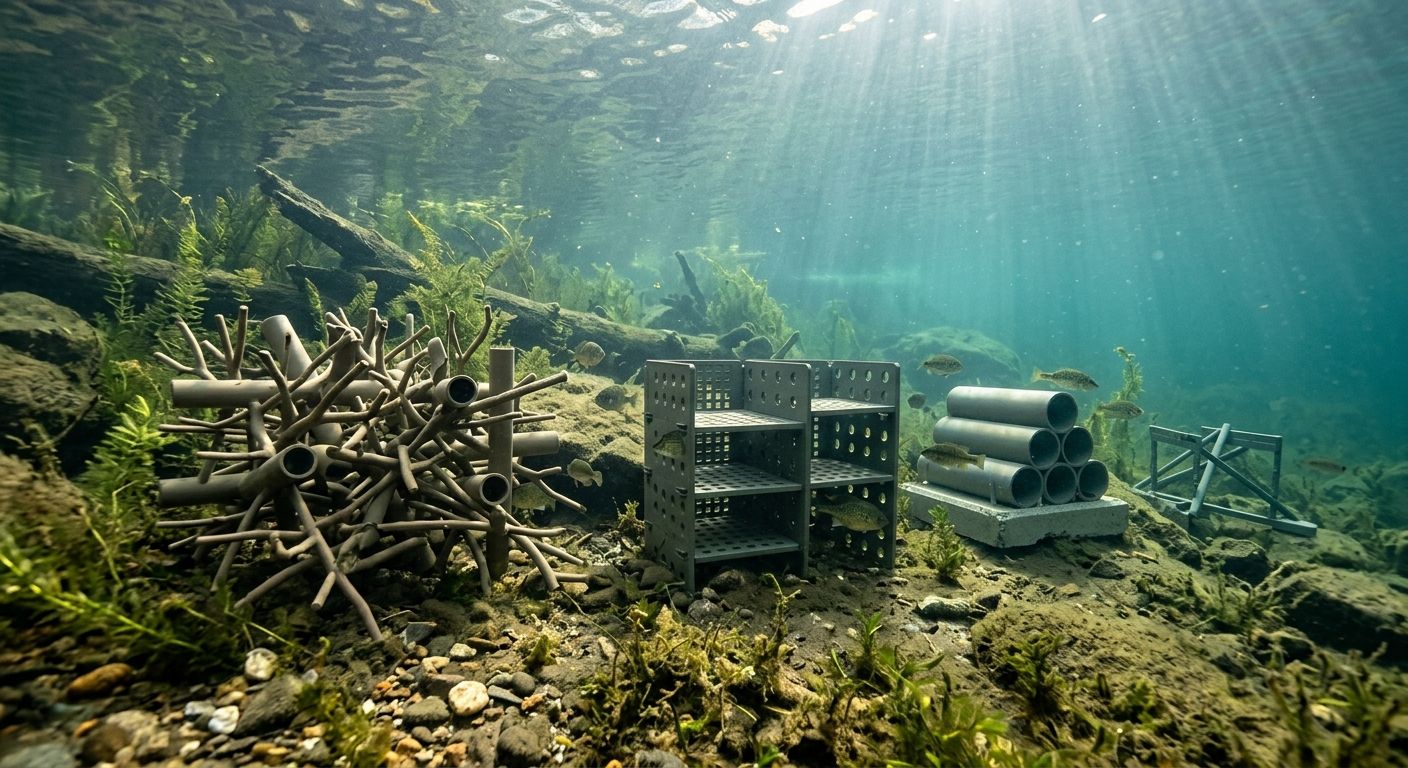
| PVC pipe stake bed (DIY) | Long-term durability | Won't rot; holds its stake profile for years | Smooth surface colonizes slower than wood |
| Fishiding preassembled PVC crib | No-build convenience | Dense, intricate branching documented across 15+ years of underwater footage | Not a literal driven-stake profile |
| Cedar or oak wood stake bed | Budget builds | Low material cost, fast early biofilm growth | Breaks down within a few seasons |
| Cinder block anchored stake bed grid | Large-scale reservoir programs | Standardized grid spacing for mapping habitat across acres | Heavy to transport; wood stakes still decompose |
| Bamboo stake bed | Quick shallow-water colonization | Periphyton growth in weeks, not months | Shallow-only, short usable lifespan |
1. PVC pipe stake bed (DIY): best crappie stake bed for durability
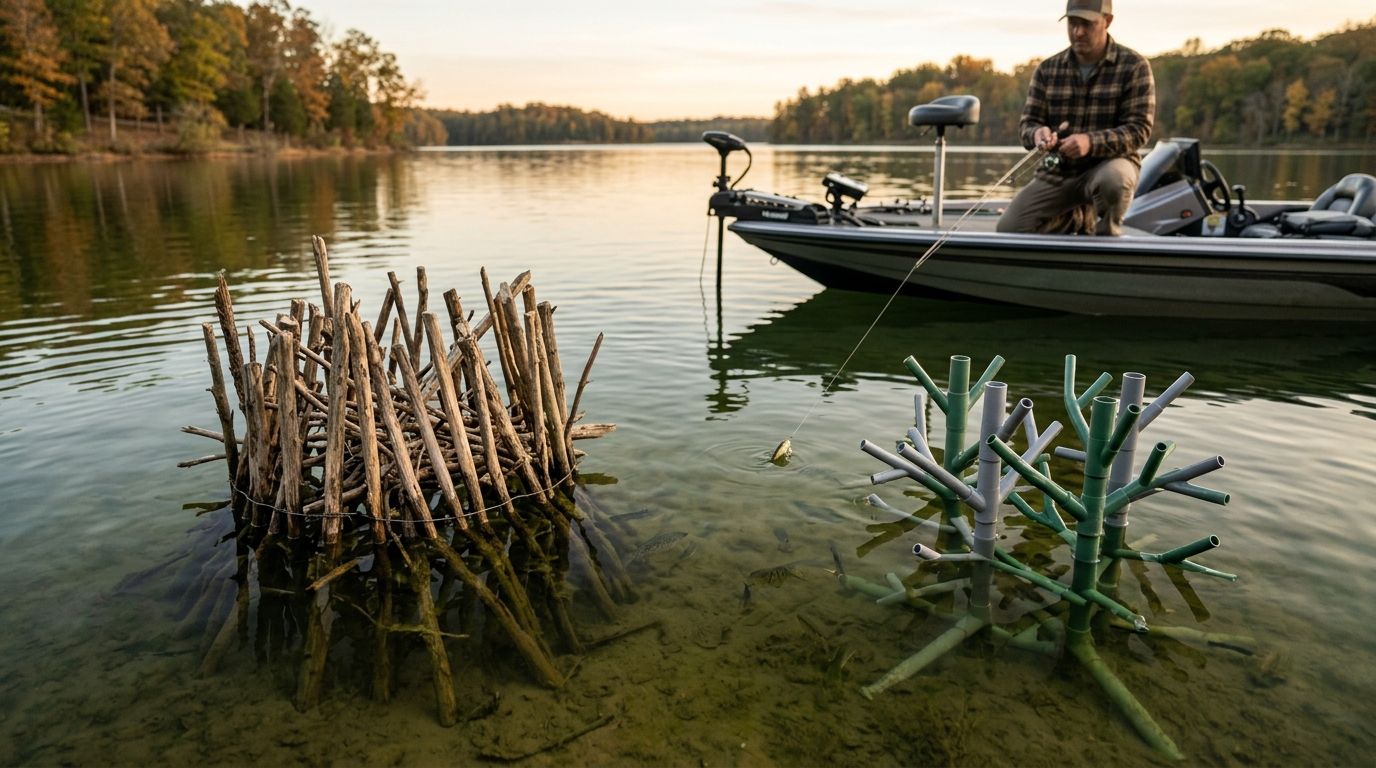
This version replaces wood stakes with lengths of rigid PVC pipe, cut and clustered the same way you'd bundle cedar, then driven or weighted into the bottom. It works across the same 4 to 12 foot depth range crappie use through the season, without the wood's decomposition clock running.
PVC pipe stake bed pros:
- Doesn't rot, so the stake profile stays intact for years instead of seasons
- Cheap material if you're sourcing scrap or offcut pipe
- Holds up in both static ponds and reservoirs with current or drawdown
- Works at any depth zone from spring shallows to winter holding water
PVC pipe stake bed cons:
- Smooth pipe surface grows biofilm and algae slower than bark or wood grain
- Cutting, drilling, and anchoring takes tools and time most DIY builders underestimate
- Uniform pipe diameter gives less texture variation than a natural stake cluster
Best for: anglers and pond owners who want a stake bed that outlasts wood by years without a rebuild.
Verdict: Buy — this is the stake bed to build if you only want to do it once.
2. Fishiding preassembled PVC crib: best crappie stake bed for no-build convenience
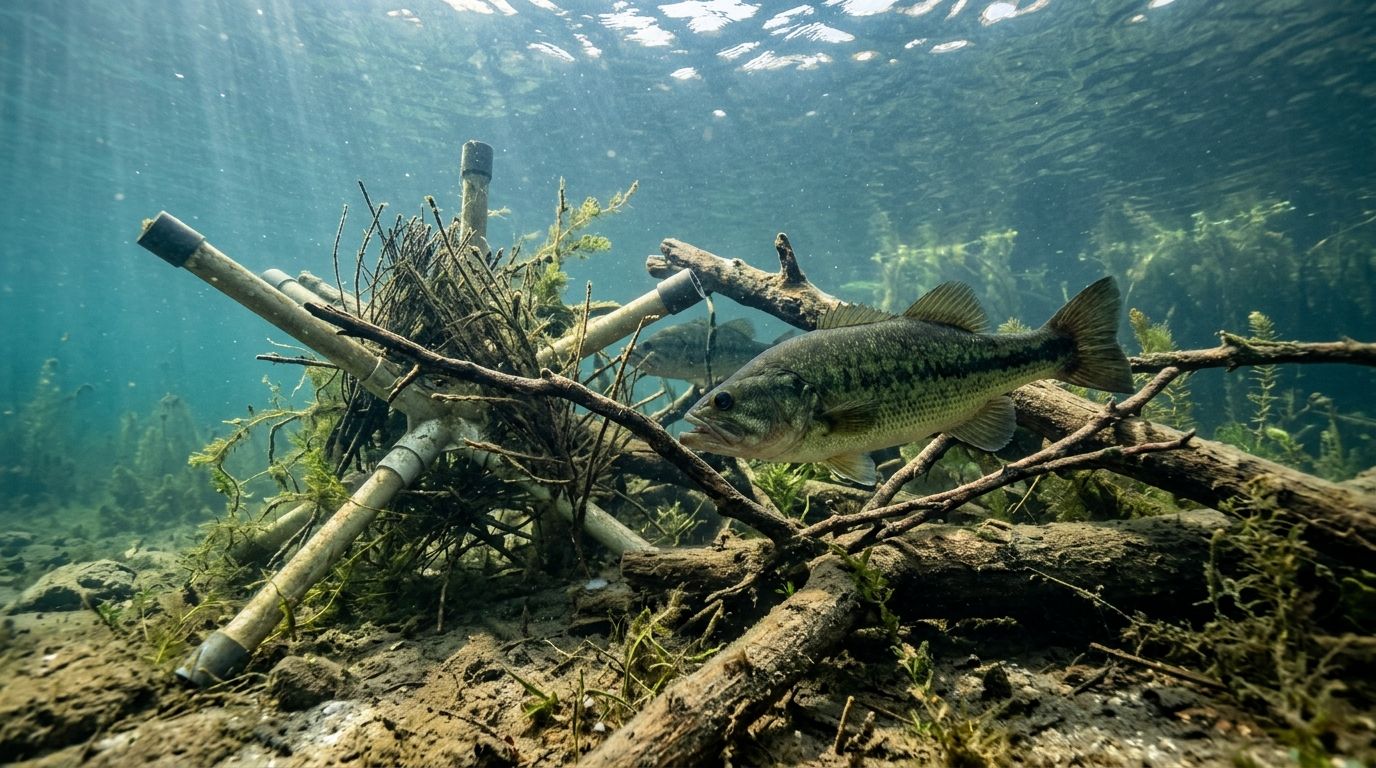
Fishiding builds dense, intricate habitat models from reclaimed PVC that was headed to a landfill, then ships them ready to drop into the water — no cutting, drilling, or driving stakes required. More than 15 years and thousands of hours of underwater filming document freshwater fish, including crappie, using this dense branching structure across the water column, from shallow spawning areas to deeper holding zones.
This isn't a literal stake — it's a manufactured attractor built for the same job a stake bed does: giving fish and forage a place to shelter and feed. For pond owners who don't want to spend a weekend building, it closes the gap between doing nothing and building a full DIY structure.
Fishiding crib pros:
- No build time; the structure arrives dense and ready to place
- Underwater footage shows fish using the intricate profile immediately after placement
- Made from reclaimed PVC, keeping plastic waste out of landfills instead of adding new material
- Available in configurations built for shallow, mid, and deep water placement
Fishiding crib cons:
- It's an attractor, not a literal driven-stake structure, so the vertical profile differs from a true stake bed
- Requires purchasing a manufactured product instead of using free scrap material
- Larger units need a boat and rope to position correctly rather than being hand-driven
Best for: pond and lake owners who want dense fish habitat in the water this season, not next spring.
Verdict: Buy — the right call when your priority is getting cover in the water now. See how it stacks up against other PVC fish habitat structures built from the same reclaimed material.
3. Cedar or oak wood stake bed: best crappie stake bed for budget builds
The traditional build: hardwood stakes, usually cedar or oak, driven into the bottom in a tight cluster, sometimes set in a bucket of concrete for stability. It's the stake bed most pond owners built first, and for good reason — the material is often free or cheap from a local woodlot.
Wood stake bed pros:
- Lowest material cost of any option on this list, especially with local timber
- Bark surface grows algae and biofilm fast, pulling in forage fish within weeks
- Simple to build with a hand drill, hatchet, and rope
Wood stake bed cons:
- Rots and softens in freshwater, typically breaking down within three to five years depending on species and water chemistry
- Stake spacing loosens as the wood degrades, reducing the cover density that made it attractive
- Requires periodic rebuilding to keep the structure functional
Best for: budget-limited builds where you're willing to rebuild every few years.
Verdict: Hold — fine as a starter structure, but plan for a replacement cycle. Compare it against other DIY fish habitat kit options before committing material and labor.
4. Cinder block anchored stake bed grid: best crappie stake bed for large-scale reservoir programs
This approach anchors individual stake bundles to cinder blocks and places them in a mapped grid across a stocked reservoir or large lake. It's built for fisheries managers who need repeatable, GPS-marked habitat density across dozens or hundreds of acres, not a single farm pond.
Cinder block grid pros:
- Standardized spacing makes habitat density easy to map and communicate to anglers or staff
- Blocks keep individual bundles anchored against current or wind-driven water movement
- Scales to cover large stocked water bodies with consistent placement
Cinder block grid cons:
- Heavy and awkward to transport and place in volume; each unit needs boat access
- Still built with wood stakes, so it inherits wood's rot and rebuild timeline
- Overkill for a single small pond where a handful of stake beds does the job
Best for: fisheries managers running structured habitat programs across reservoirs or large public lakes.
Verdict: Hold — right for managed water bodies, not a backyard pond.
5. Bamboo stake bed: best crappie stake bed for quick shallow-water colonization
Bundled bamboo poles, driven or tied together and placed in 2 to 5 feet of water, colonize faster than almost anything else on this list. The segmented surface grows periphyton quickly, which draws in forage fish and, in turn, crappie looking to feed in shallow water during spring.
Bamboo stake bed pros:
- Fast periphyton and algae growth attracts forage activity within weeks
- Lightweight poles are easy to bundle, transport, and place by hand
- Low material cost where bamboo is locally available
Bamboo stake bed cons:
- Breaks down faster than hardwood in warm freshwater
- Shallow placement limits usefulness mostly to spring and early summer behavior
- Not suited as a primary structure for deep winter holding water
Best for: a seasonal, shallow-water supplement to a deeper primary structure.
Verdict: Wait — build this alongside a longer-lasting structure, not instead of one.
“A stake bed that rots through in three years is a habitat you'll rebuild before the crappie even find it.”
How we ranked these
Ranking here comes down to four criteria pulled straight from the list above: durability against rot, how fast the structure colonizes with forage and biofilm, whether it covers the depth zones crappie actually use through the season, and how much rebuild labor it demands over time. PVC-based options, whether DIY pipe or a preassembled crib like Fishiding's, score highest on durability and depth versatility. Wood and bamboo score higher on speed of early colonization but lose points on rebuild burden.
Compare crappie habitat options
See preassembled PVC crib and attractor configurations for every depth zone.
Which crappie stake bed should you choose?
If you're building once and want it to last through 2026 and beyond without a rebuild, build a PVC pipe stake bed or place a preassembled PVC crib. If labor is the constraint and you want dense cover in the water this season, the Fishiding preassembled crib skips the build entirely. If budget is the only constraint and you don't mind rebuilding every few years, cedar or oak stakes still work — just plan the replacement cycle into your maintenance schedule. See how crappie-specific structures compare directly on the crappie habitat structures page before you commit to a build.
FAQ
What is a crappie stake bed?
A crappie stake bed is a cluster of vertical stakes, traditionally cedar or oak, driven or anchored into a pond or lake bottom to create cover crappie use for shelter and ambush feeding. PVC pipe and preassembled attractors now serve the same function without wood's decomposition timeline.
Are PVC stake beds better than wood for crappie in 2026?
PVC lasts longer than wood, which typically breaks down within three to five years in freshwater. Wood colonizes with algae and biofilm faster early on, so the tradeoff is longevity versus initial colonization speed.
How deep should crappie stake beds be placed?
Crappie stake beds work best when placed across multiple depth zones, from 2 to 5 feet for spring spawning cover up to 8 to 12 feet for summer and winter holding water. A single depth zone only covers part of the crappie's seasonal movement.
How many stakes go into a single crappie stake bed?
Most stake beds use a bundle of a dozen or more stakes clustered tightly enough to create cover without becoming a solid mass fish can't move through. Density matters more than an exact count.
Do stake beds work better than brush piles for crappie?
Stake beds and brush piles both hold crappie, but stake beds generally last longer since brush breaks down faster and loses its branching structure sooner. Combining both types of cover across a pond gives fish more variety.
How long do wood stake beds last underwater?
Cedar and oak stake beds typically hold up for three to five years in most freshwater ponds before the wood softens and the structure loosens. Softwoods break down faster than hardwoods in warm water.
Is Fishiding habitat the same as a stake bed?
No. Fishiding builds dense, intricate preassembled attractors from reclaimed PVC rather than driven stakes, but it serves the same purpose of giving fish shelter and forage structure. Underwater footage documents freshwater species using the branching profile the same way they use a stake bed.
Can stake beds be used in reservoirs as well as ponds?
Yes, stake beds work in reservoirs, though large-scale programs often anchor bundles to cinder blocks in a mapped grid to handle current, drawdown, and larger surface area than a farm pond.
One last thing
Most pond owners build one stake bed and stop, but crappie move through the water column by season, so a single structure only covers part of the year. Placing two or three stake beds at different depths, whether wood, PVC, or a preassembled PVC crib, gives crappie shelter whether they're shallow on the spawn or holding deep in July 2026 heat.