Freshwater fish attractor kits fall apart at different speeds once they hit the water, and picking the wrong material means redoing the work in three years instead of thirty. This guide ranks six attractor and crib types by how long they hold shape, density, and fish use across ponds, lakes, and reservoirs in 2026.
- Reclaimed PVC attractors and cribs from Fishiding win fish attractor kits ranked by durability for build-once habitat that holds shape for years.
- Fishiding habitat mats are best for shallow bluegill and panfish spawning-bed cover.
- PVC pipe DIY kits are the budget pick for owners willing to build their own structure.
- Concrete block cribs handle current and ice better than any lighter structure but carry less branching density.
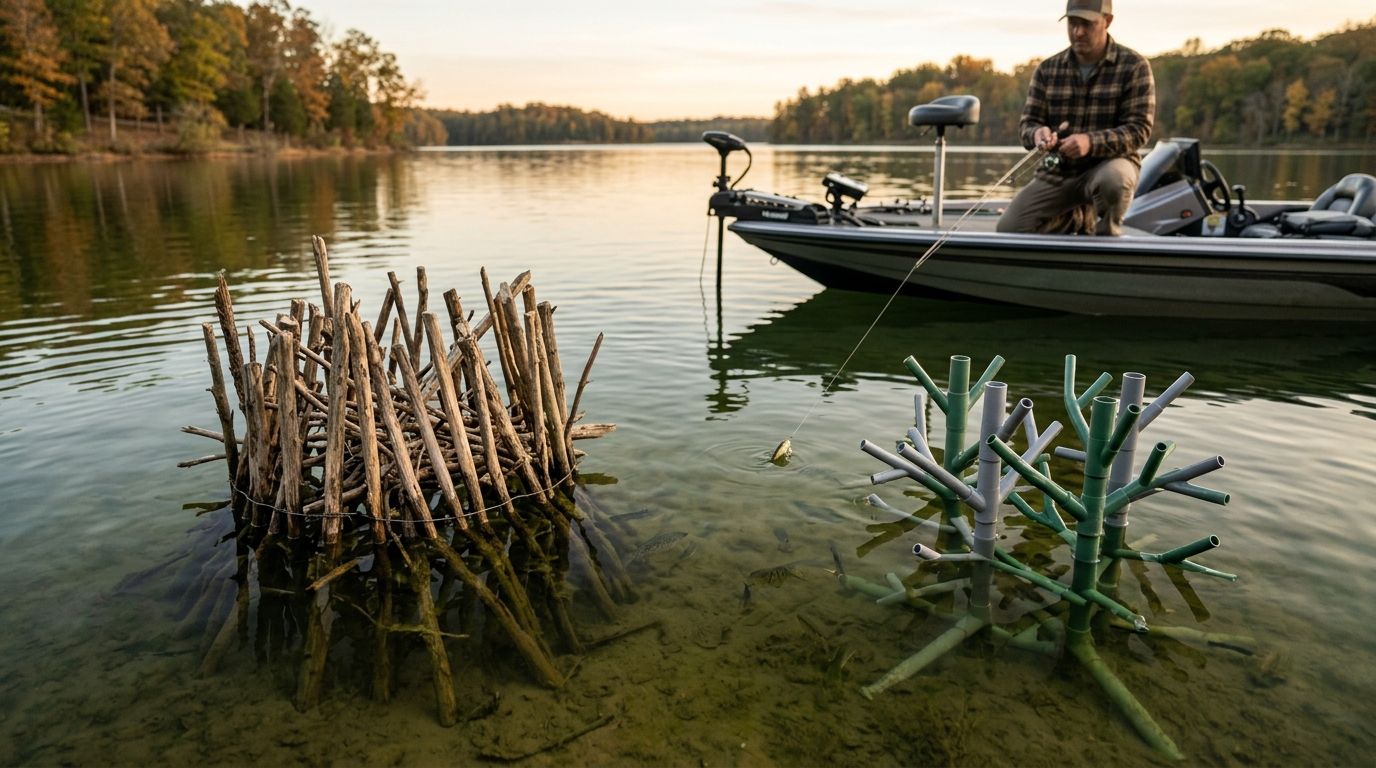
- Cedar brush piles give fast, cheap first-season cover but flatten within a few years in freshwater.
Why this matters
A fish attractor kit that degrades in two seasons costs you the same install labor as one that lasts twenty years, just repeated over and over. Reclaimed PVC fish habitat doesn't rot or rust the way wood and untreated metal do, and that single fact changes how often you're back in the boat replacing structure. Durability isn't just about the material outlasting weather; it's about whether the dense, intricate shape that draws fish in still holds together after five winters underwater.
Pond owners, lake associations, and fisheries managers all face the same tradeoff: cheap and fast versus built to last. This ranking sorts six common attractor approaches by what actually happens to them underwater over multiple seasons in freshwater, not by sticker price.
What makes the best fish attractor kit
- Rot and UV resistance — how the material holds up against constant water exposure and, for shallow placements, sun.
- Density and intricacy — branch count and layered geometry that give fish and forage species places to shelter and forage.
- Depth versatility — whether the design works across shallow, mid, and deep zones or is limited to one.
- Anchoring and stability — resistance to current, wave action, and ice shove without shifting or collapsing.
- Installation effort relative to lifespan — how much labor you're trading for how many years of service.
- Documented fish use over time — whether underwater observation across multiple seasons backs up the design.
Fish attractor kits ranked by durability: at a glance
| Kit type | Best for | Standout feature | Key limitation |
|---|---|---|---|
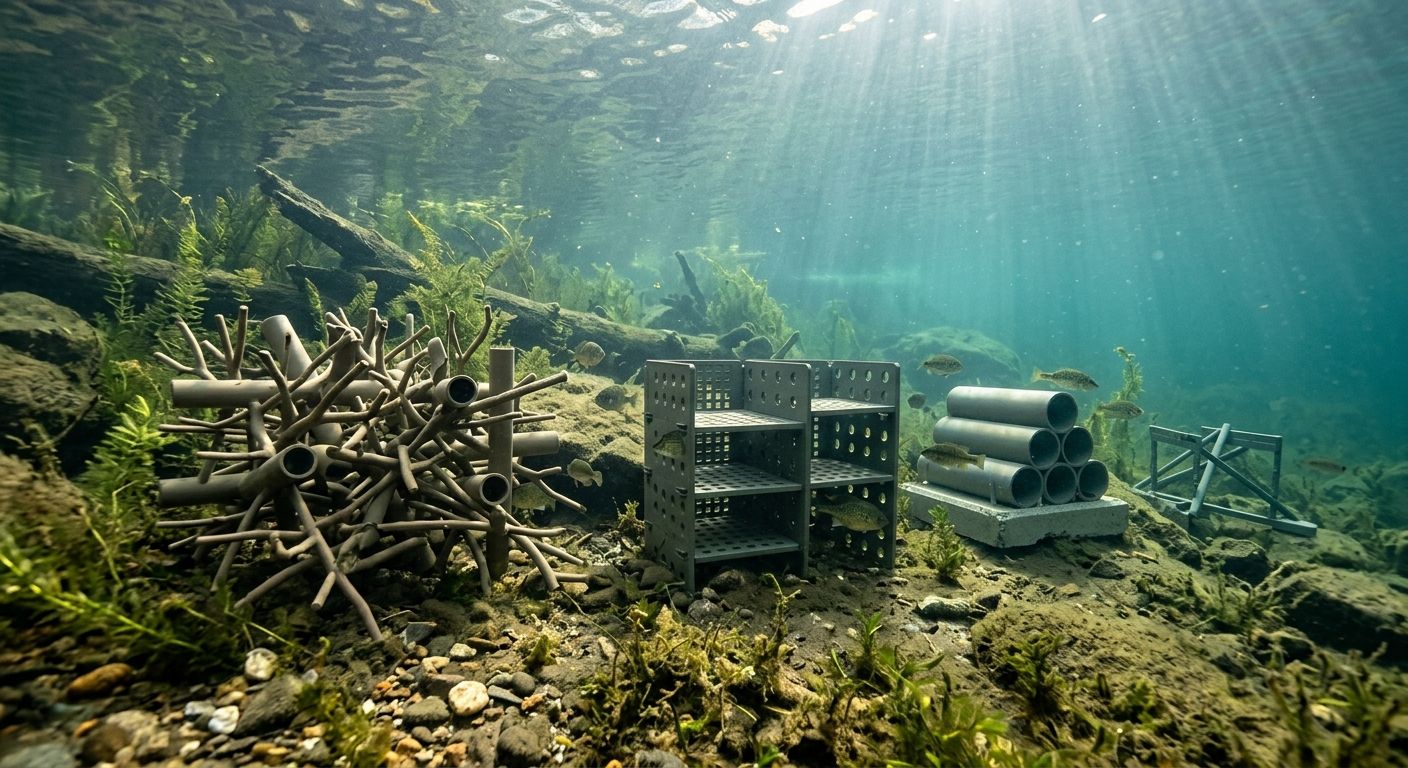
| Reclaimed PVC attractors and cribs | Build-once, multi-season habitat | Dense, intricate branching that doesn't rot | Preassembled units are heavier to handle and place |
| Reclaimed PVC habitat mats | Shallow bluegill/panfish spawning cover | Low profile fits skinny water | Not built for deep basin placement |
| PVC pipe DIY kits | Budget-conscious builders | Owner controls size and shape | Build quality depends on time invested |
| Concrete block fish cribs | High-current, wave-exposed water | Extremely stable shell | Minimal branching compared to PVC habitat |
| Cedar and hardwood brush piles | Fast, low-cost first-season cover | Cheap, familiar, quick to sink | Loses bark and twigs within a few years |
| Fallen and standing natural timber | Reservoirs with existing flooded timber | No material cost | Durability unpredictable, can't be added on demand |
1. Reclaimed PVC preassembled attractors and cribs: best fish attractor kit for build-once durability
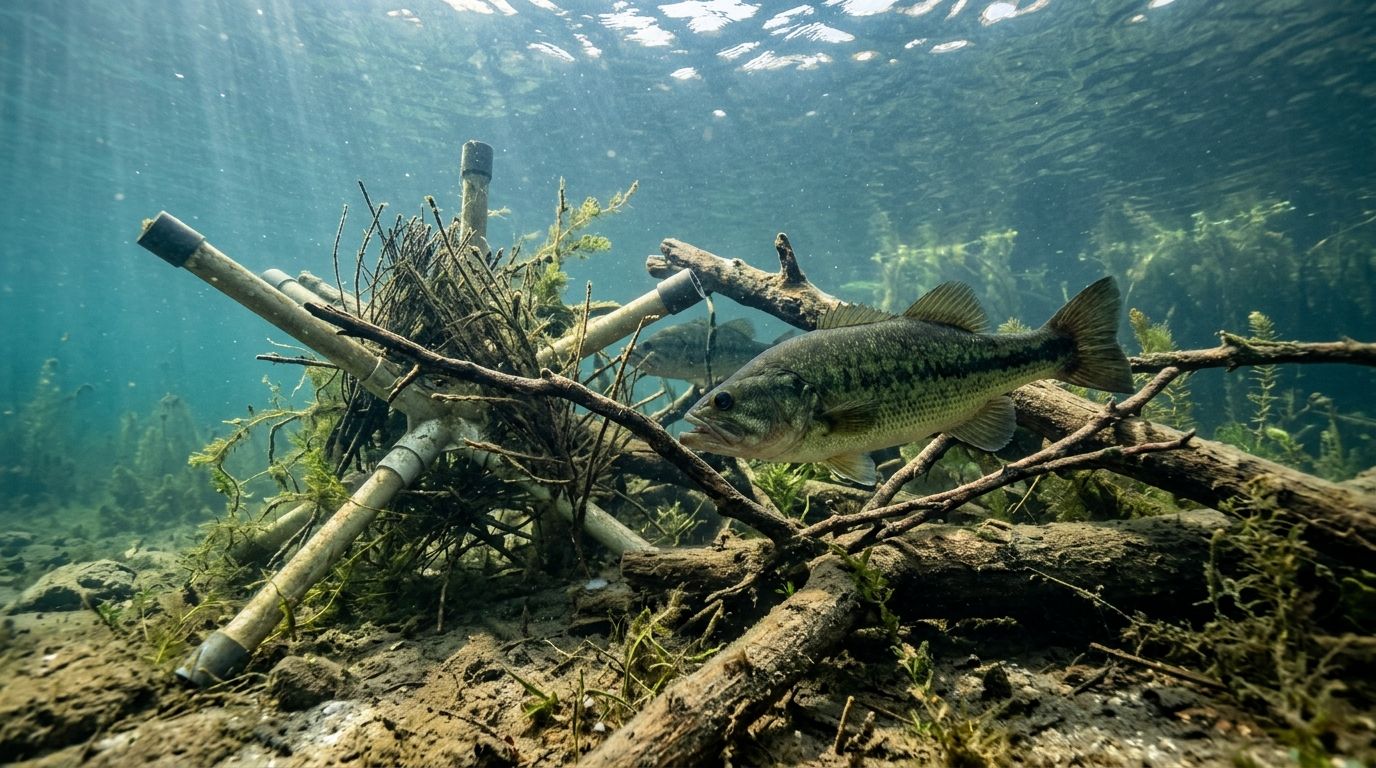
These units are made from reclaimed PVC strips that were headed for a landfill, assembled into dense, layered structures and shipped ready to sink at a chosen depth. Underwater filming spanning more than 15 years shows the branching hold its shape season after season, unlike wood-based structures placed in the same lakes.
Reclaimed PVC attractor pros:
- Doesn't rot, rust, or break down in freshwater the way wood and untreated metal do
- Dense, intricate shape gives shelter and forage cover across the water column
- Documented underwater use across multiple seasons and species
- Diverts plastic destined for landfills into working fish habitat
Reclaimed PVC attractor cons:
- Preassembled units are bulkier to transport and place than a bundle of pipe or brush
- Less hands-on customization than a from-scratch DIY build
- Still needs proper anchoring in strong current, same as any structure
Best for: pond and lake owners who want to place structure once and not revisit it for years. Verdict: Buy.
2. Reclaimed PVC habitat mats: best fish attractor kit for shallow spawning cover
Habitat mats use the same reclaimed PVC material as the attractors and cribs but in a lower-profile format built for shallow water. They're designed for bluegill and panfish spawning beds and fry cover where a tall structure doesn't fit the depth.
Habitat mat pros:
- Low profile works in skinny water where taller attractors don't fit
- Same rot-resistant reclaimed PVC as the full attractors
- Layer multiple mats to build out coverage gradually
- Gives fry and forage fish dense cover close to shore
Habitat mat cons:
- Not sized for deep basin placement
- Needs weighting or anchoring in wind-exposed shallow zones
- Coverage per mat is smaller than a full attractor unit, so you need several for real coverage
Best for: bluegill and panfish spawning-bed structure in shallow water. Verdict: Buy.
3. PVC pipe DIY attractor kits: best fish attractor kit for budget builders
Owner-built structures use slit or drilled PVC pipe assembled into a frame with a weighted base. Material cost is low because you're supplying the labor and the design.
PVC pipe DIY pros:
- Lowest material cost of any PVC-based option
- Fully customizable size and shape for your specific pond
- Can be built gradually across a season instead of all at once
PVC pipe DIY cons:
- Build quality varies a lot depending on time and tools invested
- Branching density is typically lower than a preassembled unit unless you build dense on purpose
- Requires separate anchoring hardware, cutting tools, and assembly time
A well-built DIY fish habitat kit can rival preassembled durability if you invest the time, but a rushed build won't.
Best for: budget-conscious owners willing to assemble their own habitat. Verdict: Buy.
4. Concrete block fish cribs: best fish attractor kit for high-current water
Cinderblock or poured concrete frames stacked with rebar or wood lattice create heavy, stable cover. The concrete shell itself resists current, wave action, and ice shove better than any lighter structure.
Concrete crib pros:
- Extremely stable in current-exposed or wave-exposed reservoirs
- Resists ice shove that can move lighter structures
- Long service life for the concrete shell itself
Concrete crib cons:
- Minimal branching or intricacy compared to dense PVC habitat, so less shelter surface area
- Heavy to transport and place, often requiring equipment
- Wood lattice components inside the crib still decompose over a few years
Best for: high-current or wave-exposed reservoir zones where lighter structures shift or drift. Verdict: Hold — stable, but plan on adding denser habitat inside or around it.
5. Cedar and hardwood brush piles: best fish attractor kit for fast first-season cover
Cut trees or brush bundled and sunk with concrete or cinderblock anchors give immediate cover the first season, often using material already on hand.
Brush pile pros:
- Fast to build with material that's often free
- Familiar approach for most pond and lake owners
- Immediate cover the first season after placement
Brush pile cons:
- Branches lose bark and small twigs within a few years in freshwater
- Structure flattens and loses density as wood decomposes
- Needs replacement on a repeating cycle, unlike a one-time PVC install
Best for: fast, low-cost cover while a longer-term habitat plan gets built out. Verdict: Hold — fine as a short-term bridge, not a long-term plan.
6. Fallen and standing natural timber: best fish attractor kit for reservoirs with existing timber
Some reservoirs already have standing or fallen timber left in place from flooding. Large fish use standing timber for structure, and it costs nothing to add because it's already there.
Natural timber pros:
- No material cost since it's existing structure
- Common in flooded-timber reservoirs
- Large fish are documented using standing timber for cover
Natural timber cons:
- Durability depends entirely on wood species and local water chemistry
- Can't be added on demand where it doesn't already exist
- No control over density, spacing, or placement
Best for: large reservoirs that already have flooded timber rather than new installations. Verdict: Hold — use what's there, but don't count on it as a new-build plan.
How we ranked these
Reclaimed PVC habitat scored highest on rot resistance and branching density, the two factors that most directly separate structures that last from ones you'll rebuild. Concrete cribs scored high on physical stability against current and ice but low on density, since a concrete frame alone doesn't offer much shelter surface. Brush piles and natural timber scored lowest on lifespan because wood decomposition in freshwater is steady and unavoidable, regardless of species.
Compare habitat by depth zone
Browse preassembled attractors, cribs, and mats for shallow, mid, and deep water.
Which fish attractor kit should you choose?
If you want to place structure once and not think about it again for years, reclaimed PVC attractors and cribs win fish attractor kits ranked by durability in 2026. Add reclaimed PVC habitat mats for shallow spawning zones alongside your deeper attractors. Reach for concrete cribs only where current or ice makes lighter structures shift, and treat brush piles as a short-term fix rather than a finished plan.
FAQ
What's the most durable fish attractor material for freshwater ponds?
Reclaimed PVC holds up longest because it doesn't rot or rust in freshwater, unlike wood or untreated metal structures. Underwater footage collected over more than 15 years shows PVC branching keeping its shape while nearby wood cover breaks down.
How long do PVC fish attractors last underwater?
Reclaimed PVC attractors are built to hold their dense, intricate shape for years without the material degrading the way wood does. Exact lifespan varies by water body, but the material itself resists the rot and UV breakdown that limits wood and brush.
How long do cedar brush piles last before they need replacing?
Cedar and hardwood brush piles typically lose bark and small branches within a few years in freshwater and flatten as the wood decomposes. Plan on rebuilding brush piles on a repeating cycle rather than treating them as permanent.
Are concrete fish cribs better than PVC attractors?
Concrete cribs are more stable in high-current or ice-prone water, but they offer far less branching density than reclaimed PVC habitat. Many owners use concrete for stability and add denser PVC structure inside or around it.
Can I mix attractor types in one pond?
Yes, mixing types across depth zones is common practice. Use dense PVC attractors mid to deep, PVC habitat mats in shallow spawning areas, and concrete cribs only where current demands extra stability.
How deep should fish attractor kits be placed?
Placement depends on the kit's design: habitat mats are built for shallow water near spawning zones, while attractors and cribs work across shallow, mid, and deep placements. Match the structure type to the depth zone rather than placing everything at one depth.
Do all fish species use the same attractor structure?
Underwater observations show all freshwater fish species use dense, intricate habitat structures, though specific use varies by species, life stage, and season. Bass, panfish, and crappie may favor different depths or densities within the same pond.
What's the difference between a fish crib and a fish attractor?
A fish crib is typically a framed structure, often concrete or wood-based, built for stability in current or wave-exposed water. An attractor is a broader term covering any structure, including dense PVC units, placed to concentrate fish activity.
One last thing
Underwater footage collected across more than 15 years and thousands of hours shows a pattern that surprises most first-time pond owners: brush piles placed in the same lake as reclaimed PVC structures lose their branch density within a handful of seasons, while the PVC keeps its shape and keeps drawing fish year after year. Durability isn't a marketing line here, it's what the footage shows side by side.