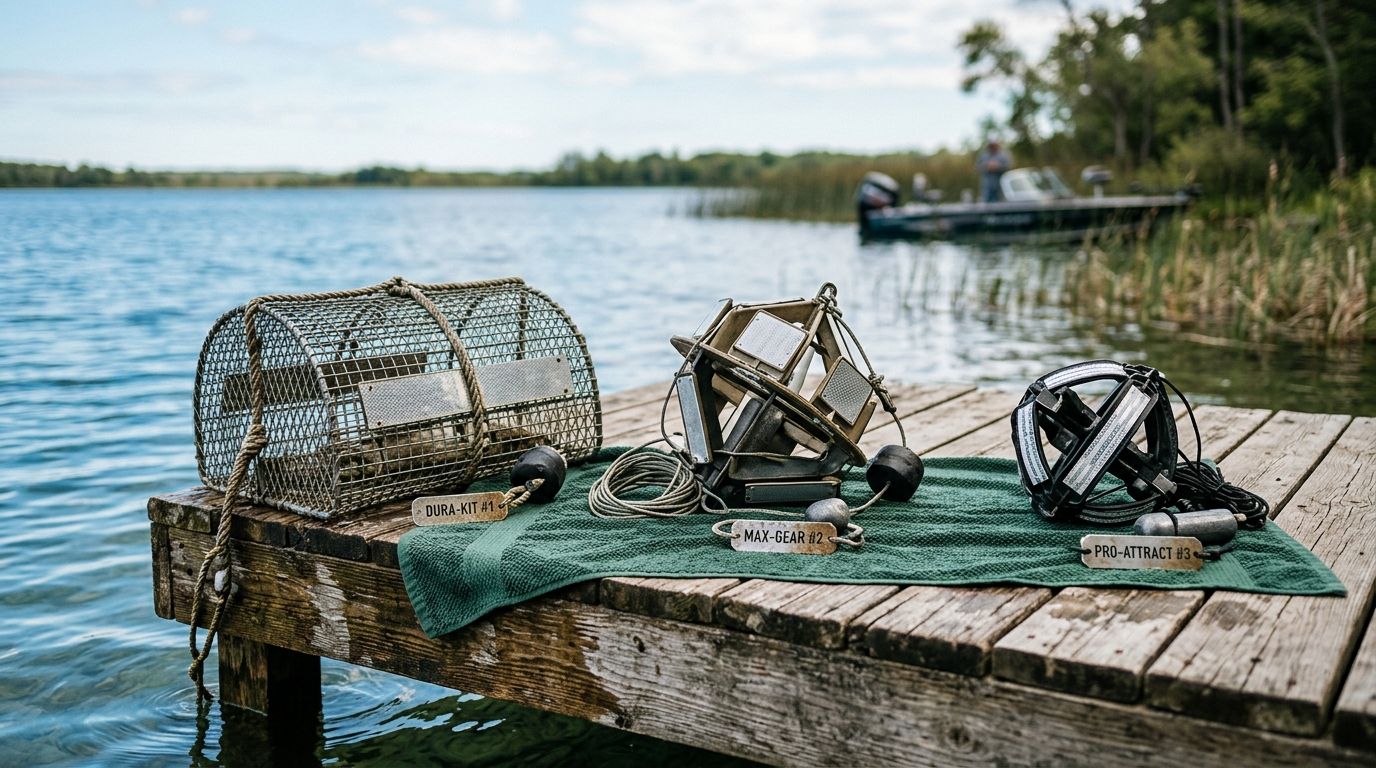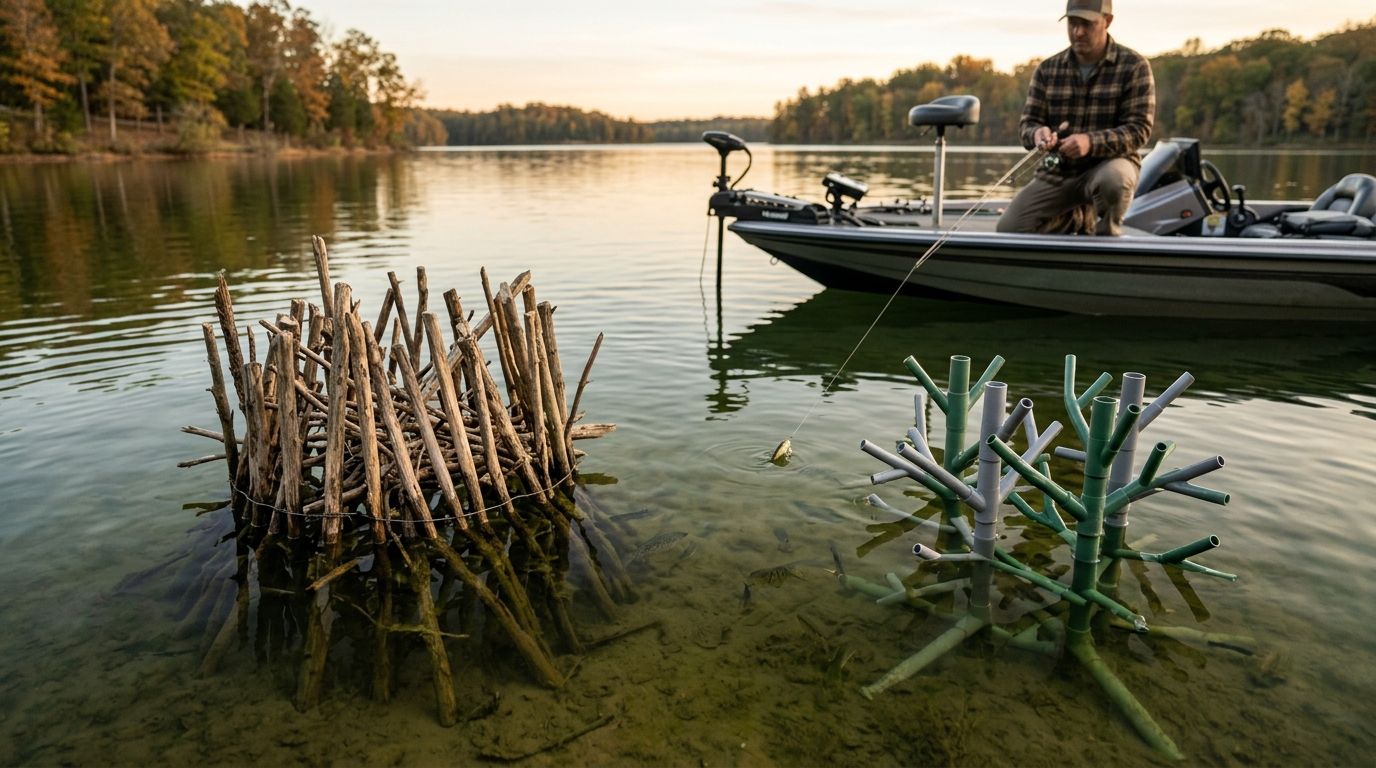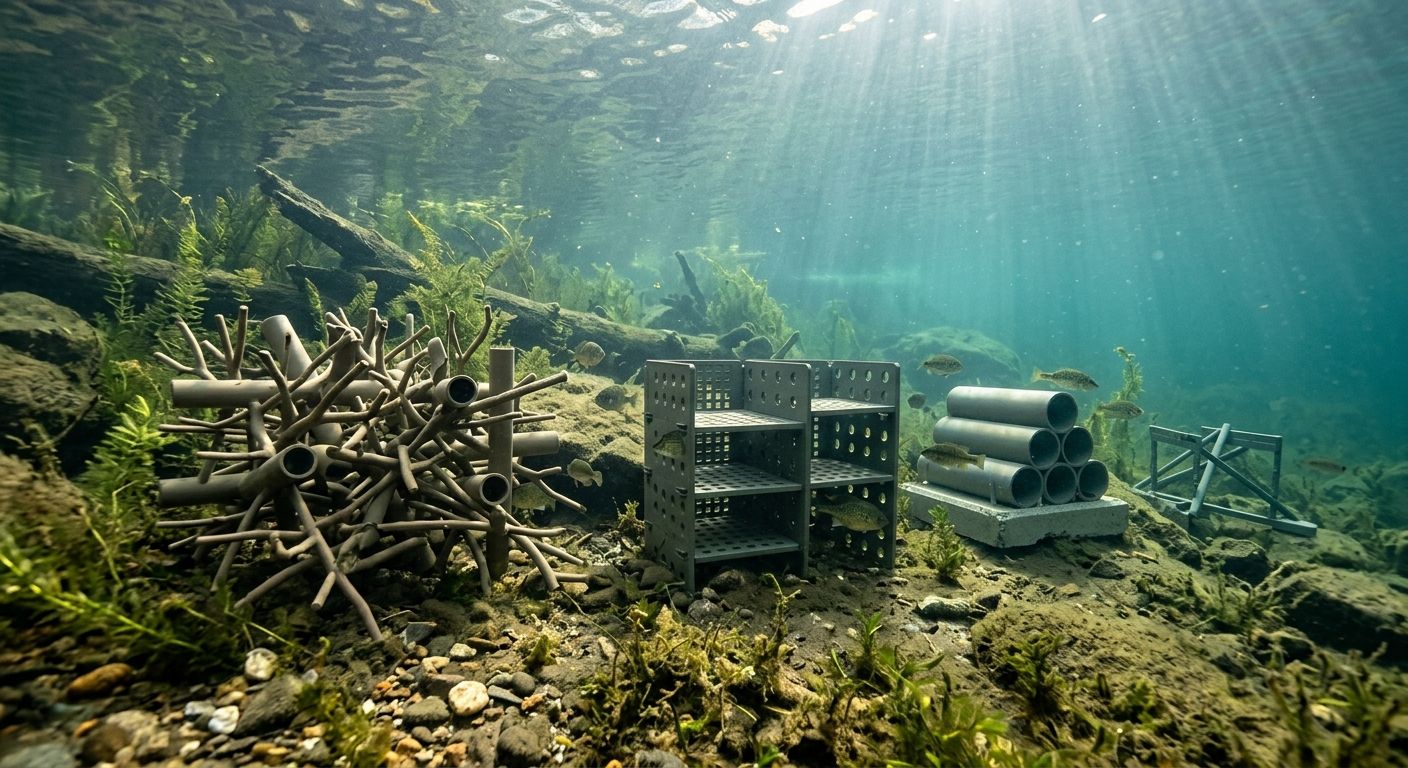
Choosing between DIY PVC components, habitat mats, preassembled attractors, fish cribs, and deep-water kits usually comes down to budget and how much assembly time you want to put in before the ice comes off in 2026. This guide ranks fish structure kits from lowest investment to highest so you can match the tier to your pond, lake, or reservoir project without overspending on structure your fish population doesn't need yet.
- DIY PVC components sit at the lowest price tier and work best for pond owners building their own fish structure kits.
- Habitat mats cost more than raw components but install faster for shallow-water spawning habitat.
- Preassembled attractors from Fishiding save assembly time for panfish ponds that need structure placed this season.
- Fish cribs rank mid-to-upper tier and suit farm pond stocking programs that need bulk coverage.
- Deep-water kits sit at the top of the price range for reservoirs and fisheries managers targeting basin structure.
Why this matters
Most buying guides for fish structure kits compare brands. This one compares tiers, because the real decision for pond owners and fisheries managers in 2026 is how much structure you can afford per acre, not which company sells it.
A single fish crib and a full mat installation solve different problems. Skip the wrong tier and you either underspend on coverage or overspend on assembly labor you didn't need. Fishiding builds every tier from reclaimed PVC destined for landfills, so the material cost logic stays consistent across the range even as assembly and density go up.
What makes the best fish structure kit
- Density and intricacy – tighter, more varied branching gives fish and forage species more places to shelter and forage in the same footprint.
- Depth targeting – shallow spawning habitat, mid-depth cover, and deep basin structure each need different rigging and weight.
- Assembly time – raw components take longer to build than preassembled attractors or cribs.
- Material durability – reclaimed PVC resists the breakdown that turns brush piles into silt within a few seasons.
- Coverage per unit – how much bottom area or water column a single kit actually fills.
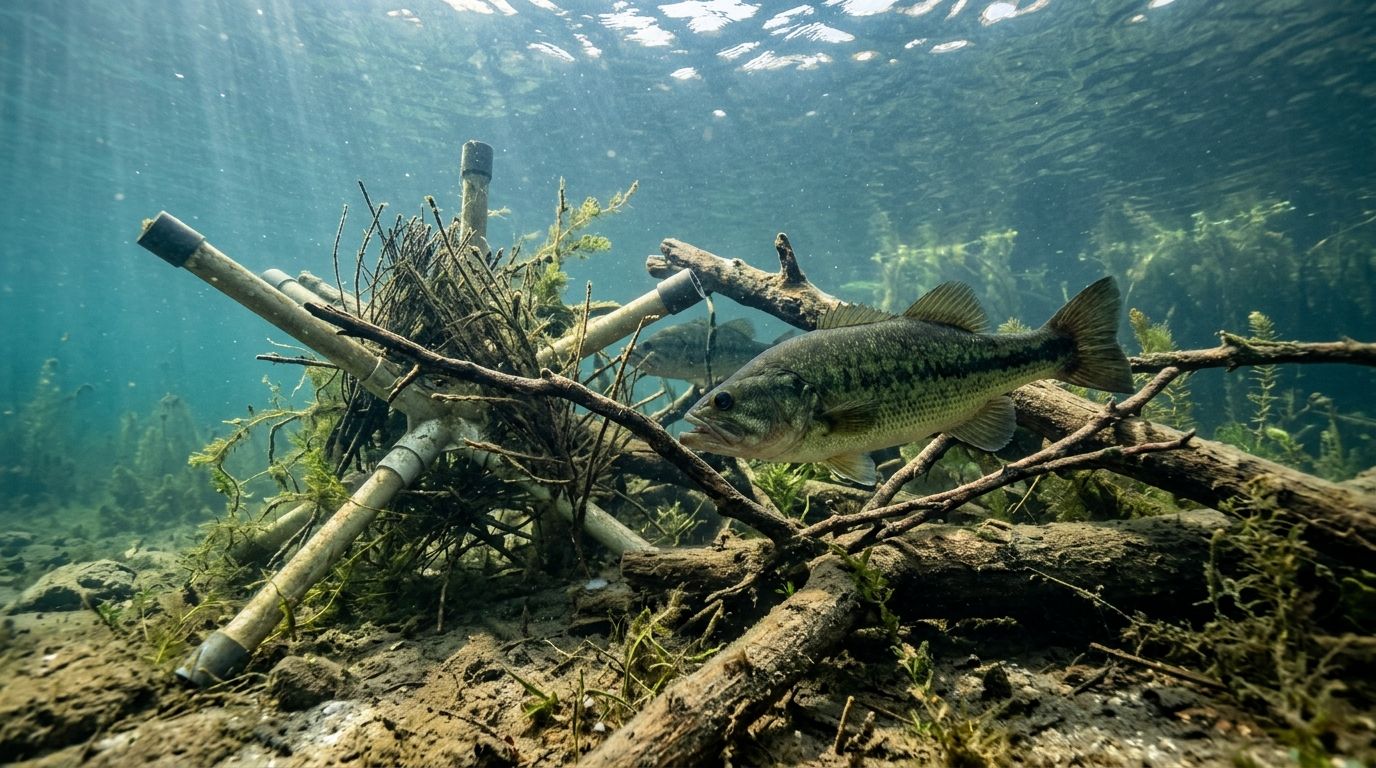
- Documented fish use – whether underwater footage shows the structure holding fish, not just marketing renders.
Fish structure kits ranked by price: at a glance
| Tier | Best for | Standout feature | Key limitation |
|---|---|---|---|
| DIY PVC components | Budget builders | Full control over shape and density | Requires assembly time and tools |
| Habitat mats | Shallow spawning habitat | Fast bottom coverage in skinny water | Less vertical structure than a crib |
| Preassembled attractors | Panfish ponds | Ready to sink same day | Higher per-unit cost than raw components |
| Fish cribs | Farm pond stocking | Bulk coverage for stocking programs | Bulkier to transport and place |
| Deep-water kits | Reservoirs and deep basins | Weighted for depth and current | Overkill for small farm ponds |
1. DIY PVC components: best for budget builders
Raw reclaimed PVC components are the entry point into Fishiding's lineup. You build the structure yourself, choosing how dense and how tall each unit goes before it sinks.
DIY PVC components pros:
- Lowest cost per unit in the lineup
- You control density, height, and branching for your specific depth zone
- Reclaimed material means no new plastic manufacturing footprint
DIY PVC components cons:
- Assembly takes hours per unit before you're ready to place structure
- Not ideal if you need habitat in the water before a stocking event this month
DIY PVC components best for: pond owners with time to build and a preference for customizing depth and density.
Verdict: Buy if you have assembly time before 2026 stocking season; Wait if you need structure in the water within days.
2. Habitat mats: best for shallow spawning habitat
Habitat mats lay flat across the bottom in shallow water, giving bluegill, crappie, and other panfish species dense cover for spawning beds without the vertical rigging a crib needs.
Habitat mats pros:
- Fast to deploy across large shallow areas
- Low profile works well in water under 6 feet
- Dense material gives fry and forage fish cover from predation
Habitat mats cons:
- Less vertical column coverage than a preassembled attractor
- Best suited to depth zones under roughly 6 to 8 feet
Habitat mats best for: pond and lake owners targeting spawning success in shallow coves.
Verdict: Buy for shallow spawning zones; Skip if your target depth is mid-column or deeper.
3. Preassembled attractors: best for panfish ponds
Preassembled attractors from Fishiding arrive built and ready to sink, cutting assembly time to zero. Underwater footage from Fishiding's documented library shows panfish species using these attractors for shelter and forage within the same season they're placed.
Preassembled attractors pros:
- No assembly required before placement
- Documented underwater use across multiple freshwater species
- Consistent density every time, no build variation
Preassembled attractors cons:
- Costs more per unit than raw DIY components
- Still requires a boat or shoreline access to place correctly
Preassembled attractors best for: panfish pond owners who want structure in the water fast, without building it themselves.
Verdict: Buy if time matters more than upfront cost.
4. Fish cribs: best for farm pond stocking programs
Fish cribs bundle multiple attractor units into a single larger structure, built for pond owners and managers stocking new fish populations who need bulk coverage across several acres.
Fish cribs pros:
- Higher coverage per placement point than a single attractor
- Well suited to new stocking programs needing habitat before fish arrive
- Dense, intricate design documented to hold multiple species and life stages
Fish cribs cons:
- Bulkier to transport than smaller kits
- Higher price tier than mats or single attractors
Fish cribs best for: farm pond owners running a stocking program that needs habitat ready before fish go in.
Verdict: Buy ahead of a stocking event; Hold if your pond is already well stocked with existing cover.
5. Deep-water kits: best for reservoirs and basin structure
Deep-water kits sit at the top of the price range because they're built and weighted to hold position in deeper basins where current and depth put more stress on rigging.
Deep-water kits pros:
- Weighted specifically for depths beyond what shallow kits can handle
- Suited to reservoir management and larger lake fisheries work
- Reclaimed PVC construction holds up over repeated seasons underwater
Deep-water kits cons:
- Highest price tier in the Fishiding lineup
- Unnecessary for small farm ponds under a few acres
Deep-water kits best for: fisheries managers and reservoir owners placing structure in deep basins.
Verdict: Buy for reservoir-scale projects; Skip for small ponds where a crib or attractor covers the need.
6. Bass-focused bundles: best for largemouth bass structure
Bass-focused bundles combine denser, taller components sized for largemouth bass, which relate more to vertical cover and ambush points than panfish species do.
Bass-focused bundles pros:
- Taller, denser branching suited to ambush-style bass behavior
- Can be placed at multiple depth zones in the same pond
- Backed by underwater footage showing bass using dense cover for ambush positioning
Bass-focused bundles cons:
- Mid-to-upper price tier compared to basic mats
- Sizing and placement take more planning than a flat mat
Bass-focused bundles best for: bass fish habitat structures work where pond owners want dedicated ambush cover.
Verdict: Buy for ponds managed specifically for largemouth bass.
How we ranked
The order above tracks assembly effort and material volume, which drives the price tier from DIY components at the bottom to deep-water kits at the top. Density, depth targeting, and documented fish use from Fishiding's underwater footage library informed the best-for label on each tier, not marketing copy.
Which fish structure kit should you choose?
If you're building on a tight budget and have time before 2026 stocking season, start with DIY fish habitat kits and build your own density. If you need structure in the water fast for a panfish pond, preassembled attractors solve that without the build time. Reservoir owners and fisheries managers working deep basins should plan for the deep-water tier from the start rather than under-sizing with a shallow kit.
Compare fish structure kits by tier
Browse the full range of reclaimed PVC habitat kits by depth and density.
FAQ
What's the cheapest fish structure kit option?
DIY PVC components are the lowest-cost tier because you assemble them yourself instead of paying for preassembled labor. They work well for pond owners with time before the 2026 season starts.
Are preassembled attractors worth the higher cost over DIY components?
Preassembled attractors cost more per unit but arrive ready to sink, which matters if you need structure in the water this season rather than after hours of assembly.
How much fish structure does a small farm pond need?
Coverage depends on pond size and stocking goals, so map your depth zones first, then compare mats, attractors, or cribs against the acreage you're covering.
Do fish cribs work better than brush piles for stocking programs?
Fish cribs built from reclaimed PVC hold their density and structure over multiple seasons, while brush piles break down and lose cover value within a few years.
What depth do habitat mats work best in?
Habitat mats perform best in shallow water under roughly 6 to 8 feet, which suits spawning habitat for bluegill and other panfish species.
Do I need a deep-water kit for a reservoir?
Reservoirs and larger lake fisheries generally need kits weighted specifically for depth and current, since shallow kits aren't rigged to hold position in deeper basins.
Does all freshwater fish use Fishiding structure?
Underwater footage documented over 15-plus years shows all freshwater fish species using Fishiding's dense, intricate habitat models, though placement and use vary by species, life stage, and season.
Is reclaimed PVC durable enough for long-term pond use?
Reclaimed PVC resists the breakdown that natural brush experiences, holding its structure across repeated underwater seasons better than wood-based cover.
One last thing
The biggest mistake pond owners make in 2026 isn't picking the wrong tier, it's buying a single unit and stopping there. Underwater footage from Fishiding's documented library consistently shows fish concentrating around clusters of structure, not isolated single units, so budget for coverage across multiple depth zones before you settle on one kit.