Largemouth bass move with water temperature, oxygen, and forage, so a pond or lake with only shoreline brush leaves them nowhere to go once summer sets in. This guide ranks the habitat for largemouth bass that actually holds fish through spawning, summer, and winter, based on depth zone, density, and documented underwater use.
- Best overall habitat for largemouth bass in 2026: Fishiding Modular Attractors placed at 6-12 feet for mid-depth ambush cover.
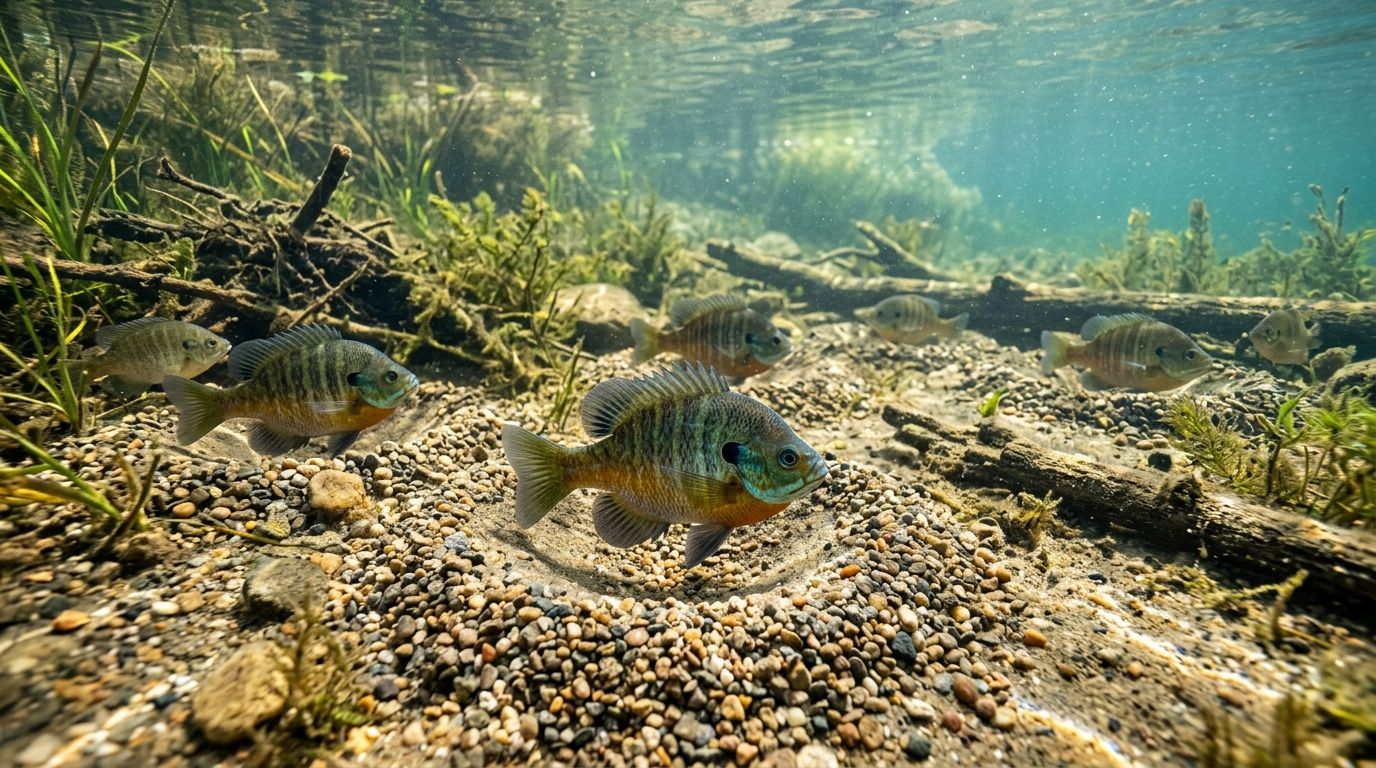
- Best for spawning season: Fishiding Habitat Mats in 2-5 feet of water near shoreline structure.
- Best budget build: Fishiding DIY PVC Kits let you size cribs to your own dock or point.
- Best for deep water holding: Fishiding Deep Water Kits sink to 15-25+ feet for winter bass.
- Best for small ponds under an acre: Fishiding Small Pond Kits concentrate cover in tight spaces.
Why this matters
Largemouth bass don't camp in one spot all season. They shift between shallow spawning flats, mid-depth ambush points, and deep water holding areas as temperature and oxygen change. A pond stocked with only brush piles gives bass one option, and brush rots out within a few seasons anyway.
Fishiding has logged more than 15 years and thousands of hours of underwater filming across freshwater lakes, and that footage shows bass, along with panfish, crappie, and forage species, using dense, intricate reclaimed PVC structure at every depth tested. Observed use isn't the same as a guaranteed population increase in every water body, but the video record backs two things stated plainly here: all freshwater species use this kind of habitat, and it grows more fish over time when placed correctly.
The right pick for habitat for largemouth bass in 2026 depends on what your fishery lacks: ambush cover for adult bass, nursery cover for fry, or holding cover for winter months.
What makes the best habitat for largemouth bass
- Depth zone coverage — shallow spawning cover, mid-depth ambush cover, and deep winter holding cover are three different jobs, not one
- Structure density and intricacy — tight, varied surface area holds forage fish and crawfish, which is what actually draws bass
- Material durability — reclaimed PVC resists the breakdown that takes down cedar brush and thin pipe rigs within a few seasons
- Stability and anchoring — a weighted base that holds position through current, wave action, or a winter drawdown
- Documented fish use — underwater footage or field reports showing bass and forage actually using the structure, not just a sales claim
- Installation effort — preassembled units you sink same-day versus DIY kits you build to your own dimensions
At a glance: habitat for largemouth bass in 2026
| Structure | Best for | Standout feature | Key limitation |
|---|---|---|---|
| Fishiding Modular Attractors | Mid-depth ambush cover | Dense reclaimed PVC fronds branch in multiple directions | Bulkier to transport in volume than pipe rigs |
| Fishiding Habitat Mats | Spawning and fry cover | Low-profile mat sits in 2-5 ft without snagging trolling motors | Limited vertical cover for suspended adult bass |
| Fishiding DIY PVC Kits | Custom budget cribs | You size the base and frond count to your own water | Requires assembly time and basic tools |
| Fishiding Deep Water Kits | Winter holding structure | Weighted base sinks and holds at 15-25+ ft | Overkill for ponds under 2 acres |
| Fishiding Small Pond Kits | Ponds under 1 acre | Compact footprint concentrates cover per square foot | Total forage-holding surface is naturally smaller |
| Fishiding Farm Pond Structures | Farm pond stocking programs | Matches typical farm pond depth and turnover cycles | Not built for reservoir current or heavy boat traffic |
1. Fishiding Modular Attractors: best habitat for largemouth bass in mid-depth ambush zones
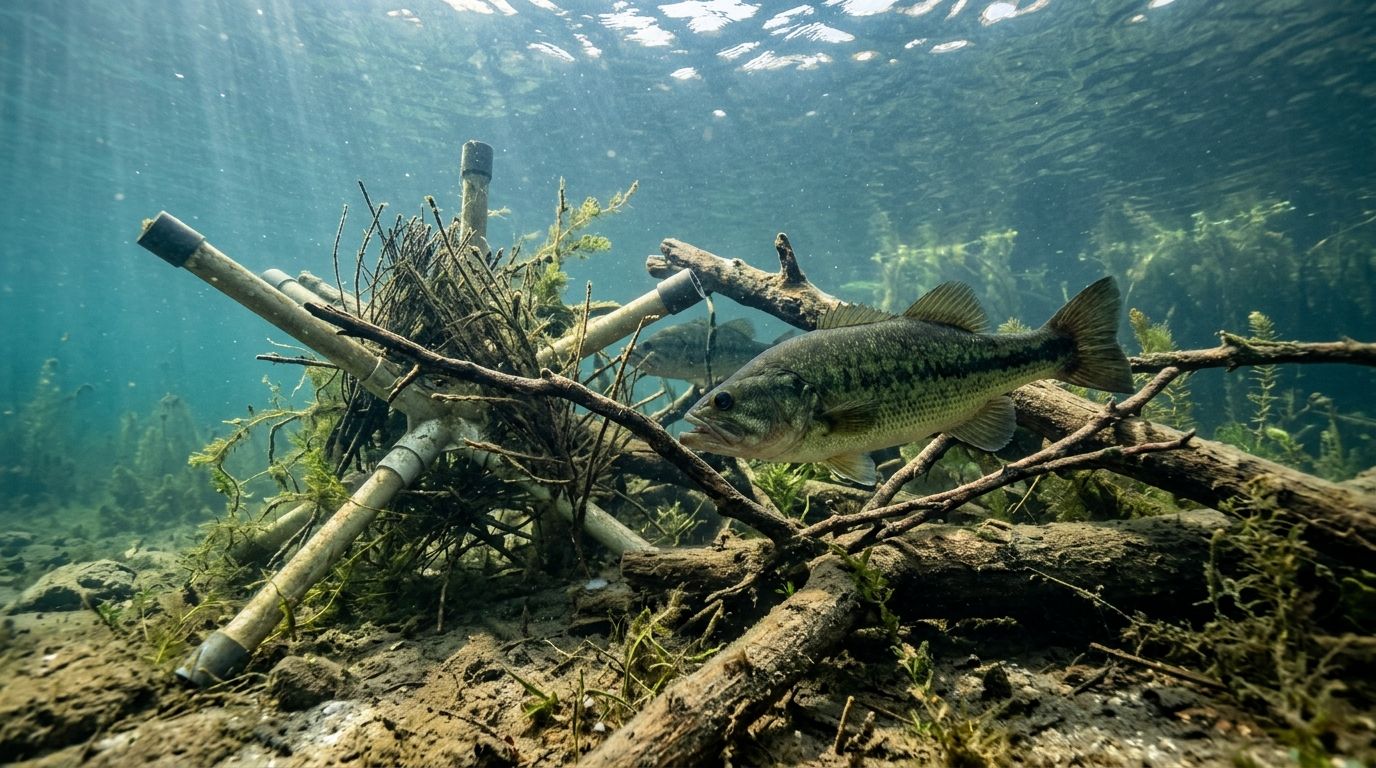
Modular Attractors use branching reclaimed PVC fronds on a weighted base, built to sit at 6-12 feet where adult bass hold and ambush baitfish moving through open water. The branching pattern creates shade and current breaks that shallow mats can't replicate.
Modular Attractors pros:
- Dense cover holds forage fish and crawfish in one location
- Branches create shade and current breaks bass use to ambush
- Underwater footage documents bass holding tight to the fronds across multiple seasons
- Modular design lets you stack density at high-traffic sites
Modular Attractors cons:
- Bulkier per unit than PVC pipe rigs, so bulk placement takes more boat trips
- Not a shallow spawning solution on its own
Best for: mid-depth summer and fall ambush cover in lakes, ponds, and reservoirs. Verdict: Buy.
2. Fishiding Habitat Mats: best for spawning and fry season shallow cover
Habitat Mats are a low-profile reclaimed PVC structure built to sit in 2-5 feet without snagging props or trolling motors. Fine fronds shelter fry and forage minnows near shoreline structure during spawning months.
Habitat Mats pros:
- Low profile skims over without catching boat traffic
- Fine fronds shelter fry and forage minnows close to shore
- Documented footage shows spawning-season use near shoreline structure
- Easy to place by hand from a kayak or dock, no boat required
Habitat Mats cons:
- Less vertical cover for adult bass holding deeper in the water column
- Shallow placement means more UV and ice exposure in northern ponds
Best for: spring spawning cover and fry survival. Verdict: Buy.
3. Fishiding DIY PVC Kits: best budget build for custom cribs
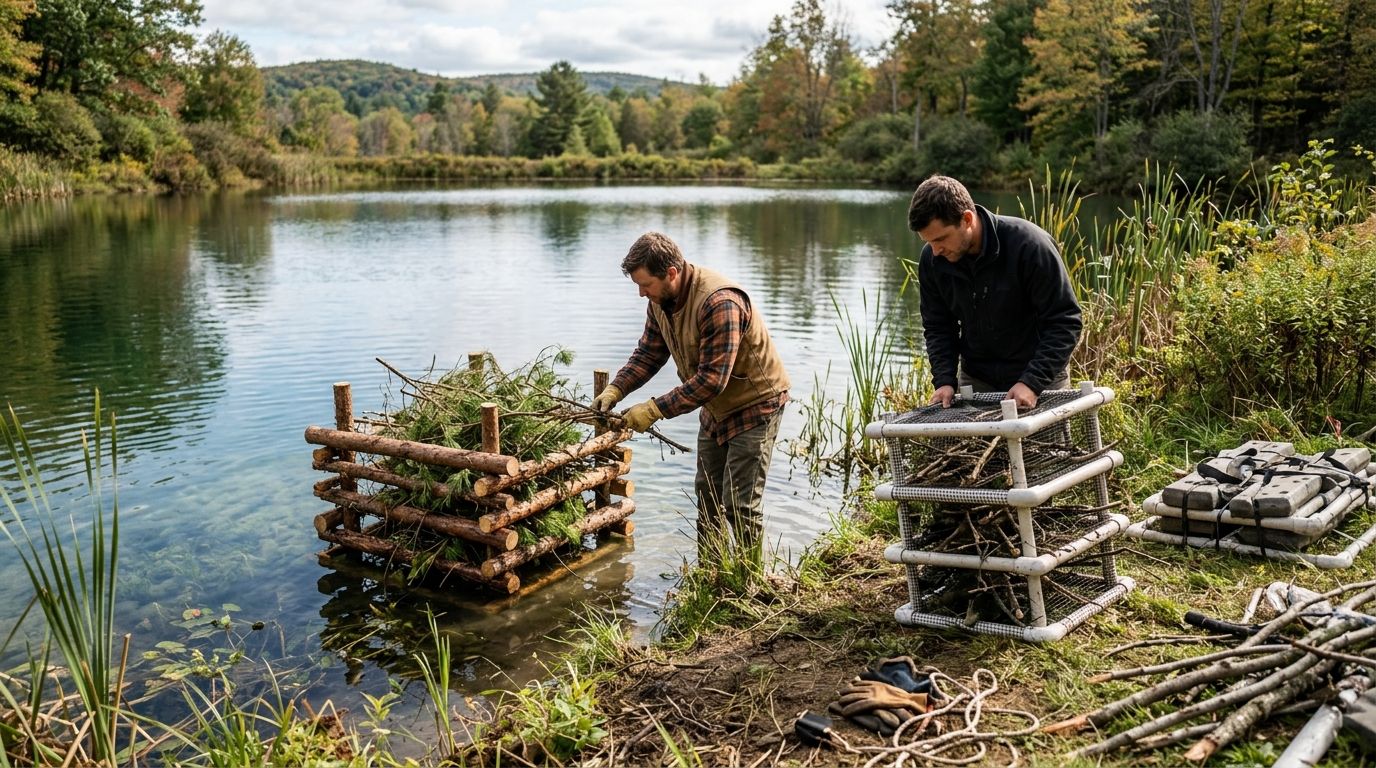
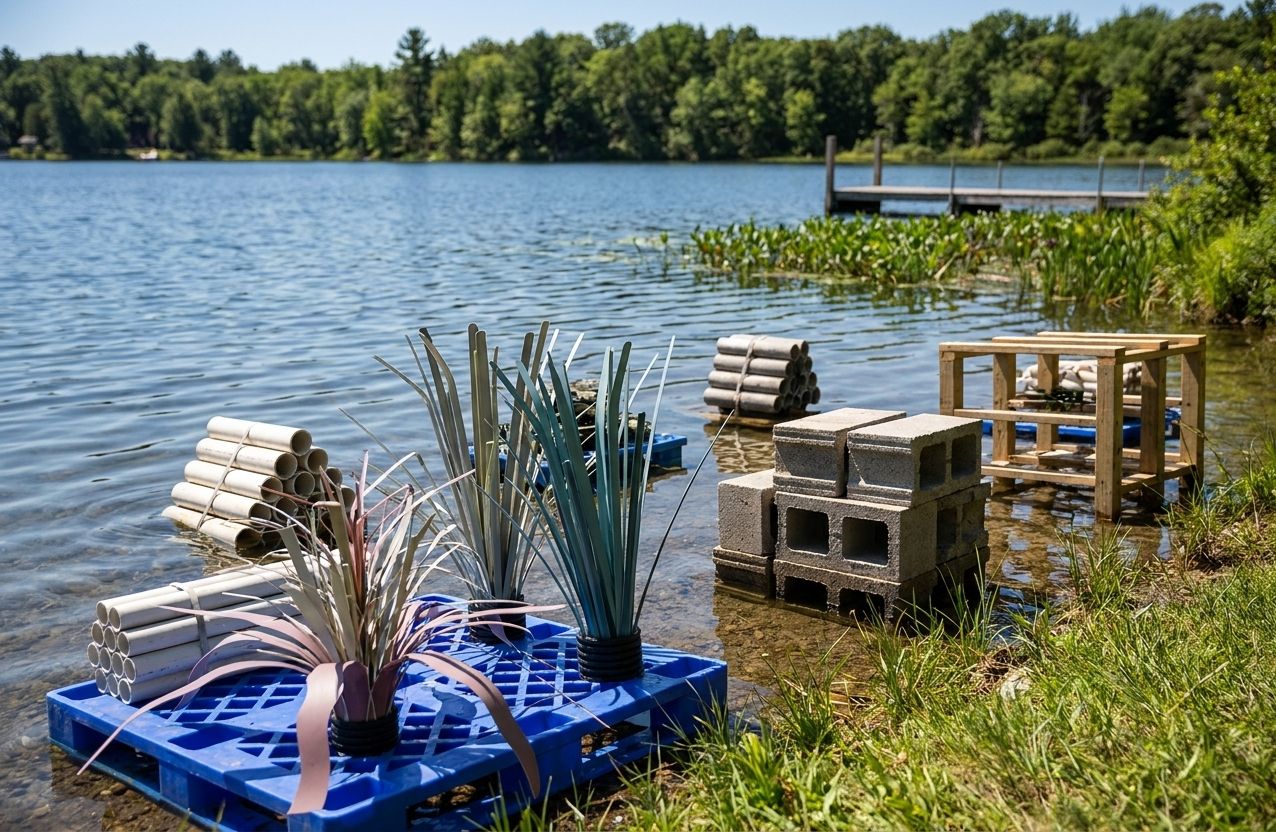
DIY PVC fish habitat kits give pond owners and habitat clubs the same reclaimed PVC material used in preassembled units, but let you set the base size and frond density to your own water and dock footprint.
DIY Kits pros:
- Lower cost per cubic foot of cover when you supply the labor
- Size cribs to a specific depth, dock, or point
- Same reclaimed PVC material as preassembled units, not a different grade
- Fits volunteer or club habitat days well
DIY Kits cons:
- Takes real assembly time and basic tools
- Results vary if density and spacing guidelines aren't followed closely
Best for: pond owners and habitat clubs building on a weekend budget. Verdict: Buy, with the time tradeoff in mind.
4. Fishiding Deep Water Kits: best for winter holding structure
Deep Water Kits carry enough weight to sink and hold position at 15-25+ feet, giving bass a place to stack once shallow water cools in late fall and winter. This is the zone brush piles almost never reach intact.
Deep Water Kits pros:
- Holds bass off bottom through cold months when shallow cover empties out
- Weighted base keeps position in deep current or wind-driven water movement
- Pairs with shallow and mid-depth units for full-season coverage
Deep Water Kits cons:
- Overkill for small ponds without real deep water zones
- Harder to place accurately without a boat and depth finder
Best for: reservoirs and lakes with a defined winter thermocline. Verdict: Buy for lakes and reservoirs, Skip for shallow ponds.
5. Fishiding Small Pond Kits: best for ponds under an acre
Small pond fish habitat kits scale the same reclaimed PVC frond design down to a footprint that fits ponds under an acre without crowding the water.
Small Pond Kits pros:
- Concentrates cover without overwhelming a small pond's swim space
- Scaled units are easy to place by hand, no heavy equipment needed
- Still uses the dense, intricate PVC fronds documented in larger-water footage
Small Pond Kits cons:
- Total forage-holding surface area is naturally smaller than lake-scale programs
- Most small ponds need multiple units placed at different depths for full coverage
Best for: residential and farm ponds under 1 acre. Verdict: Buy.
6. Fishiding Farm Pond Structures: best for farm pond stocking programs
Farm pond fish structures are sized around typical farm pond depth cycles, supporting the bass-bluegill balance most farm pond owners manage on purpose.
Farm Pond Structures pros:
- Sized for typical farm pond depth, often 4-15 feet
- Supports stocked bass and bluegill programs with layered cover
- Reclaimed PVC holds up through drawdown and refill cycles common in farm ponds
Farm Pond Structures cons:
- Not designed for heavy current or wave action found in larger reservoirs
- Structure alone won't fix poor water quality or overcrowded stocking
Best for: farm pond owners running an active bass-bluegill program. Verdict: Buy.
Map your bass habitat placement
Match depth zones to your pond or lake before you order.
How we ranked these
Each entry was scored against the six criteria above: depth zone fit, structure density, reclaimed PVC durability, anchoring stability, documented fish use, and installation effort. In 2026, the products that scored highest combined at least two of those factors instead of leaning on one, which is why a modular attractor and a habitat mat both rank ahead of a single-purpose crib.
Which habitat for largemouth bass should you choose in 2026?
If you manage one water body and want a single default pick, Fishiding Modular Attractors cover the widest range of bass behavior at mid-depth, where adult fish spend most of the season. Add Habitat Mats if spawning success or fry survival is the specific problem you're solving. Reservoirs and larger lakes benefit from stacking Deep Water Kits underneath the mid-depth units to hold bass through winter.
Small pond and farm pond owners should start with the Small Pond Kits or Farm Pond Structures sized for their actual acreage rather than scaling down a lake-sized program. Anyone building on a weekend with volunteer labor gets the same reclaimed PVC material through the DIY PVC Kits, just with more assembly time.
FAQ
What's the best habitat for largemouth bass in a pond under 1 acre?
Fishiding Small Pond Kits are sized for ponds under an acre and concentrate reclaimed PVC cover without crowding the water. Placing a few units at different depths covers more of the bass's seasonal range than one large structure.
Is PVC fish habitat better than brush piles for bass?
Reclaimed PVC habitat holds its structure longer than cedar or oak brush, which breaks down within a few seasons. Underwater footage over 15+ years shows bass and forage using dense PVC structure well after comparable brush piles have collapsed.
How deep should fish habitat be placed for largemouth bass?
Cover multiple depth zones rather than one: shallow habitat mats at 2-5 feet for spawning, mid-depth attractors at 6-12 feet for ambush cover, and deep water kits at 15-25+ feet for winter holding. Bass move between zones as the season changes.
Do largemouth bass actually use artificial habitat structures?
Yes. Thousands of hours of underwater filming document largemouth bass, along with panfish, crappie, and other freshwater species, using dense, intricate reclaimed PVC habitat at every depth tested. Placement and density still affect how quickly bass commit to a new structure.
What's the difference between a fish attractor and a fish crib?
An attractor is typically a preassembled, branching structure like a Fishiding Modular Attractor, while a crib is often a framed enclosure you build yourself, such as a DIY PVC kit. Both function as cover, but cribs give you more control over size and depth placement.
How much habitat does a farm pond need for bass?
There's no single number that fits every farm pond; coverage depends on pond size, depth range, and existing stocking density. Distributing structure across shallow, mid, and deeper zones matters more than any fixed unit count.
Can DIY PVC fish habitat work as well as preassembled units?
DIY PVC kits use the same reclaimed material as preassembled attractors and mats, so performance comes down to following density and spacing guidelines during assembly. The main tradeoff is your own labor and installation time.
When should you place fish habitat for spawning season?
Shallow habitat mats and cover placed in 2-5 feet of water ahead of spring spawning give fry and forage minnows shelter as soon as bass move onto the flats. Placing structure before the season starts beats adding it after fish have already spawned elsewhere.
One last thing
Underwater footage compiled over 15+ years shows something worth knowing before you judge a new installation: forage fish and fry often move onto new reclaimed PVC habitat before adult bass commit to it in numbers. Give a new structure a full season before deciding whether it's working, and resist the urge to add more units in month one instead of watching how bass actually use what's already down there.