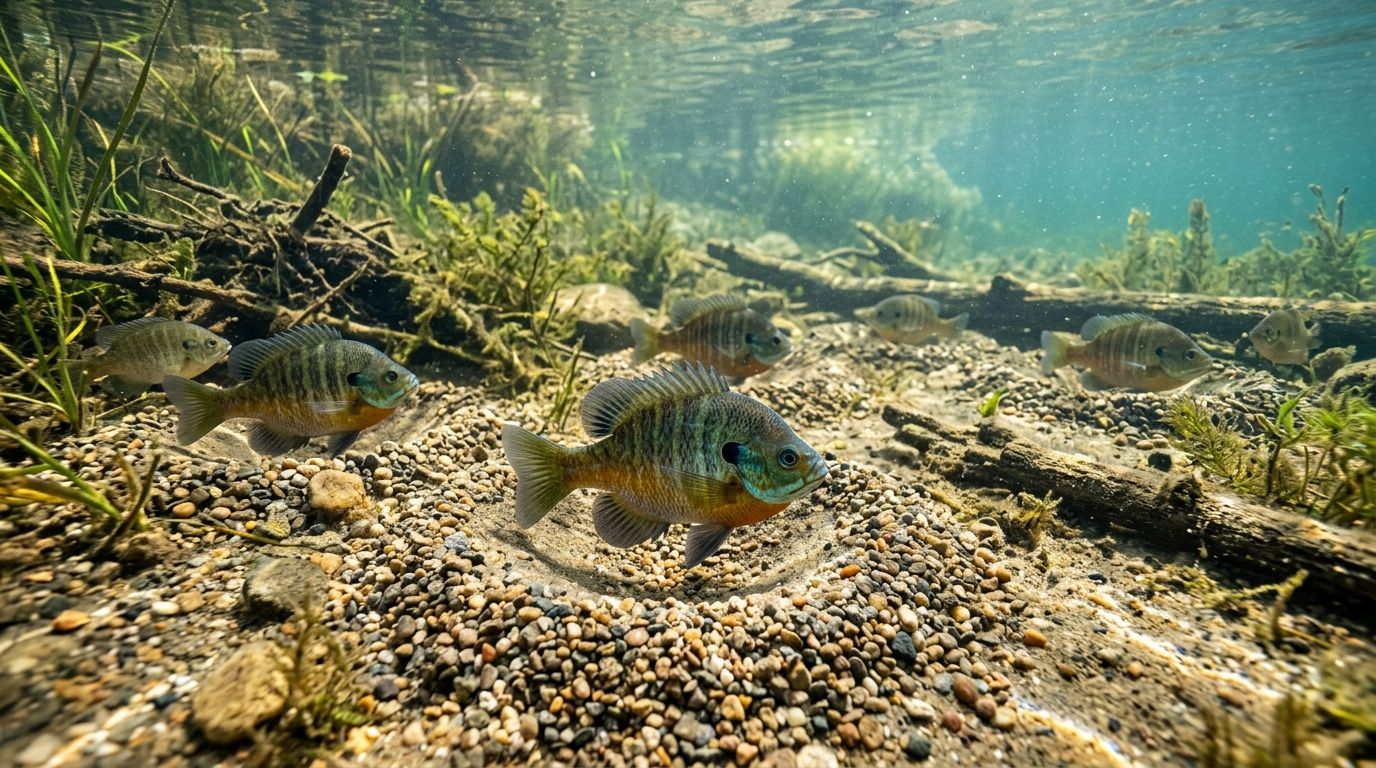
Bluegill build spawning beds in colonies, often dozens of nests fanned into sand or gravel in 1 to 4 feet of water, and the habitat you place near that colony decides how many fry make it past their first month. This guide ranks the fish habitat structures that support bluegill spawning beds in 2026, covering placement, depth, and what to skip.
- Fishiding shallow water attractors rank best overall for cover bordering bluegill spawning beds in 2026.
- Fishiding habitat mats win for fry protection once young bluegill scatter from the nest.
- DIY PVC kits let you size a habitat border to match your pond's actual spawning flat.
- Bluegill spawning beds sit in 1 to 4 feet of water once temperatures hit the mid-60s to mid-70s Fahrenheit.
- Brush piles still work but break down within a few seasons, unlike reclaimed PVC structure.
Why this matters
Bluegill don't need habitat to build a nest — they fan a bowl into open sand or gravel themselves, usually in a colony with other beds nearby. What habitat does is give the surrounding fry, forage fish, and adult bluegill somewhere to hide once the eggs hatch and the fry scatter off the bed.
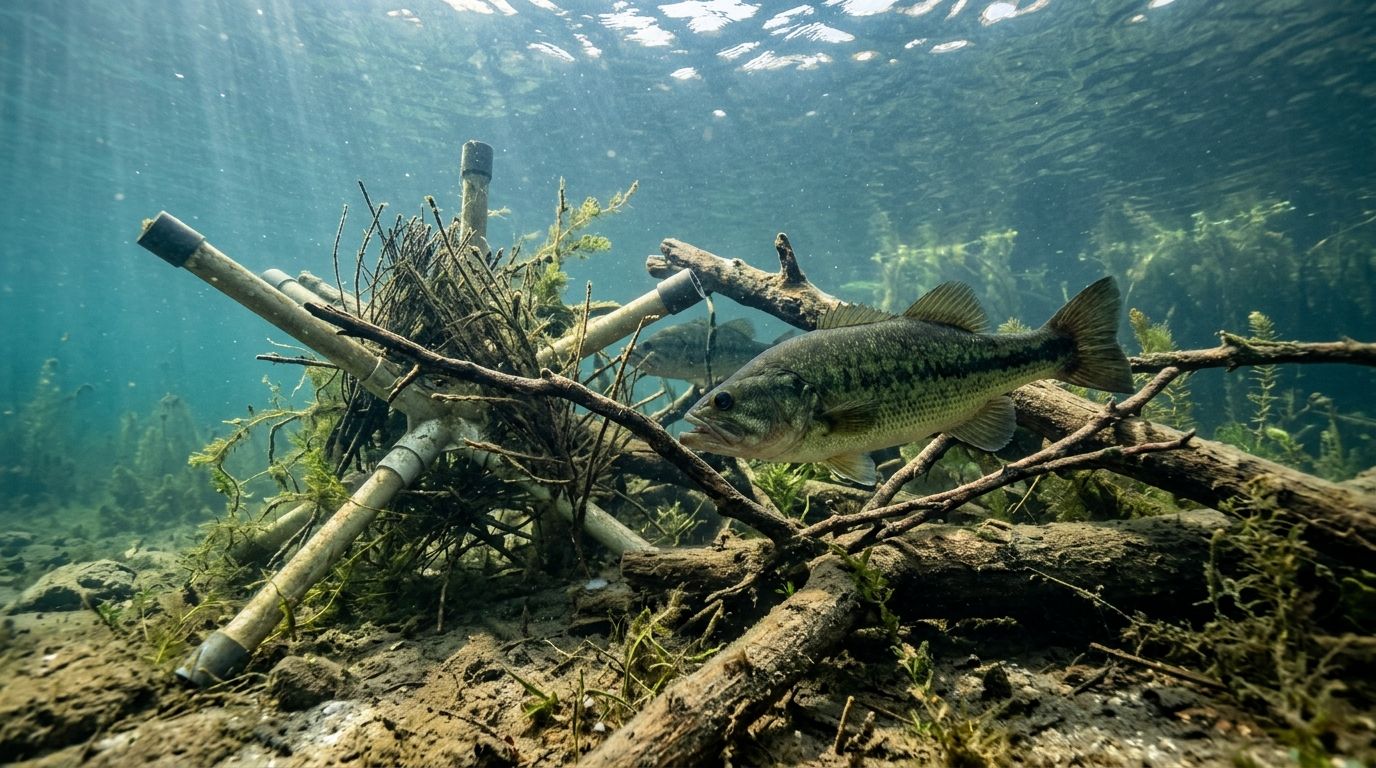
Underwater observations documented over 15+ years of freshwater filming show bluegill and other panfish holding tight to dense, intricate structure placed near spawning flats, not on top of them. That distinction matters: cover placed directly over an active bed blocks the open bottom bluegill need to spawn in the first place. Placement near the bed, not on it, is the difference between structure that helps and structure that gets ignored.
This is observed fish use, not a guarantee of higher recruitment in every pond — placement, water clarity, predator pressure, and forage all affect outcomes too.
What makes the best structure for bluegill spawning beds
- Placement beside the flat, not over it — bluegill need open substrate to fan a nest
- Depth match — cover in the 1 to 4 foot zone for the bed itself, staging cover in 3 to 6 feet nearby
- Density and branching — fry need tight, complex cover within days of hatching
- Durability in shallow water — sun and ice exposure break down loose brush faster than reclaimed PVC
- Documented fish use — underwater evidence of bluegill and fry actually holding on the structure, not just claims
- Ease of placement — installation that doesn't require disturbing the bed's sand or gravel bottom
Bluegill spawning bed structures at a glance
| Structure | Best for | Standout feature | Key limitation |
|---|---|---|---|
| Fishiding shallow water attractors | Edge cover bordering an active spawning colony | Dense branching fry use within days of hatching | Placing directly on the flat crowds out open bottom |
| Fishiding habitat mats | Post-spawn fry protection on the flat's fringe | Low-profile, won't block boat lanes | Lacks the vertical cover adults use later in the season |
| Fishiding DIY PVC kits | Custom-sized borders around a specific bed | Footprint matches your pond exactly | Takes bank or boat time to assemble before spawn |
| Fishiding preassembled cribs | Staging cover at pond edges, not on the bed | No assembly, holds position in wave action | Bulkier, not suited to the shallowest 1-2 foot zone |
| Natural brush piles | Low-cost testing before buying manufactured habitat | Free if you have cut trees on hand | Breaks down within a few seasons, needs replacing |
1. Fishiding shallow water attractors: best for cover bordering a spawning colony
Fishiding's shallow water attractors are preassembled reclaimed PVC units built to sit in the 1 to 4 foot zone where bluegill colonies typically nest. Set them along the edge of a flat, a point, or a drop-off adjacent to the bed instead of on top of it, and the dense branching gives fry a hiding spot the moment they leave the nest.
Fishiding shallow water attractors pros:
- Dense, intricate branching fry use within days of hatching, per underwater footage collected across 15+ years
- Reclaimed PVC won't compact or rot the way brush does
- No disturbance to the bed's sand or gravel bottom since the unit sits beside it
- All freshwater fish species, not just bluegill, use this kind of structure once it's in place
Fishiding shallow water attractors cons:
- Placed directly over the flat, they crowd out the open bottom bluegill need to fan a nest
- Heavier units need a boat or dock access to reach deeper edge zones
Best for: edge cover bordering an active spawning colony. Verdict: Buy if you already know where your bluegill bed each spring.
See more panfish attractor options sized for pond and small lake use.
2. Fishiding habitat mats: best for post-spawn fry protection
Habitat mats are low-profile, reclaimed PVC panels laid flat on the bottom in shallow water. They don't compete for space on the bed itself — set them a few feet off the flat where scattering fry naturally drift after hatching.
Fishiding habitat mats pros:
- Thin, horizontal profile that doesn't block boat lanes over shallow flats
- Gives newly hatched fry cover from bass and other predators cruising the shallows
- Reclaimed PVC holds its shape season after season, unlike leaves or cut brush
Fishiding habitat mats cons:
- Lacks the vertical complexity larger bluegill and forage fish look for later in the year
- Won't stop egg predation on the nest itself — mats support fry after hatch, not the bed
Best for: shallow flats where fry congregate right after hatching. Verdict: Buy as a complement to edge attractors, not a stand-alone plan.
3. Fishiding DIY PVC kits: best for custom-built spawning-bed borders
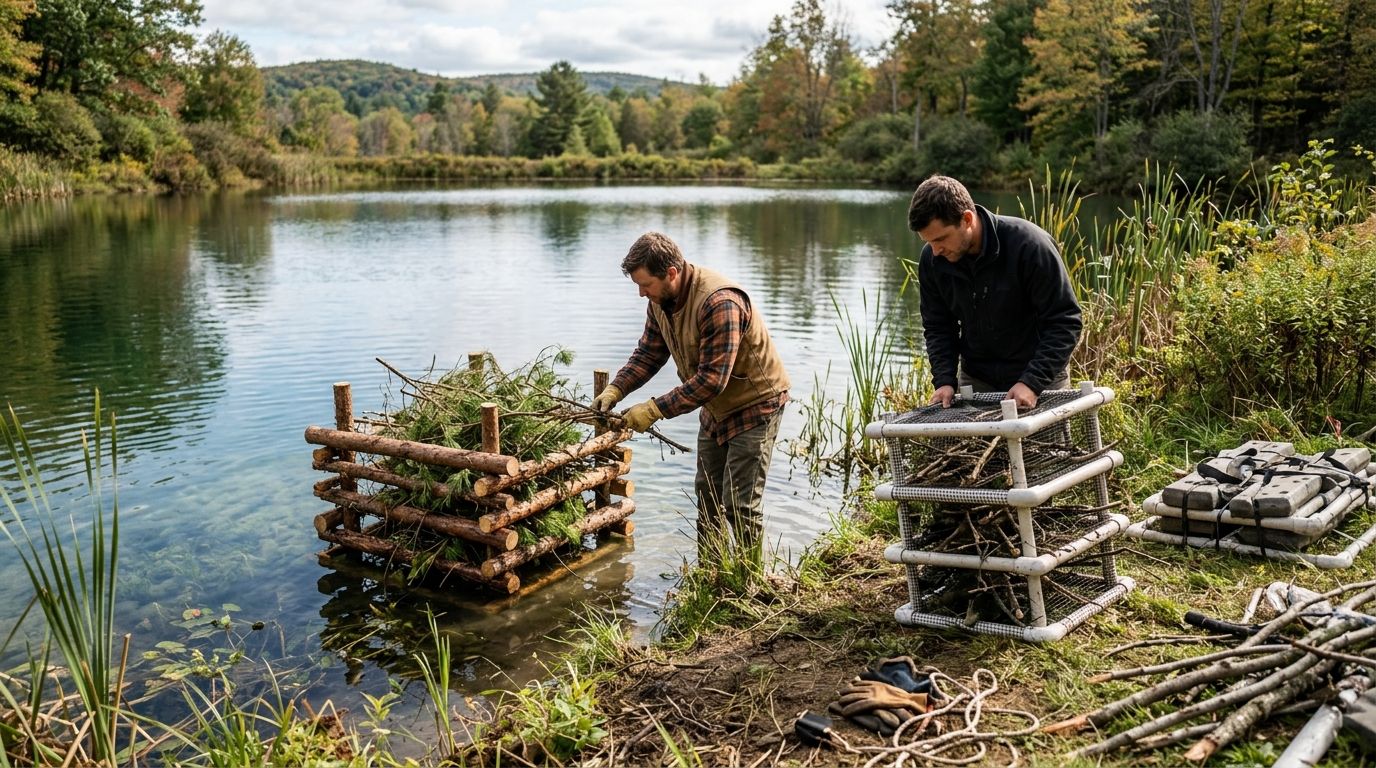
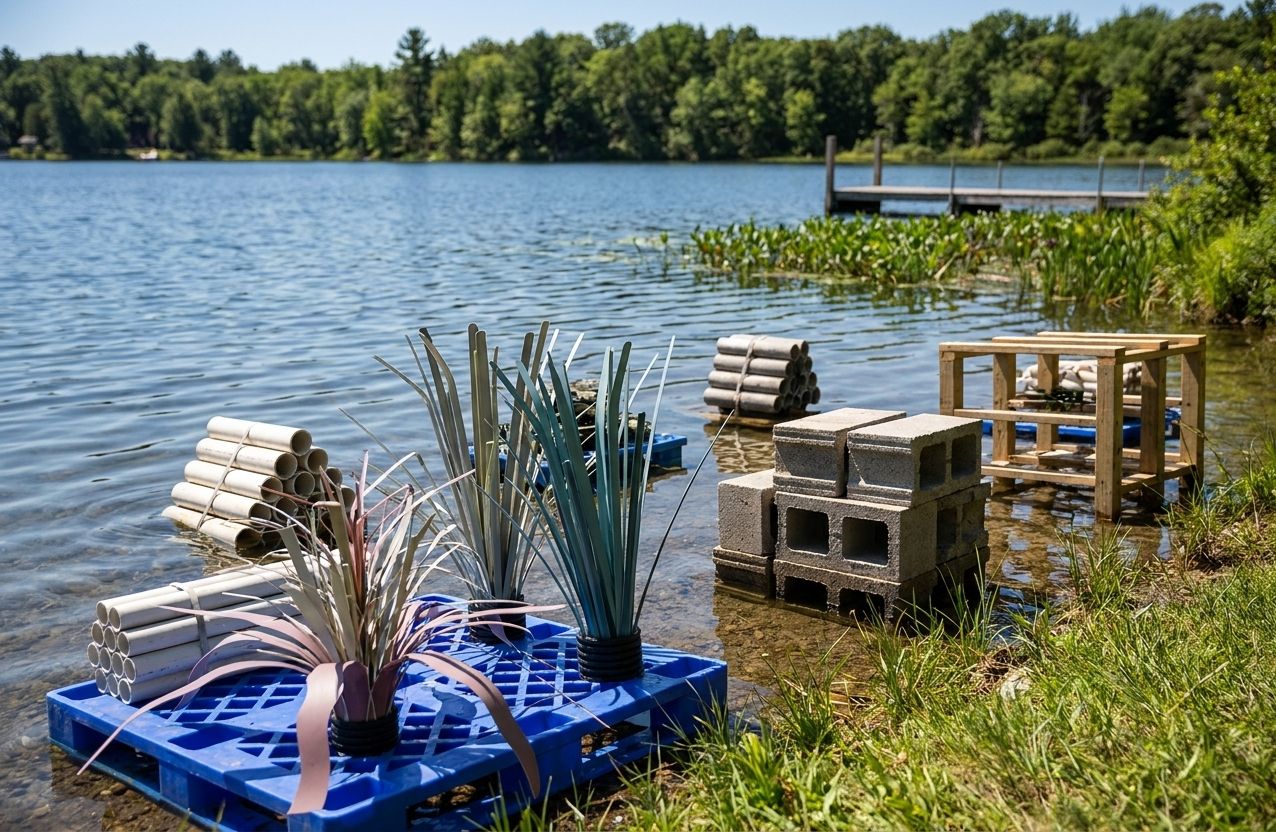
DIY kits ship as reclaimed PVC components you assemble on-site, which means you set the footprint and density to match your pond's actual spawning flat instead of guessing at a preassembled unit's size.
Fishiding DIY PVC kits pros:
- Footprint and density built to match your bed's exact shape and size
- Reclaimed PVC materials keep cost down against buying bulk preassembled units
- You control exactly how close to the bed edge the habitat sits
Fishiding DIY PVC kits cons:
- Takes more bank or boat time to assemble than an unbox-and-drop attractor
- Requires basic assembly before launch day, which means planning ahead of spring spawn
Best for: owners who want a habitat footprint sized to one specific spawning flat. Verdict: Buy if you have time to build before the spawn window opens.
Review DIY kit components and instructions before your next installation window.
4. Fishiding preassembled cribs: best for pond edges and staging areas
Cribs are bulkier preassembled structures meant for pond edges, points, and staging zones where bluegill hold before and after they spawn, not the shallowest part of the flat itself.
Fishiding preassembled cribs pros:
- No assembly required before launch day
- Heavier footprint holds position better in wave action or current than lighter attractors
- Gives larger bluegill and other panfish a staging area near the bed without sitting on it
Fishiding preassembled cribs cons:
- Bulkier structures cost more to move and place than mats or small attractors
- Not suited to the shallowest 1 to 2 foot zone where beds actually sit
Best for: staging cover at pond edges near, but not on, the spawning flat. Verdict: Buy for larger ponds with a defined edge zone.
Compare edge and staging structures for farm ponds before placing cribs near a colony.
5. Natural brush piles: best low-cost option for testing placement
Cut brush, sunk with weights near a spawning flat, is the no-cost baseline most pond owners try first. It gives some cover in the first season but doesn't hold up long-term.
Natural brush piles pros:
- Free or low-cost if you already have cut trees or brush on hand
- Familiar to most pond owners, no new equipment needed
- Provides some immediate cover the first season after placement
Natural brush piles cons:
- Breaks down within a few years and needs regular replacement
- Loses density and branching faster than reclaimed PVC structure
- Can't be shaped to match a spawning bed's exact footprint
Best for: testing where habitat belongs before investing in manufactured structure. Verdict: Hold as a short-term option, not a long-term plan.
How this list was ranked
Each structure was scored against the criteria above: placement relative to the bed, depth match, density and branching for fry, durability in shallow water, and documented fish use from underwater footage. Structures that sit beside a flat and support fry within days of hatching ranked above options that only add bulk without matching the 1 to 4 foot spawning zone.
Which structure should you choose?
For most pond and lake owners heading into 2026, start with Fishiding shallow water attractors placed along the edge of the spawning flat, then add habitat mats a few feet off the bed for fry once they hatch. Larger ponds with a defined edge should add a preassembled crib as a staging point. Skip brush piles once you've confirmed where the colony nests each spring — reclaimed PVC holds its shape longer in the same shallow-water conditions.
Plan your bluegill habitat placement
Browse shallow, mid, and deep water structure options at Fishiding.
FAQ
What is the best structure for bluegill spawning beds in 2026?
Fishiding shallow water attractors placed along the edge of a spawning flat rank best in 2026 because their dense branching gives fry cover within days of hatching without blocking the open bottom bluegill need to nest.
How deep do bluegill spawning beds sit?
Bluegill spawning beds typically sit in 1 to 4 feet of water. Colonies form on sand or gravel bottoms where nests can be fanned clear of debris.
What water temperature triggers bluegill spawning?
Bluegill generally begin spawning once water warms into the mid-60s to mid-70s Fahrenheit, and spawning can repeat through summer as temperatures stay in that range.
Should you place fish habitat directly on top of a spawning bed?
No. Habitat placed directly over an active bed blocks the open sand or gravel bluegill need to fan a nest. Place cover along the edge of the flat instead.
Are DIY PVC kits better than preassembled attractors for spawning-bed cover?
DIY kits let you size a habitat footprint to match a specific spawning flat, while preassembled attractors save assembly time. Pick DIY if you have time before spring spawn, preassembled if you don't.
Do brush piles work as well as reclaimed PVC habitat near spawning beds?
Brush piles give some cover the first season but break down within a few years, while reclaimed PVC structure holds its density and shape season after season.
How do you know fish are using habitat near a spawning bed?
Underwater observation is the most reliable evidence — footage collected over 15+ years shows bluegill and fry holding tight to dense structure placed beside spawning flats.
How much habitat coverage do you need near one spawning colony?
There's no fixed number, since colony size and pond depth vary, but structure placed at the drop-off edge of the flat gives fry cover without crowding the bed itself.
One last thing
Bluegill colonies can hold dozens to hundreds of nests packed into a single flat, and underwater footage shows fry schooling around nearby structure within days of hatching, long before they're big enough to fend for themselves. If you only do one thing in 2026, place your first attractor at the drop-off edge of the flat, not on the flat itself — that single placement decision matters more than which structure you buy.