A fish crib is a submerged structure built to concentrate baitfish, gamefish, and forage in a specific spot in a pond, lake, or reservoir. The best overall fish crib for pond stocking in 2026 is the Fishiding reclaimed PVC fish crib, built for budget builders the DIY PVC pipe crib wins, for crappie spawning a stake bed crib wins, for shallow farm ponds a cinder block and brush crib wins, for natural short-term cover a wood pallet crib wins, and for zero-cost temporary cover a brush pile crib wins.
- Fishiding's reclaimed PVC fish crib is the top pick for pond stocking in 2026 based on density and documented fish use.
- DIY PVC pipe cribs cost less but take hours of cutting and anchoring before they go in the water.
- Stake bed cribs are the strongest choice for crappie spawning structure in spring.
- Cinder block and brush cribs work best in shallow farm ponds where cost matters more than lifespan.
- Wood pallet and brush pile cribs give fast, cheap cover but break down within a few seasons.
Why this matters
A pond without structure loses fish to predation and never holds a stable population in open water. Fish need cover to ambush prey, escape bigger predators, and rear fry away from open-water threats. A fish crib gives them that cover in a defined footprint you control, instead of hoping natural brush or downed timber ends up in the right spot.
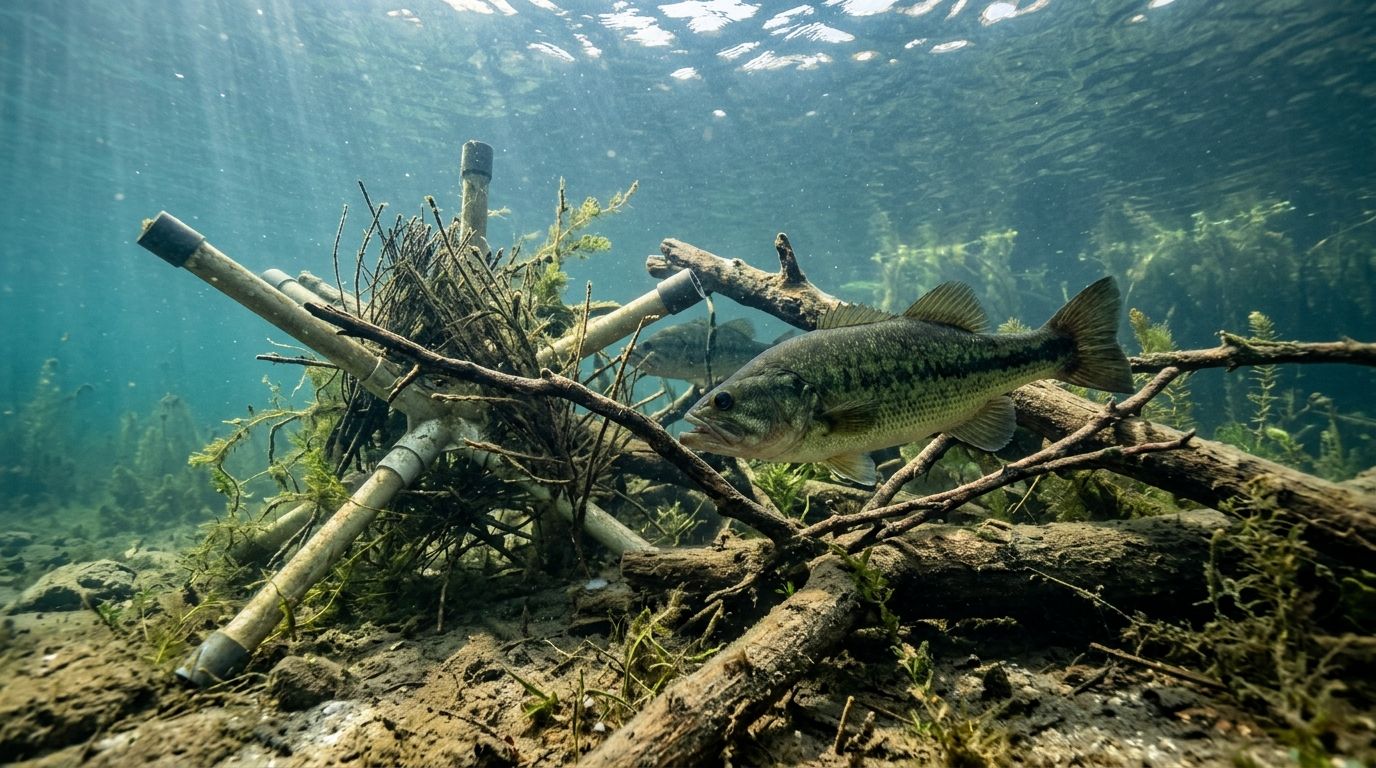
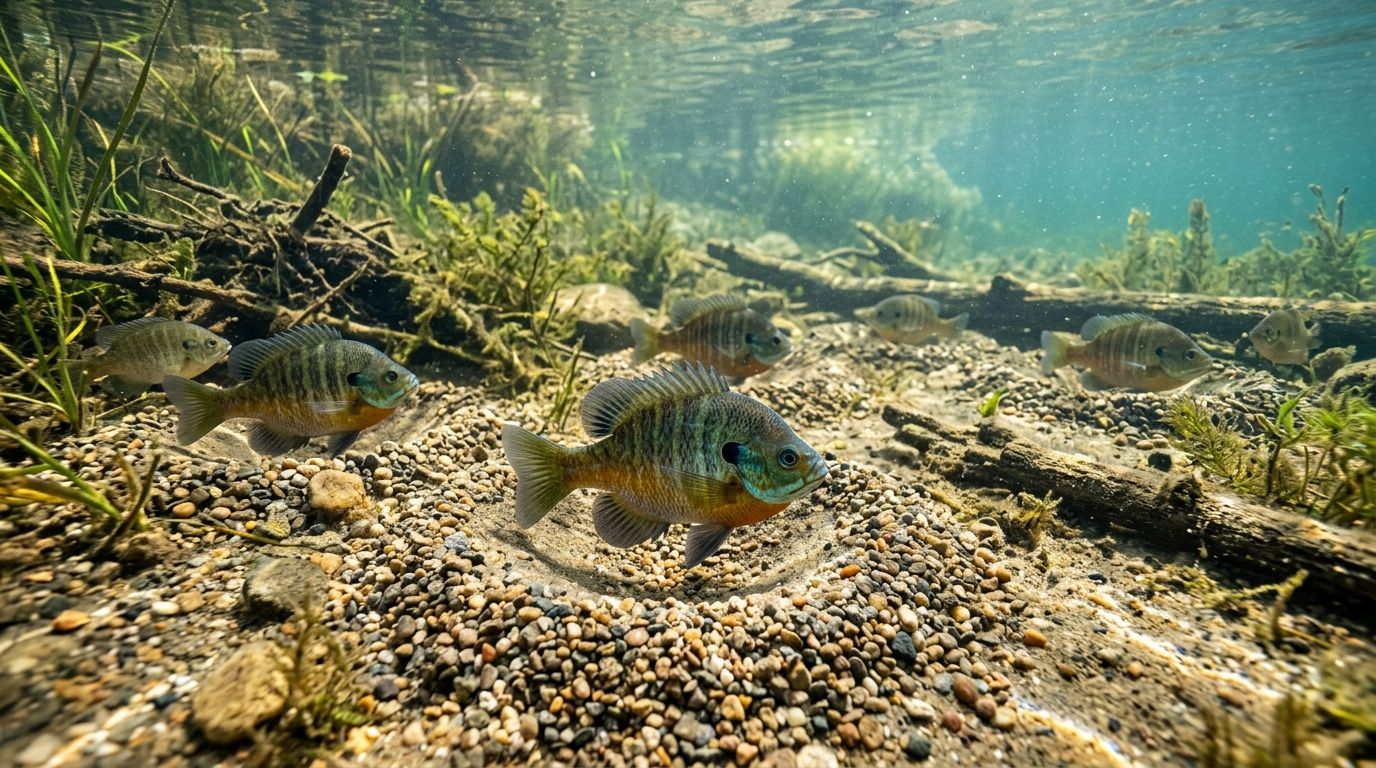
More than 15 years and thousands of hours of underwater filming in freshwater lakes have documented how fish actually use different crib designs, not just whether they show up on a fish finder. That footage shows every freshwater species, from bluegill fry to mature bass, using dense, intricate habitat differently depending on depth, season, and life stage. The crib type you pick changes how long that use lasts and how much of the water column it covers.
What makes the best fish crib
- Density and intricacy — more branching points and internal structure hold more fish per cubic foot than open brush.
- Material durability — PVC and reclaimed plastics outlast wood and natural brush by years, not seasons.
- Water column coverage — a good crib design works across shallow (2 to 6 feet), mid (6 to 15 feet), and deep water (15+ feet) zones, not just one depth.
- Stability and anchoring — a crib that shifts or floats loses its footprint and its fish.
- Cost per structure — material and labor cost per crib determines how many you can place per acre.
- Ease of assembly and placement — cribs that go together fast get placed before the stocking or spawning window closes.
Fish cribs at a glance
| Crib type | Best for | Standout feature | Key limitation |
|---|---|---|---|
| Fishiding reclaimed PVC crib | Pond stocking overall | Dense, intricate PVC fingers documented on underwater film | Costs more upfront than scrap-built cribs |
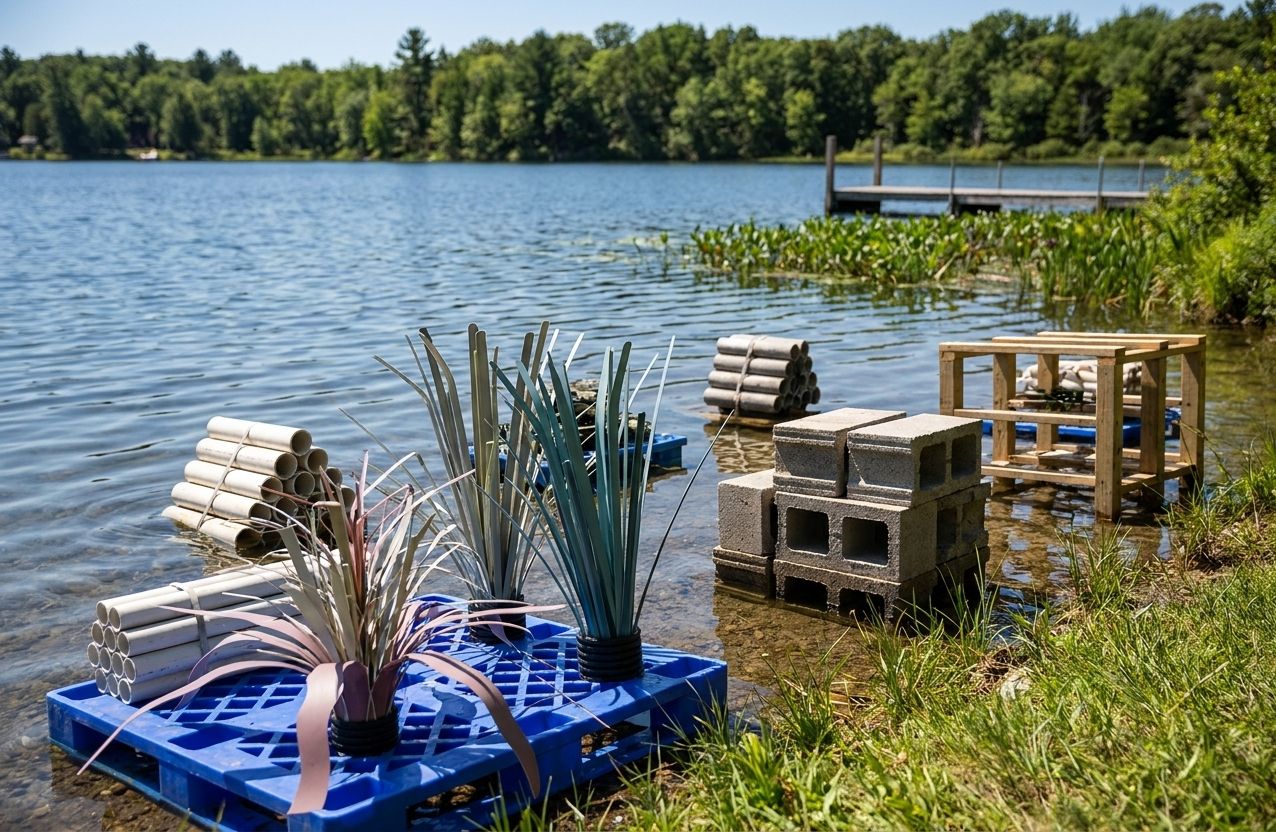
| DIY PVC pipe crib | Budget builders | Built from Fishiding DIY components you assemble yourself | Takes hours of cutting, drilling, and anchoring |
| Stake bed crib | Crappie spawning | Vertical stakes mimic standing timber crappie use to spawn | Needs re-driving after a few seasons in soft bottoms |
| Cinder block and brush crib | Farm pond shallow water | Cheap, heavy base holds brush through spring runoff | Brush breaks down within 2 to 4 years |
| Wood pallet crib | Natural short-term cover | Reclaimed pallets give quick cover with material on hand | Wood rots and loses structure within a few seasons |
| Brush pile crib | Zero-cost temporary cover | Fastest to build with cut limbs and rock | Collapses and sheds branches fastest of any option |
1. Fishiding reclaimed PVC fish crib: best fish crib for pond stocking overall
Fishiding builds its cribs from reclaimed PVC material that was headed for a landfill, cut and shaped into dense, intricate fingers that fill the water column instead of sitting as a flat pile. Underwater footage collected over more than 15 years shows bluegill, crappie, bass, and forage fish all using the same structure at different depths within it. That range of use is the reason it sits at the top of this list for pond stocking in 2026.
Fishiding fish crib pros:
- Documented use by every freshwater species filmed underwater, not just gamefish
- Reclaimed PVC resists rot and breakdown far longer than wood or natural brush
- Preassembled options cut placement time versus building on-site
Fishiding fish crib cons:
- Higher material cost than scrap-built cribs
- Preassembled units are bulkier to transport than flat-pack brush
Best for: pond owners who want one crib design that works across shallow, mid, and deep zones. Verdict: Buy.
2. DIY PVC pipe crib: best fish crib for budget builders
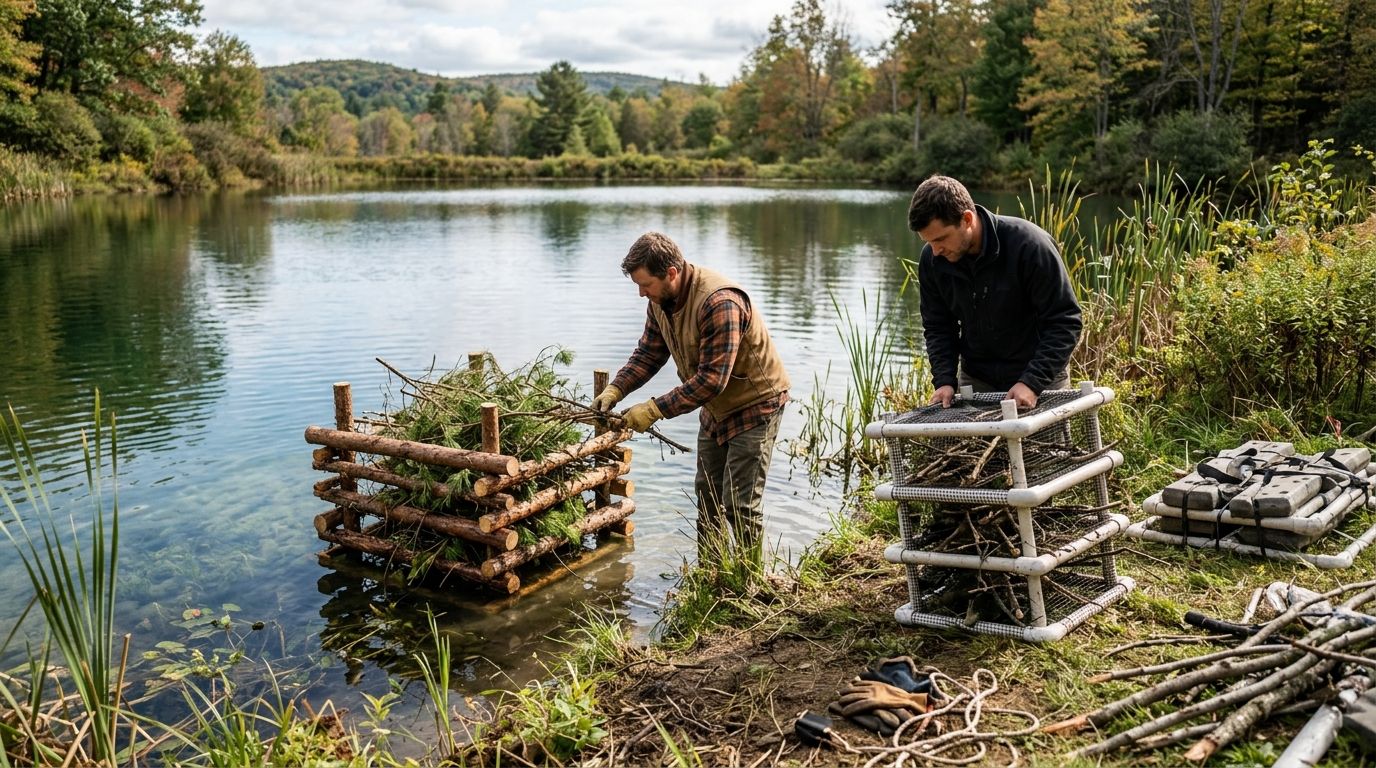
A DIY PVC pipe crib uses cut sections of pipe, connectors, and Fishiding DIY components assembled by hand rather than shipped preassembled. You control the density and shape, and material costs stay lower than a finished unit because you're supplying the labor. Fisheries managers building dozens of cribs for a reservoir often start here to stretch a habitat budget across more sites.
DIY PVC crib pros:
- Lower material cost per crib than preassembled options
- Density and shape adjust to match your target depth zone
- Works well when you're placing a high volume of cribs across a large water body
DIY PVC crib cons:
- Assembly takes hours of cutting, drilling, and anchoring per unit
- Inconsistent builds if multiple people assemble without a set spec
See the DIY fish habitat kits for pond owners guide before you start cutting pipe. Best for: builders with time to invest and a large number of sites to cover. Verdict: Buy.
3. Stake bed crib: best fish crib for crappie spawning structure
A stake bed crib drives vertical stakes into the pond bottom in a grid pattern, mimicking standing timber that crappie use for spawning in spring. The vertical orientation gives crappie a clean substrate to fan nests against, which flat brush piles don't replicate as well. This design shows up often in the crappie habitat structures guide because spawning success depends on that vertical surface.
Stake bed crib pros:
- Vertical stakes closely mimic natural spawning substrate
- Simple materials, straightforward driving pattern
- Works in a range of bottom types when stakes are set deep enough
Stake bed crib cons:
- Stakes loosen and need re-driving after a few seasons in soft mud
- Offers less shelter density than a PVC crib once spawning season ends
Best for: ponds and lakes managed specifically for crappie reproduction. Verdict: Buy for spawning-focused management.
4. Cinder block and brush crib: best fish crib for farm pond shallow water
A cinder block and brush crib stacks blocks as a heavy, stable base and packs cut brush into the gaps and on top. The block base keeps the whole structure anchored through spring runoff and wave action, which loose brush piles can't do on their own. Many farm pond owners lean on this design because it's covered directly in the fish structures for farm ponds guide as a low-cost shallow-water option.
Cinder block crib pros:
- Very low material cost using blocks and cut brush already on the property
- Heavy base resists shifting in shallow, wave-exposed water
- Fast to build with materials most pond owners already have
Cinder block crib cons:
- Brush component breaks down within 2 to 4 years and needs replacing
- Provides less density than a PVC crib once the brush thins out
Best for: farm pond owners stocking shallow water on a tight budget. Verdict: Hold as a budget option, plan to refresh brush every few years.
5. Wood pallet crib: best fish crib for natural short-term cover
A wood pallet crib stacks reclaimed pallets, sometimes weighted with blocks, to create quick cover using material that's often free or nearly free. It gets fish holding over a structure fast, which matters if you're stocking new fingerlings and need cover in the water before predation losses stack up. The tradeoff is lifespan: wood underwater rots faster than PVC or concrete-anchored designs.
Wood pallet crib pros:
- Fast to build with material many pond owners already have on hand
- Provides immediate cover for newly stocked fish
- No specialized tools required beyond basic fasteners
Wood pallet crib cons:
- Rots and loses structural integrity within a few seasons underwater
- Density thins as slats break down, reducing shelter over time
Best for: pond owners who need cover in the water immediately after stocking and plan to replace it later. Verdict: Wait if you can afford a longer-lasting option instead.
6. Brush pile crib: best fish crib for zero-cost temporary cover
A brush pile crib is the simplest option: cut limbs, sometimes weighted with rock, dropped or sunk in a target spot. It costs almost nothing and takes the least time of any design on this list, which makes it a reasonable stopgap while you plan a more durable crib. But brush piles collapse and shed branches faster than any other structure here, and the cover they provide shrinks quickly.
Brush pile crib pros:
- Costs next to nothing if you have access to cut limbs
- Fastest option to place, no assembly required
- Useful as a temporary fix while planning a permanent crib
Brush pile crib cons:
- Collapses and loses branches faster than any structure on this list
- Provides the least density and shortest useful lifespan
Best for: a temporary cover fix, not a long-term stocking plan. Verdict: Skip for permanent placement, use only as a stopgap.
How we ranked these fish cribs
Each crib type was weighed against the same six criteria: density and intricacy, material durability, water column coverage, stability once placed, cost per structure, and ease of assembly. Underwater documentation collected over more than 15 years and thousands of hours of freshwater filming informed the density and durability scoring, since that footage shows how fish actually use each design rather than just where they're detected. Cost and assembly time came from comparing labor and material inputs across DIY and preassembled builds.
“Dense, intricate habitat gives fish and forage species places to shelter and forage at the same time, which flat brush piles and thin stake beds don't replicate as well.”
Which fish crib should you choose?
If you're stocking a pond or reservoir in 2026 and want one design that works across depth zones and holds up for years, the Fishiding reclaimed PVC fish crib is the default pick. If you're building at scale on a tight budget, a DIY PVC pipe crib using Fishiding components gets you there for less per unit, provided you have time to assemble them. If your management goal is specifically crappie reproduction, add stake beds in shallow spawning areas alongside your main cribs rather than choosing one design exclusively.
Compare habitat options for your pond
Preassembled cribs, attractors, and DIY kits for shallow, mid, and deep water.
FAQ
What is a fish crib and how does it differ from a fish attractor?
A fish crib is a built structure, often blocks, stakes, or PVC, designed to sit in one fixed spot and concentrate fish over time. A fish attractor is a broader term that can include cribs, brush piles, and mats; every crib is an attractor, but not every attractor is a crib.
What's the best material for a DIY fish crib in 2026?
Reclaimed PVC is the most durable DIY crib material available in 2026 because it resists rot and breakdown far longer than wood or natural brush. Fishiding's DIY components are built specifically for pond owners assembling their own cribs.
How many fish cribs does a pond need?
The right number depends on pond size, depth variety, and stocking density, and a fisheries manager or the pond's stocking plan should guide the exact count. Spreading cribs across shallow, mid, and deep zones matters more than hitting one fixed number.
Is a PVC fish crib better than a brush pile?
A PVC fish crib lasts years longer than a brush pile and holds its density instead of collapsing within a season or two. Brush piles are cheaper and faster to place, which makes them a reasonable temporary fix, not a long-term structure.
How deep should fish cribs be placed in a pond?
Shallow cribs generally sit in 2 to 6 feet of water, mid-depth cribs in 6 to 15 feet, and deep cribs below 15 feet, depending on the pond's thermocline and target species. Placing cribs across multiple depth zones covers more of the water column than concentrating them in one zone.
Do cinder block cribs attract crappie?
Cinder block and brush cribs attract crappie and other panfish, but a stake bed crib with vertical stakes better mimics the standing timber crappie use for spawning. Combining both designs in the same pond covers more of a crappie's seasonal needs.
How long do wood pallet cribs last underwater?
Wood pallet cribs typically lose structural integrity within a few seasons underwater as the wood rots and slats break down. They work as fast, low-cost cover right after stocking, not as a permanent structure.
Can I build a fish crib myself or should I buy a preassembled one?
You can build a fish crib yourself using DIY PVC components if you have the time for cutting, drilling, and anchoring each unit. A preassembled crib costs more per unit but cuts placement time, which matters if you're working against a stocking or spawning deadline.
One last thing
The underwater footage behind these rankings shows something most pond owners don't expect: it isn't just bass and crappie using dense habitat, it's fry, forage fish, and smaller panfish species too, all sharing the same structure at different depths within it. A crib built with only gamefish in mind misses half the reason dense, intricate habitat works in the first place. Build for the whole food chain, not just the fish you plan to catch.