Private lake owners face a real choice every spring: drop loose brush and hope, or install structure built to hold fish through 2026 and beyond. The best fish structures for private lakes in 2026 depend on your depth zones and your goals — spawning cover, deep-water holding, or a custom build you can place yourself. Best overall: Fishiding preassembled attractors and cribs. Best for shallow spawning cover: Fishiding habitat mats. Best for custom multi-depth builds: Fishiding DIY kits and components. Best budget DIY option: PVC pipe crappie structures you build yourself.
- Fishiding preassembled attractors and cribs win for private lakes needing fast, no-build deep-water cover in 2026.
- Fishiding habitat mats are the top pick for shallow spawning beds and fry nursery habitat.
- DIY kits and components let you match structure density to each depth zone yourself.
- Brush piles and stake beds cost less upfront but break down within a few seasons.
- Reclaimed PVC structures hold their shape and density far longer than wood-based cover.
Why this matters
A private lake without structure loses fish to open water where they're easy targets for predators and hard to find on a line. Natural cover — fallen timber, stumps, weed beds — disappears over time as wood rots and vegetation dies back in winter.
More than 15 years and thousands of hours of underwater filming in freshwater lakes show that every freshwater species, from bluegill fry to mature largemouth bass, uses dense, intricate habitat when it's available. That's the standard any fish habitat you install in 2026 should be measured against — not just whether fish visit it, but whether it holds enough density and variety to shelter multiple species and life stages at once.
What makes the best fish structures for private lakes
Before comparing products, know what separates habitat that works from habitat that gets ignored:
- Depth zone match — shallow structure (roughly 0-6 feet) serves spawning and fry; mid-depth (6-15 feet) holds panfish and juvenile bass; deep structure (15 feet-plus) shelters mature fish and baitfish through summer stratification.
- Density and intricacy — sparse brush gives fish one place to hide; tightly branched, layered structure gives them dozens.
- Material durability — reclaimed PVC resists rot and compaction; wood and natural brush degrade within a few growing seasons.
- Installation effort — sinking a preassembled unit takes minutes; a DIY build takes tools, time, and a weighting plan.
- Species coverage — structure that works for bass alone leaves panfish and forage fish without cover.
- Documented use — underwater footage of fish actually occupying the structure beats a manufacturer's claim with no evidence behind it.
Fish structures for private lakes at a glance
| Structure | Best for | Standout feature | Key limitation |
|---|---|---|---|
| Fishiding preassembled attractors and cribs | Fast deep-water cover, no building required | Dense, reclaimed PVC branching sunk and ready | Heavier units need a boat and a plan for exact placement |
| Fishiding habitat mats | Shallow spawning and fry nursery cover | Low-profile mat spreads across the bottom | Needs anchoring in current or wave-exposed shallows |
| Fishiding DIY kits and components | Custom builds across depth zones | You control density, shape, and depth per unit | Assembly takes time and a basic tool kit |
| PVC pipe crappie structures (DIY) | Budget-minded builders | Cheap materials, simple pipe-and-base design | Needs proper weighting or units drift and tip |
| Cedar stake beds | Stump-and-brush style crappie habitat | Familiar profile crappie anglers already target | Wood degrades and needs replacement within a few years |
| Brush piles | Natural, low-cost interim cover | Fast to place, no cost beyond cutting and hauling | Breaks down within a couple of seasons, thinning fast |
1. Fishiding preassembled attractors and cribs: best fish structure for private lakes needing fast deep-water cover
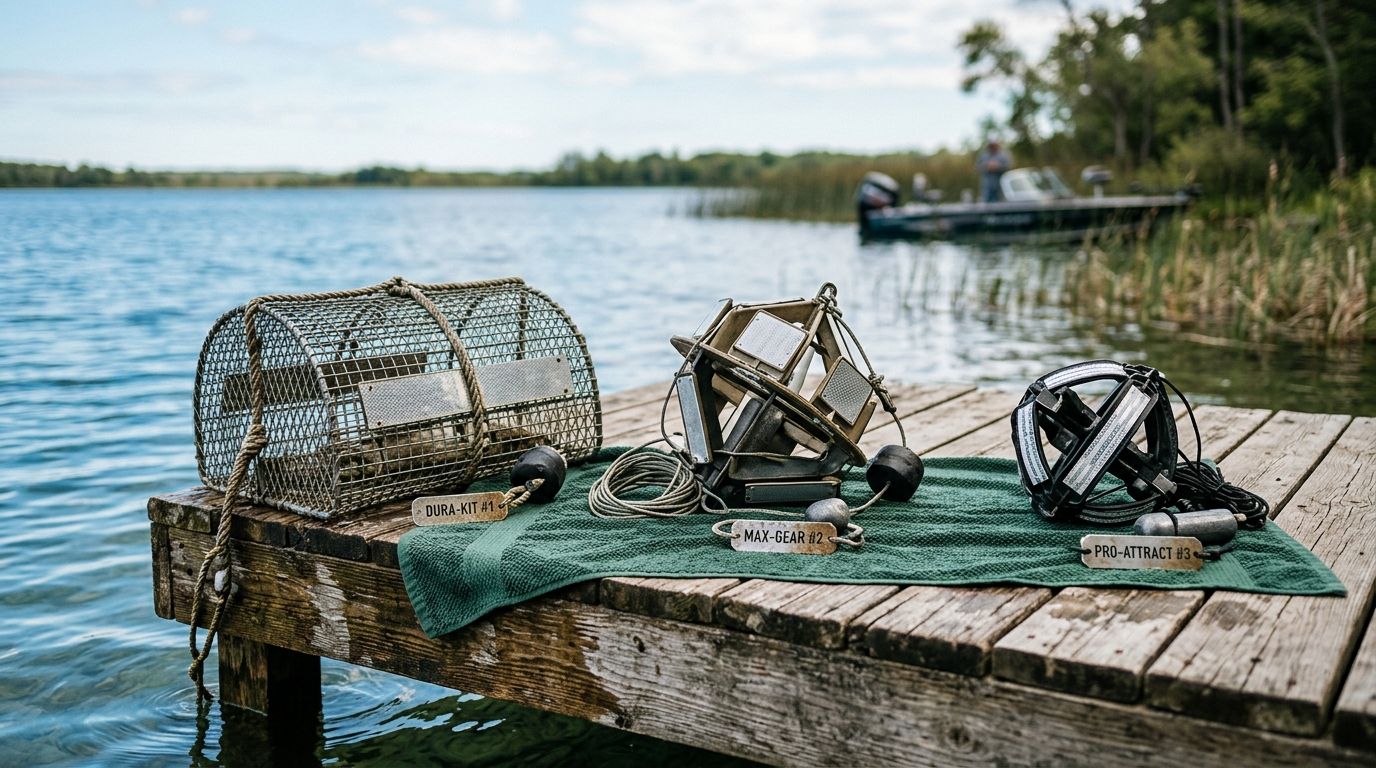
These units arrive built from reclaimed PVC strips woven into dense, branching shapes, then sunk with a weighted base. You skip the build entirely and place finished habitat directly at your target depth. Underwater footage collected over 15-plus years shows bass, panfish, and forage species holding in these units across multiple seasons.
Fishiding attractors and cribs pros:
- No assembly or tools required before sinking
- Dense, intricate branching documented on camera holding multiple species at once
- Reclaimed PVC resists the rot and compaction that break down wood-based cover
- Consistent shape and density from unit to unit
Fishiding attractors and cribs cons:
- Heavier units are easier to place accurately with a boat and depth finder
- Upfront cost per unit runs higher than cutting your own brush
Best for: private lake owners who want deep-water and mid-depth structure in the ground this season without a build project. Verdict: Buy.
2. Fishiding habitat mats: best fish structure for shallow spawning and fry nursery cover
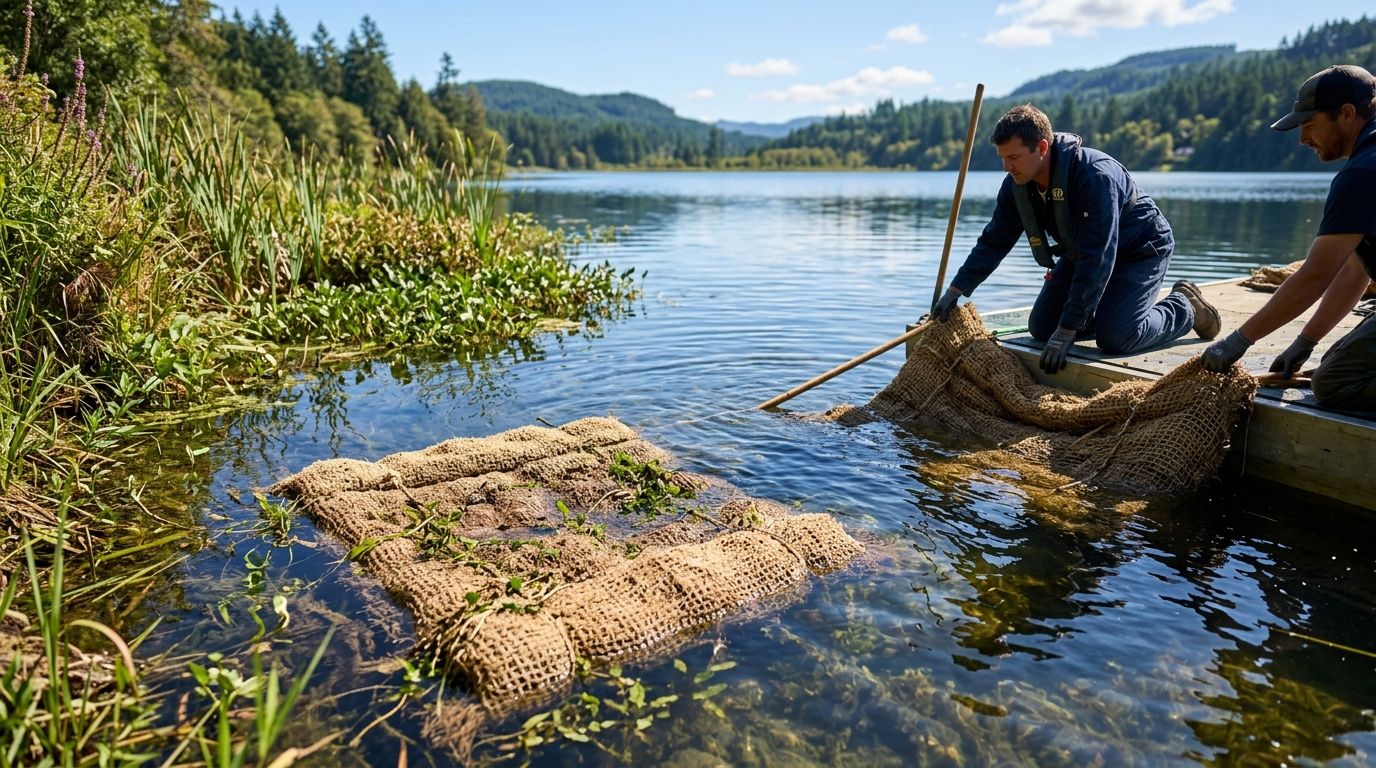
Habitat mats spread a low-profile, reclaimed PVC mesh across the shallow bottom rather than standing tall like a crib. That profile mimics the tangled vegetation bluegill, crappie, and bass fry use to hide from predators in the first weeks of life. Mats work well laid across a bank shelf or shallow flat rather than a single point.
Fishiding habitat mats pros:
- Low profile suits shallow water where a tall structure would break the surface
- Documented underwater use by spawning bluegill and fry-stage fish
- Reclaimed PVC holds its shape without matting down like natural vegetation
- Covers a wider footprint than a single crib
Fishiding habitat mats cons:
- Needs anchoring in shallows exposed to wind or current
- Not built for deep-water holding cover
Best for: shallow spawning beds and fry nursery zones on private lakes and ponds. Verdict: Buy.
3. Fishiding DIY kits and components: best fish structure for custom multi-depth builds
Kits and loose components let you assemble your own reclaimed PVC structure to match a specific depth, density, or footprint rather than accepting a fixed preassembled shape. This suits lake owners mapping out shallow, mid, and deep zones separately and wanting different densities in each. Check the DIY fish habitat kit options before deciding how many zones to build out.
Fishiding DIY kits pros:
- Full control over density and shape per depth zone
- Same reclaimed PVC durability as preassembled units
- Lets you phase installation across a season instead of one big buy
- Good fit for owners already comfortable with basic assembly
Fishiding DIY kits cons:
- Takes real time and a basic tool kit to build
- Results depend on how carefully you weight and space each unit
Best for: owners who want to build habitat matched to three or more distinct depth zones. Verdict: Buy.
4. PVC pipe crappie structures (DIY): best fish structure for budget-minded builders
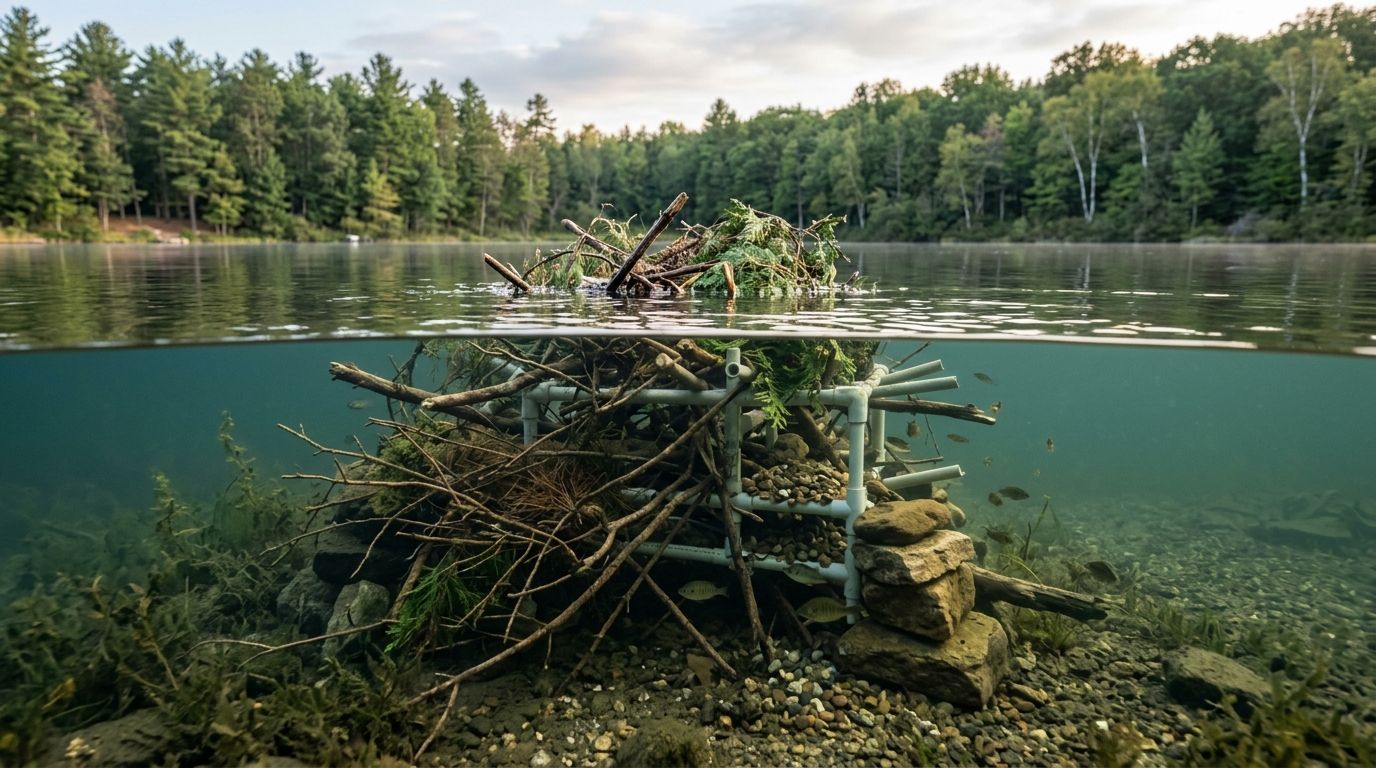
A classic build: PVC pipe sections fanned out from a weighted base, sized to mimic standing timber crappie relate to. Materials cost less than a preassembled attractor, and the design has decades of use behind it among crappie anglers building their own cover.
PVC pipe crappie structure pros:
- Low material cost compared to preassembled units
- Simple design anglers can build in an afternoon
- Works at any depth once properly weighted
PVC pipe crappie structure cons:
- Needs a solid, properly sized base or units drift and tip in current
- Sparse pipe fans offer less density and intricacy than a woven crib
- Quality varies build to build
Best for: anglers building their own crappie structure on a tight budget. Verdict: Hold — fine as a supplement, thinner on documented multi-species use than woven habitat.
5. Cedar stake beds: best fish structure for stump-and-brush-style crappie habitat
Stake beds drive cedar posts or stakes into a shallow-to-mid-depth bottom to recreate the look of flooded timber. Crappie anglers have used the design for decades because it reads like natural standing wood on sonar. See how stake beds compare against other crappie structure builds before committing materials.
Cedar stake bed pros:
- Familiar profile many crappie anglers already target
- Relatively cheap materials if cedar is locally available
- Simple to install without heavy equipment
Cedar stake bed cons:
- Wood degrades and needs replacement within a few years
- Density is fixed once staked — no easy way to add more cover later
Best for: owners replicating a specific timber-style crappie spot they've lost to erosion or clearing. Verdict: Hold.
6. Brush piles: best fish structure for natural, low-cost interim cover
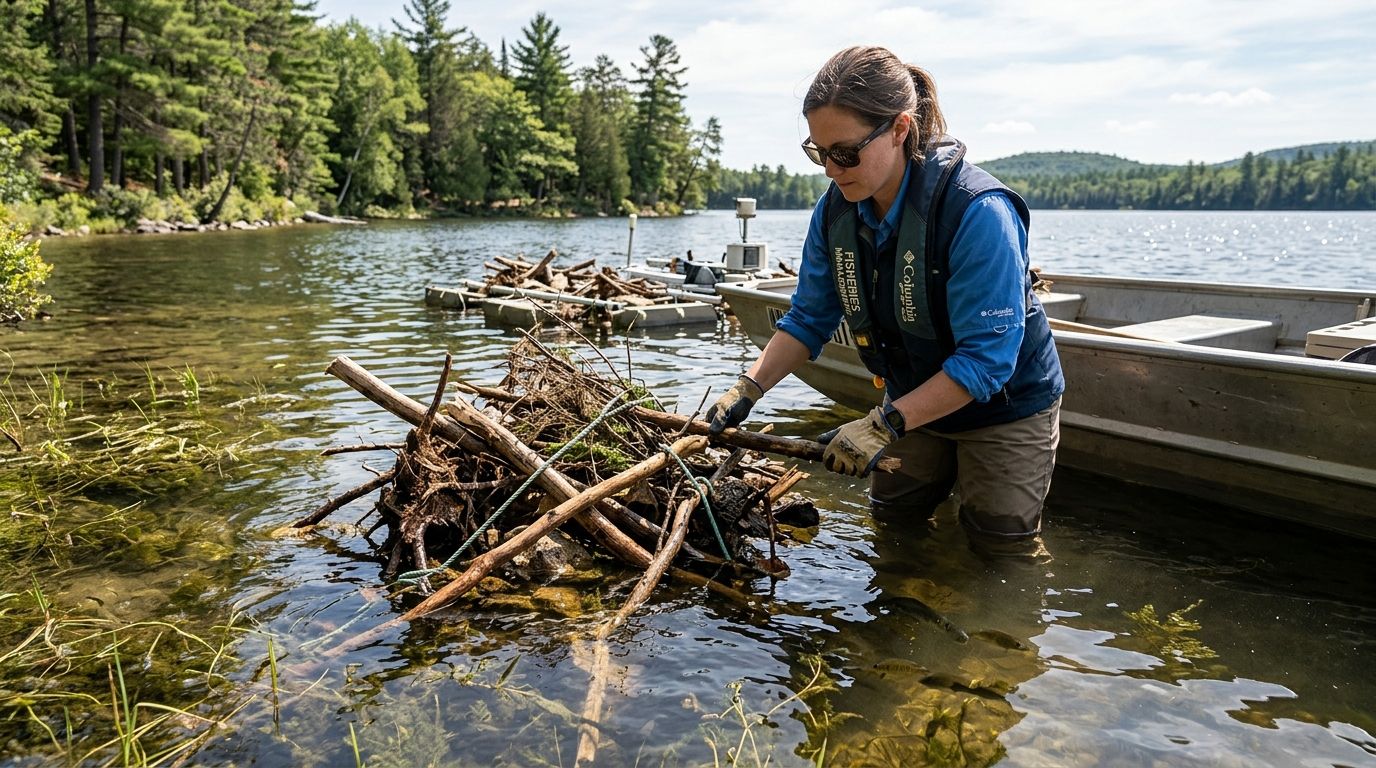
Cut brush sunk with cinder blocks or weights remains the oldest, cheapest way to add cover to a private lake. It works immediately after placement, which makes it a reasonable stopgap while planning a longer-term structure plan.
Brush pile pros:
- No material cost beyond cutting and hauling
- Immediate cover the day it's placed
- Easy to add more piles as needed
Brush pile cons:
- Breaks down within a couple of seasons as branches rot and thin out
- Density and fish-holding value drop fast as the pile compacts
- Needs regular replacement to maintain the same cover level
Best for: lake owners wanting cover this weekend while planning a more durable installation later in 2026. Verdict: Wait — useful as a bridge, not a long-term plan.
How this ranking was built
Each structure type is measured against the same six criteria: depth zone fit, density and intricacy, material durability, installation effort, species coverage, and documented fish use. Reclaimed PVC structures score highest on durability and documented use because they hold their shape across seasons instead of rotting or compacting like wood and cut brush.
“Structure that fish only visit once isn't habitat — structure they hold in across seasons is.”
Which fish structure should you choose?
For most private lake owners planning 2026 stocking or habitat upgrades, Fishiding preassembled attractors and cribs are the default pick — no build time, and dense reclaimed PVC branching backed by documented underwater use. Add Fishiding habitat mats wherever you need shallow spawning or fry cover, since a crib's profile doesn't suit that shallow zone. If you're mapping three or more depth zones and want to build it yourself, Fishiding DIY kits and components give you that control without giving up the same reclaimed PVC durability.
Brush piles and stake beds still have a place as a stopgap or a specific timber-style build, but plan on replacing them within a few seasons as wood and cut brush break down.
Map your lake's habitat plan
Compare structure types by depth zone before you order.
FAQ
What are the best fish structures for private lakes in 2026?
Fishiding preassembled attractors and cribs lead for fast deep-water cover, while habitat mats handle shallow spawning zones and DIY kits suit custom multi-depth builds. The right pick depends on which depth zones your lake still lacks cover in.
Do bass and bluegill use the same type of fish structure?
Both species use dense, intricate habitat, but at different depths and life stages. Bluegill fry favor shallow, low-profile cover like habitat mats, while adult bass often hold around mid-depth and deep-water cribs.
How deep should fish structures be placed in a private lake?
Shallow structure works well from the surface to about 6 feet for spawning and fry cover, mid-depth structure from roughly 6 to 15 feet holds panfish and juvenile bass, and deep structure past 15 feet shelters mature fish during summer stratification. Match structure type to each zone rather than using one design everywhere.
Are DIY PVC fish structures as effective as preassembled units?
They can be, provided the build reaches similar density and is weighted correctly so it doesn't drift or tip. Preassembled units remove that risk since density and stability are set before the unit reaches the water.
How long do brush piles last compared to PVC fish structures?
Brush piles typically thin out and lose fish-holding value within a couple of seasons as branches rot and compact. Reclaimed PVC structures hold their shape and density far longer, based on documented underwater footage collected over 15-plus years.
Is a fish habitat mat better than a fish crib for spawning?
For shallow spawning and fry nursery cover, mats generally work better because their low profile matches the tangled vegetation fry use to hide. Cribs are built for a taller, more upright profile suited to mid and deep water.
How much fish structure coverage does a private lake need?
Coverage needs vary with lake size, fish density, and existing natural cover, so there's no single number that fits every lake. Start by mapping which depth zones currently have no structure and prioritize those first.
Can one type of structure cover every depth zone on a private lake?
No single structure type fits shallow, mid, and deep water equally well. Pairing shallow habitat mats, mid-depth cribs, and deep-water attractors covers more of the water column than relying on one design.
One last thing
The detail most lake owners miss in 2026: density matters more than total footprint. Ten tightly branched, intricate units spread across your depth zones will hold more fish across more life stages than one large but sparse pile of brush, based on more than 15 years of underwater footage showing fish crowding into the most intricate sections of any structure, not the biggest ones.