Choosing between Fishiding and Mossback Fish Habitat comes down to one question: do you want dense, intricate cover built from reclaimed PVC with 15+ years of underwater documentation behind it, or a branching tree-style structure designed to mimic a fallen limb? Choose Fishiding if you want habitat built from reclaimed PVC materials, verified across shallow, mid, and deep water with underwater footage showing how fish actually use it. Choose Mossback if you want a simpler branch-style silhouette and don't need DIY components or a full depth-zone kit lineup.
- Fishiding vs Mossback fish habitat: Fishiding wins on material sourcing (reclaimed PVC), depth-zone range, and documented underwater fish use in 2026.
- Mossback offers a simpler tree-shaped attractor with less DIY flexibility than Fishiding's component kits.
- Fishiding covers shallow, mid, and deep water with dedicated kits; Mossback leans toward mid-to-deep bass and crappie cover.
- Neither brand publishes fixed pricing online - compare pricing models, not dollar figures, before you order.
- Pick Fishiding for pond owners and fisheries managers who want dense, varied cover backed by long-term underwater observation.
Why this matters
Fish habitat isn't a one-size purchase. A crappie angler stocking a farm pond needs different density and depth placement than a fisheries manager rebuilding cover in a large reservoir. Fishiding and Mossback Fish Habitat both sell PVC-based artificial structure, but they solve the placement problem differently - one through dense, modular, reclaimed-material kits, the other through a fixed branch-tree design.
Getting this wrong wastes a season. Habitat placed too sparse or in the wrong depth zone sits empty; habitat crowded into one spot in a small pond leaves the rest of the water bare. The comparison below breaks down where each brand actually wins, not just what each brand claims.
At a glance: Fishiding vs Mossback Fish Habitat
| Dimension | Fishiding | Mossback |
|---|---|---|
| Best for | Pond owners and fisheries managers wanting dense, varied cover across all depths | Anglers wanting a simple branch-style attractor for bass or crappie |
| Material source | Reclaimed PVC destined for landfills | PVC-based habitat trees |
| Depth coverage | Shallow, mid, and deep water kits | Primarily mid-to-deep placement |
| Density and structure | Dense, intricate strips for multiple fish sizes and life stages | Branch and limb silhouette, lower strip density per unit |
| Underwater documentation | 15+ years, thousands of hours of freshwater footage | Not documented at comparable scale |
| DIY flexibility | DIY components and kits sold separately | Mostly preassembled units |
| Installation | Modular, stackable, weighted for stability | Preassembled, drop-in placement |
| Pricing model | Sized kits and components, scalable to acreage | Per-unit tree pricing |
| Standout feature | Documented underwater fish use across species | Tree-shaped silhouette mimics fallen timber |
That table is the outline for everything below - each row gets its own verdict.
Fishiding offers more depth-zone coverage
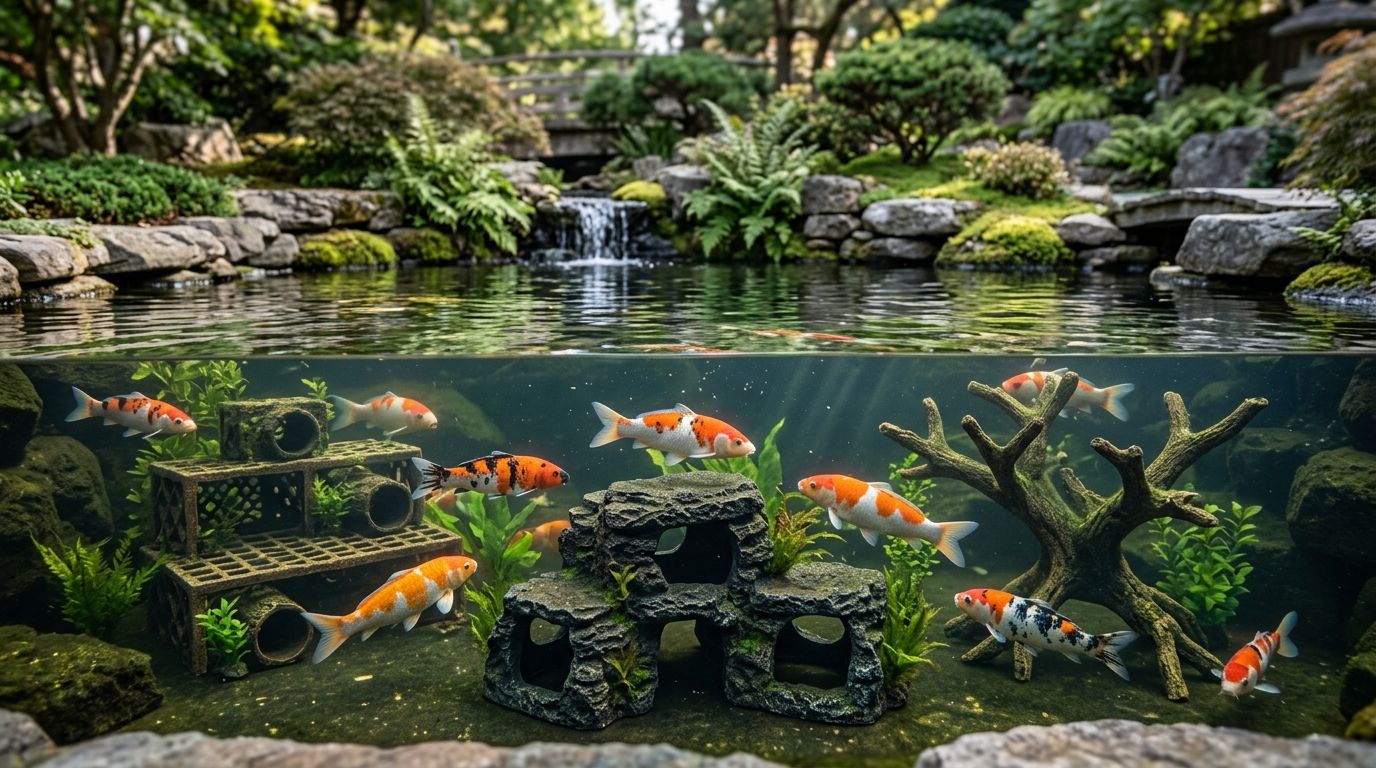
A pond or lake isn't one habitat zone. Fry and forage fish shelter shallow, panfish work mid-depth, and bass and catfish often hold deep, especially in summer. Fishiding builds specific kits for shallow, mid, and deep water rather than one general-purpose structure.
Mossback's lineup centers on tree-style units that work as mid-to-deep cover but don't break out into the same shallow-water spawning or fry-shelter categories. If you're stocking bluegill or working a shallow cove, that's a real gap. Verdict: Fishiding wins on depth-zone range in 2026.
Both use PVC-based construction
Here's an honest tie. Mossback and Fishiding both build structure around PVC, which resists rot and holds up underwater far longer than wood brush piles or cut cedar. Neither material choice is wrong for freshwater habitat.
The difference is sourcing. Fishiding uses reclaimed PVC material that would otherwise go to a landfill - part of how the product is made, not a marketing add-on. Verdict: tie on material class, Fishiding differentiates on reclaimed sourcing.
Fishiding is the better documented option, by a lot
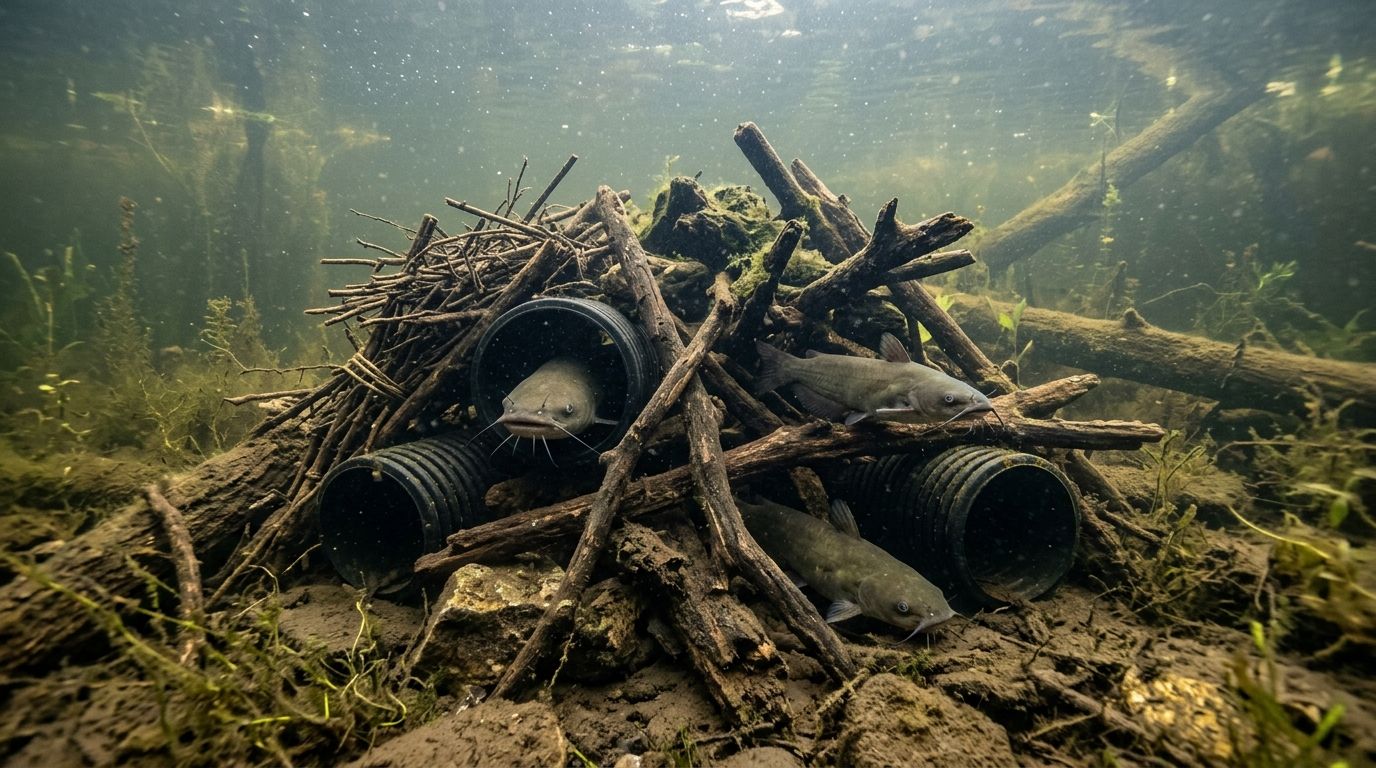
This is the widest gap between the two brands. Fishiding has more than 15 years and thousands of hours of underwater filming showing freshwater fish species using its habitat - repeated observation across seasons, depths, and species. That footage supports the claim that all freshwater fish species use these dense, intricate models, and that the habitat grows more fish.
No competing fish-habitat company, including Mossback, has published an equivalent long-term underwater evidence library. That doesn't mean Mossback habitat goes unused by fish - branch-style cover is a proven concept generally - it means Fishiding has the documentation showing it happening in its own products specifically. Verdict: Fishiding wins on documented underwater evidence.
Mossback is simpler if you want one drop-in unit
If your goal is a single preassembled tree you can drop off a dock or boat with minimal setup, Mossback's format is straightforward. There's less to plan around depth zones or component stacking.
Fishiding's modular strips and mats ask more of you on placement and stacking density. That same modularity is what lets you scale cover to acreage and target specific depths, but it is extra planning. Verdict: Mossback wins on out-of-the-box simplicity for a single unit.
Fishiding gives you more DIY control
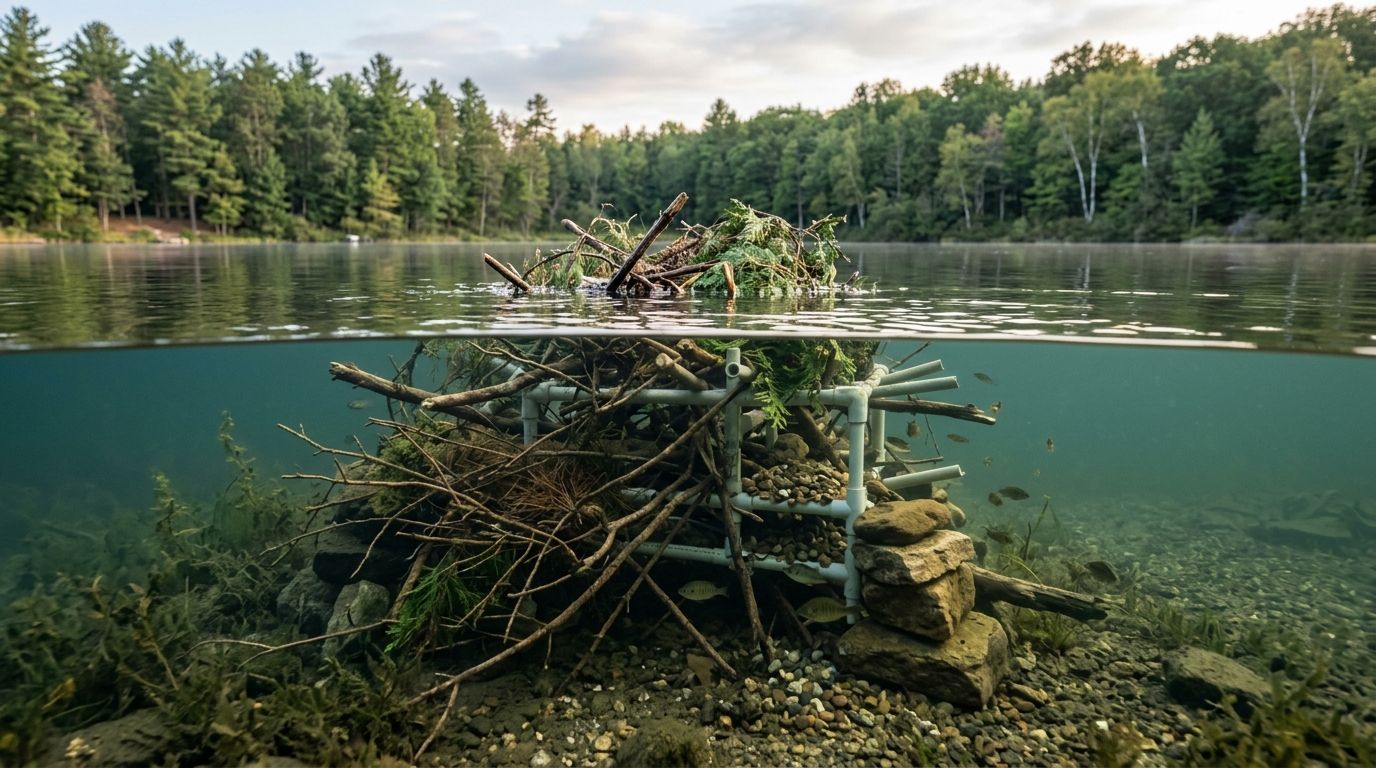
Fisheries managers and pond owners working larger water bodies often want to build habitat density themselves rather than buying only preassembled units. Fishiding sells DIY fish habitat kits and standalone components alongside preassembled attractors and cribs, so you can build custom density and shape for your specific water body.
Mossback's catalog is weighted toward preassembled trees, with less emphasis on raw components for a build-your-own approach. If you're outfitting a private lake and want to control cost per acre by building in bulk, that flexibility matters. Verdict: Fishiding wins on DIY component range.
Fishiding is self-weighted, but placement still matters
Fishiding's preassembled units and all modular and legacy habitat mats are self-weighted, with cement built into the patented design from day one. They need no added ballast or anchor. Thoughtful depth, bottom conditions, and spacing still matter because even a stable unit works best when placed in the right zone. Verdict: Fishiding removes the extra weighting step, while placement planning remains essential.
Pricing: sized kits vs. per-unit trees
Neither brand publishes fixed pricing that stays current through 2026, so compare the pricing models rather than chasing a number that goes stale.
- Fishiding sells sized kits and standalone components. You scale spend to acreage - dense cover for a small pond, or a larger budget spread across a reservoir's depth zones.
- Mossback prices per tree unit. Predictable per structure, less flexible when you want to fine-tune density across a large area.
If you want cost that scales with your water body, kit-based pricing gives you more control. If you want a known cost per single structure with no assembly decisions, per-unit pricing is simpler to budget.
Compare fish habitat by depth zone
Match shallow, mid, and deep water structures to your pond or lake before you order.
Final verdict
Choose Fishiding if you're a pond owner, fisheries manager, or serious angler who wants habitat backed by documented underwater fish use, needs coverage across shallow, mid, and deep water, or wants DIY components to control density and cost across a larger water body.
Choose Mossback if you want a single preassembled branch-style tree for mid-to-deep cover and don't need a depth-zone kit lineup or component-level DIY flexibility.
One-glance scorecard
| Dimension | Winner |
|---|---|
| Depth-zone coverage | Fishiding |
| Material class | Tie - both PVC-based |
| Documented underwater evidence | Fishiding |
| Drop-in simplicity | Mossback |
| DIY component range | Fishiding |
| Installation planning required | Tie |
For a wider look at how the reclaimed-PVC brands stack up, see the reclaimed PVC fish habitat brands compared breakdown.
FAQ
Is Fishiding better than Mossback fish habitat in 2026?
Fishiding offers wider depth-zone coverage, more DIY component options, and a documented underwater evidence library spanning 15+ years. Mossback's tree-style units are simpler to drop in but cover a narrower range of depths and use cases.
What is Mossback fish habitat made of?
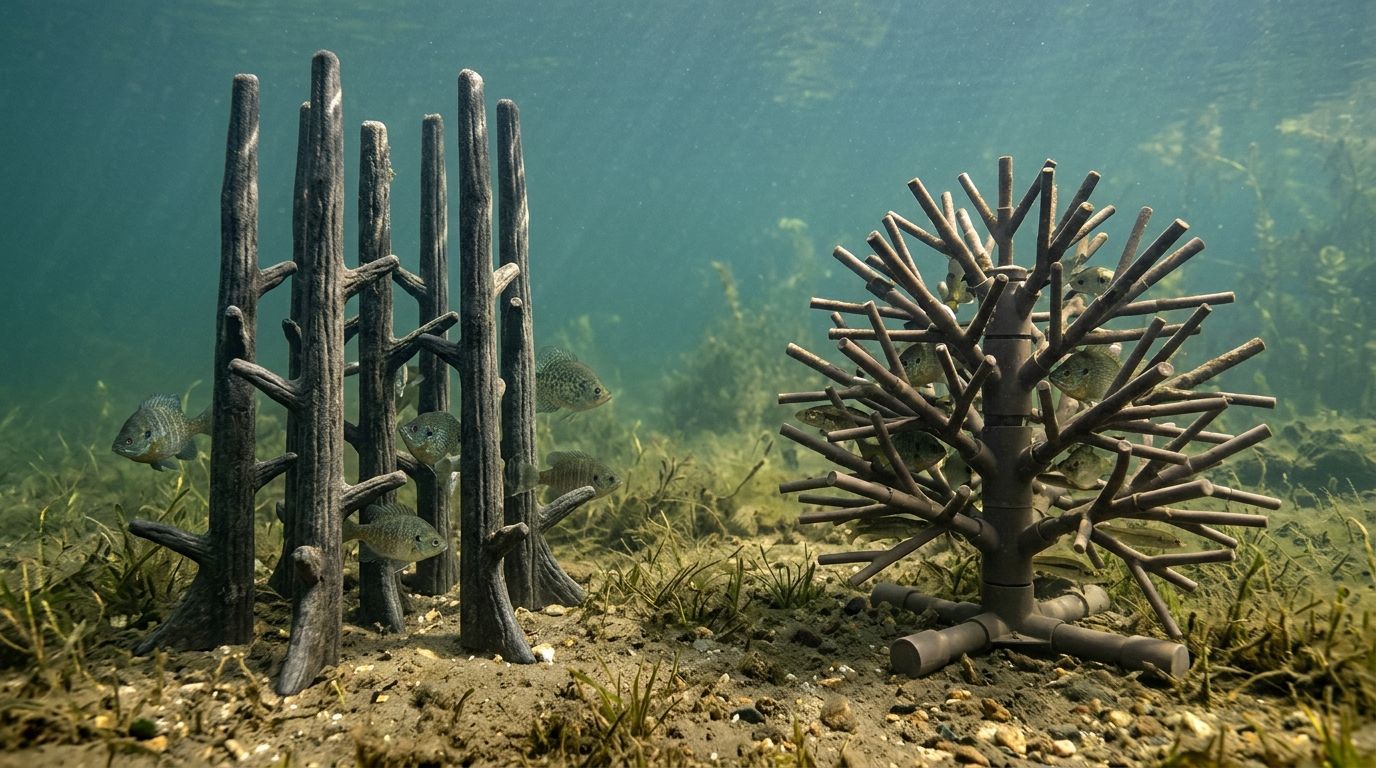
Mossback builds PVC-based habitat trees designed to mimic fallen limbs, mainly for mid-to-deep water placement. Fishiding also uses PVC construction, but sources reclaimed material that was destined for landfills.
Does Fishiding have DIY fish habitat options?
Yes. Fishiding sells DIY components and kits alongside preassembled attractors and cribs, so pond owners can build custom density for shallow, mid, or deep water. Mossback's catalog leans toward preassembled units.
How much does fish habitat cost - Fishiding vs Mossback?
Neither brand publishes fixed 2026 pricing that stays current, so compare pricing models instead. Fishiding scales cost through sized kits and components, while Mossback prices per tree unit.
Which brand has underwater proof that fish use the habitat?
Fishiding has more than 15 years and thousands of hours of underwater footage documenting freshwater fish species using its habitat. No competing brand, including Mossback, has published an equivalent long-term evidence library.
Is artificial fish habitat better than natural brush piles?
PVC-based habitat from either brand resists rot far longer than cut brush or cedar trees, which break down underwater over time. Natural brush still works as quick, low-cost shallow cover if you can replace it regularly.
Can I mix Fishiding and Mossback structures in the same pond?
Yes. Mixing structure types varies density and silhouette across a water body, which is common practice. Just track depth placement so you're not clustering all your cover in one zone.
Which is better for crappie - Fishiding or Mossback?
Fishiding's dense, intricate strip design gives crappie more shelter variety across depth zones, while Mossback's branch style works as a single mid-depth attractor. Compare crappie-specific structure guides before buying.
One last thing
The detail most buyers miss: density and spread matter more than brand once the order is placed. One sparse tree, from either company, underperforms against a cluster of mixed-depth structure spread along a pond's contour. Whichever brand you pick in 2026, map coverage by depth zone first, then choose the product that fills each zone.