Choose Fishiding if you want a fish habitat specialist that builds dense, intricate reclaimed-PVC structures and backs the design with more than 15 years of underwater filming across freshwater species. Choose Outdoor Water Solutions if you want one vendor to handle broader pond management — aeration, fountains, water treatment — with habitat as one line in a wider catalog. The real difference isn't quality of PVC, it's focus: Fishiding builds habitat and only habitat; Outdoor Water Solutions builds a pond-management business that also sells habitat.
- Fishiding vs Outdoor Water Solutions in 2026 comes down to specialist habitat design versus broad pond-product convenience.
- Fishiding uses reclaimed PVC destined for landfills, built into dense, intricate structures documented with underwater footage.
- Outdoor Water Solutions sells habitat alongside aeration, fountains, and dye as part of a wider pond management line.
- Fishiding wins on habitat density, DIY component options, and documented species use; Outdoor Water Solutions wins on catalog breadth.
- Pond and lake owners who want habitat as the core purchase should start with Fishiding's structure and kit options.
Why this matters
Anglers, pond owners, and fisheries managers researching fish habitat in 2026 usually land on two kinds of vendors: companies built entirely around habitat structure, and pond-supply companies that carry habitat as one product among many. That distinction changes what you're actually buying — a purpose-built shelter system with documented fish use, or a catalog add-on to an aeration or water-quality order.
Fishiding's business is reclaimed PVC fish habitat: preassembled attractors and cribs, habitat mats, DIY components, and kits for shallow, mid, and deep water. Outdoor Water Solutions runs a broader pond-management catalog that includes MossBack-branded habitat structures alongside fountains, aeration systems, and dye products. Neither model is wrong — the right one depends on whether habitat is your project or one line item in a bigger pond overhaul.
If you're weighing Outdoor Water Solutions alternatives against a dedicated habitat builder, the comparison below breaks it down by the factors that actually affect fish use and installation.
At a glance
| Dimension | Fishiding | Outdoor Water Solutions |
|---|---|---|
| Best for | Pond/lake owners prioritizing fish shelter and structure | Owners managing a full pond system (aeration, water quality, habitat) |
| Core focus | Fish habitat only | Pond management, habitat as one category |
| Material | Reclaimed PVC, destined for landfills | PVC-based structures under the MossBack line |
| Habitat density/design | Dense, intricate, multi-branch structures | Simpler branch and frame designs |
| Underwater documentation | 15+ years, thousands of hours of freshwater footage | Not a documented focus area |
| Depth zone coverage | Shallow, mid, and deep water kits | Shallow to mid-depth habitat offerings |
| DIY component options | Full DIY kits and raw components | Preassembled structures, limited DIY parts |
| Catalog breadth | Habitat-only | Aeration, fountains, dye, water treatment, habitat |
| Pricing model | Direct per-unit and kit pricing | Bundled pond-system pricing |
Fishiding builds denser, more intricate structure
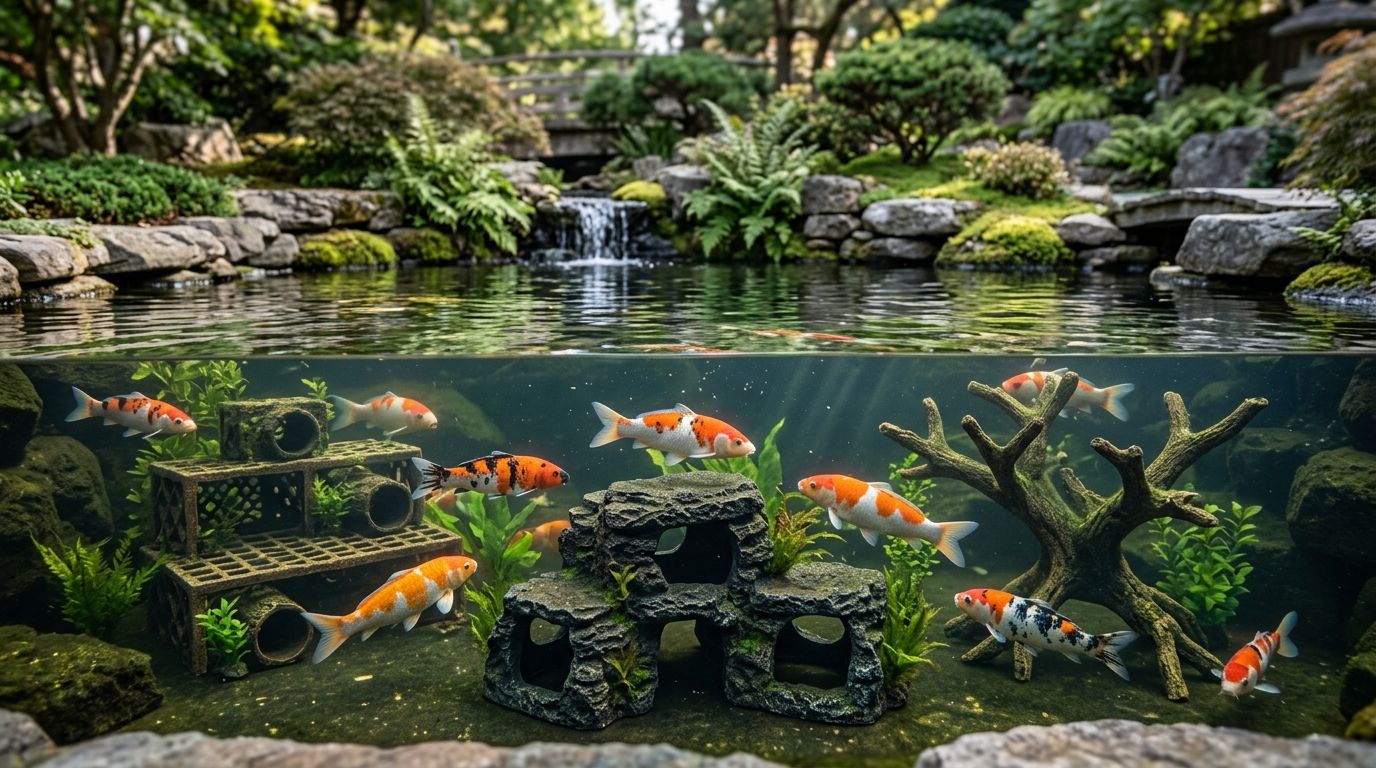
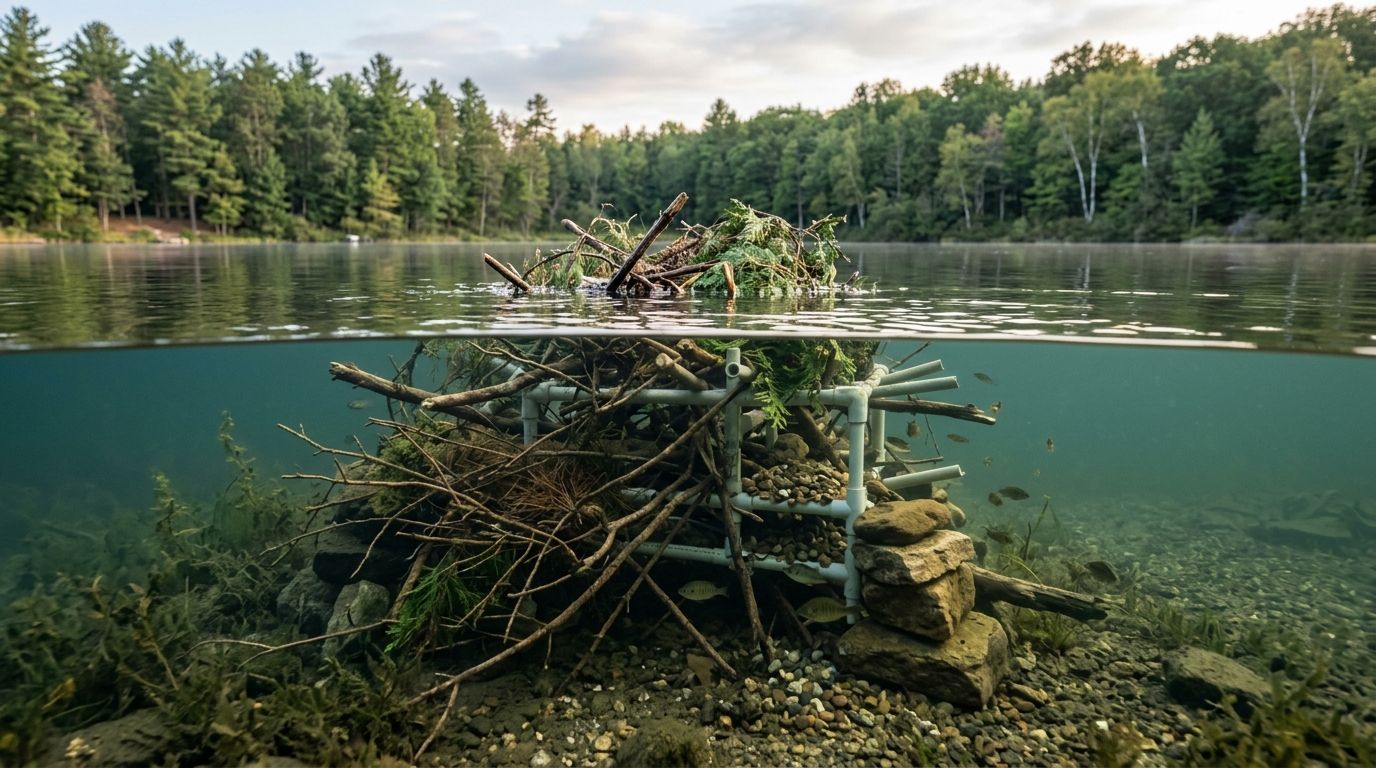
Fishiding's habitat is built from strips and sections of reclaimed PVC layered into dense, tangled forms that mimic brush and root systems. That density matters because fish — from fry to adult bass — use the gaps between branches differently depending on size and species.
Outdoor Water Solutions' habitat designs, sold under the MossBack name, tend toward simpler branch-and-base structures. They function as attractors, but the intricacy and layering isn't the primary design goal the way it is for Fishiding. Fishiding wins on structural density for owners who want habitat that gives fish more places to shelter and forage in a single unit.
Fishiding has the underwater evidence, by a lot
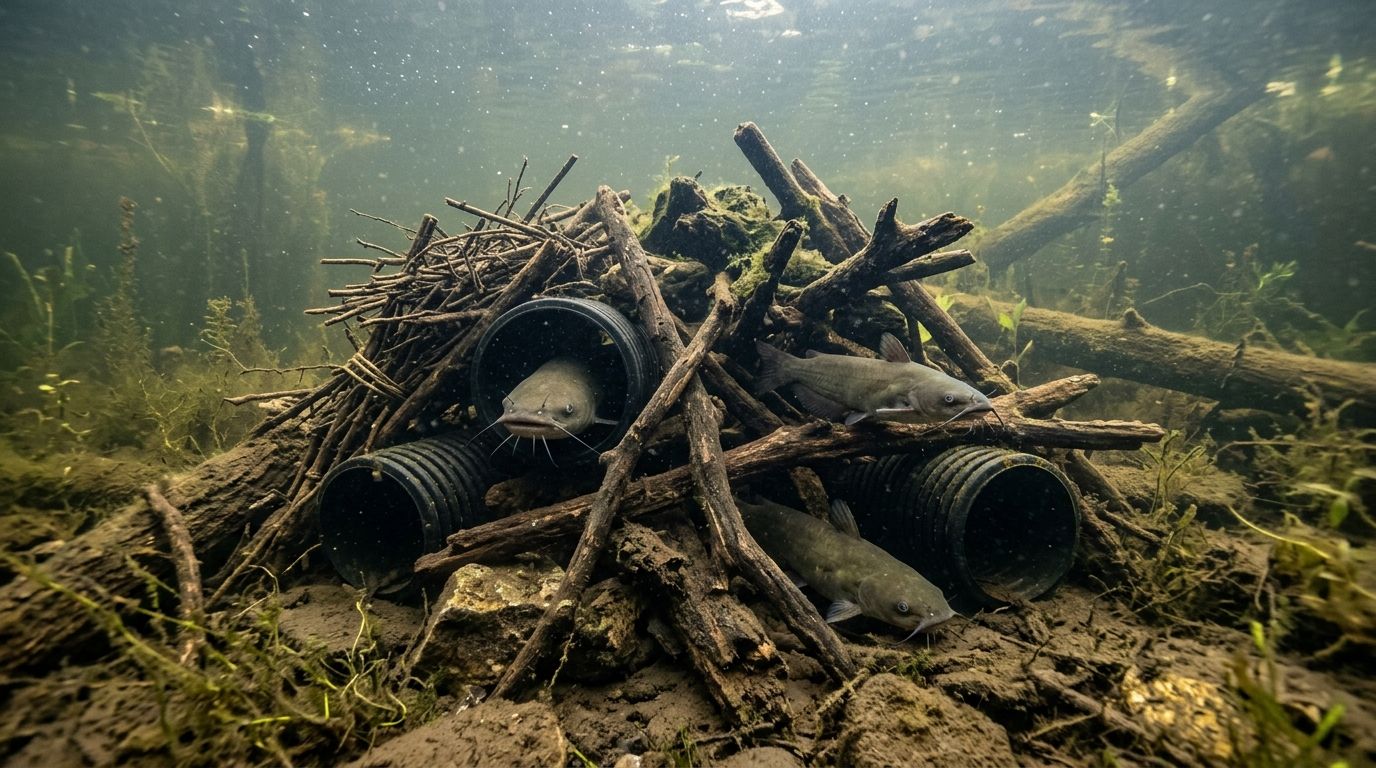
This is the widest gap between the two companies. Fishiding has more than 15 years and thousands of hours of underwater filming in freshwater lakes documenting how bluegill, crappie, bass, catfish, and forage fish actually use its habitat — at what depth, in what season, and at what life stage.
Outdoor Water Solutions doesn't publish an equivalent underwater documentation library. That doesn't mean their habitat doesn't attract fish — attractor structures of any design draw fish activity — but there isn't the same body of long-term footage tying design choices to observed use. Fishiding wins here, and the margin isn't close.
Outdoor Water Solutions covers more of the pond, in one order
If your project is bigger than habitat — you're also fixing low dissolved oxygen, adding a fountain, or dealing with algae — Outdoor Water Solutions' broader catalog means one vendor relationship instead of several. That's a real convenience for pond owners managing water quality and habitat at the same time.
Fishiding doesn't sell aeration or water treatment products. Outdoor Water Solutions wins on catalog breadth for anyone treating fish habitat as one part of a larger pond-management project rather than the main event.
Fishiding gives you more DIY control
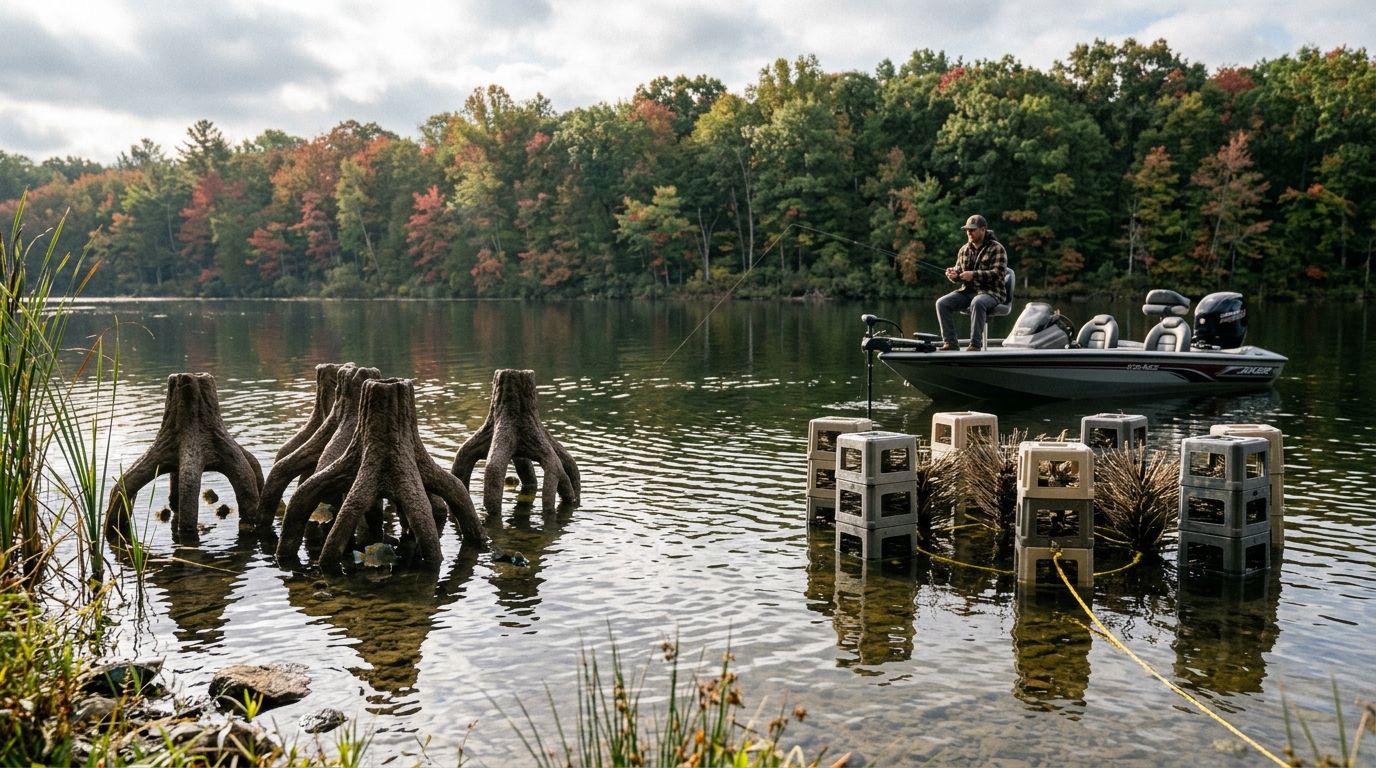
Fishiding sells DIY components and kits, not just preassembled units. That matters for fisheries managers or pond owners who want to build custom structure sizes, mix materials across depth zones, or scale a project on a large private lake without buying only fixed-size preassembled attractors.
Outdoor Water Solutions' habitat line leans toward preassembled structures with fewer raw-component options for custom builds. Fishiding wins on DIY flexibility — check the DIY fish habitat kits for pond owners if that's the route you want.
Both cover shallow-to-mid depth placement well
Here's a tie. Both companies offer habitat aimed at shallow and mid-depth zones, which is where most spawning and forage activity happens in warm-water ponds. Fishiding extends further into dedicated deep-water kits; Outdoor Water Solutions' habitat line concentrates more heavily on shallow-to-mid placements tied to its broader pond systems.
For a straightforward shallow or mid-depth project in 2026, both companies handle the basics reasonably well — the difference shows up in density and documentation, not in depth-zone availability alone.
Pricing: per-unit versus bundled
Neither company's pricing belongs hard-coded in a comparison table, since it changes. What's worth understanding is the model behind each.
Fishiding prices habitat by the unit, mat, or kit, so you can scale a project by adding structures as budget allows — predictable per-piece cost, but you build the plan. Outdoor Water Solutions tends to fold habitat into larger pond-system quotes alongside aeration or water-quality equipment, which simplifies a big project but makes it harder to isolate what habitat alone costs. If habitat is your only need, per-unit pricing from a specialist is easier to budget against. Check current pricing directly with each company before deciding.
Compare habitat structures for your pond
See density, depth-zone fit, and DIY options before you order.
Final verdict
Choose Fishiding if: you're a pond owner, lake association, or fisheries manager whose main goal is fish shelter and forage habitat, and you want dense, intricate structure backed by documented underwater fish use across species and depths.
Choose Outdoor Water Solutions if: you're managing a full pond system — aeration, fountains, water quality — and want habitat included in a broader vendor relationship rather than sourced separately.
For a look at how other reclaimed-PVC brands stack up beyond these two in 2026, the reclaimed PVC fish habitat brands compared breakdown covers additional options.
Scorecard
| Dimension | Winner |
|---|---|
| Habitat density and design | Fishiding |
| Underwater documentation | Fishiding |
| Catalog breadth | Outdoor Water Solutions |
| DIY component options | Fishiding |
| Depth zone coverage | Tie |
| Pricing model | Depends on project scope |
FAQ
Is Fishiding better than Outdoor Water Solutions for fish habitat in 2026?
Fishiding is the better choice when habitat is the main goal, since it builds dense, documented structures rather than treating habitat as one product line among many. Outdoor Water Solutions works better when habitat is part of a wider pond-management purchase.
Does Outdoor Water Solutions make its own habitat structures?
Outdoor Water Solutions sells habitat under its MossBack line alongside aeration, fountains, and water treatment products. It is one category in a broader pond-management catalog rather than the company's sole focus.
What material does Fishiding use for fish habitat?
Fishiding builds habitat from reclaimed PVC that was destined for landfills, formed into dense, intricate structures for shallow, mid, and deep water placement.
Which company has more underwater documentation of fish using their habitat?
Fishiding has more than 15 years and thousands of hours of underwater freshwater footage documenting fish use across species and depths. Outdoor Water Solutions does not publish an equivalent documentation library.
Can I build my own habitat instead of buying preassembled units?
Yes, Fishiding sells DIY components and kits for owners who want custom structures. Outdoor Water Solutions leans more toward preassembled habitat with fewer raw-component options.
Do both companies offer habitat for deep water?
Fishiding sells dedicated deep-water kits in addition to shallow and mid-depth options. The Outdoor Water Solutions habitat line is weighted more toward shallow-to-mid depth placements.
Which is the better single vendor for a full pond management project?
Outdoor Water Solutions covers more ground in one order if you also need aeration, fountains, or water treatment alongside habitat. Fishiding is the stronger single-purpose habitat vendor.
Do all freshwater fish species use Fishiding habitat?
Underwater observations documented by Fishiding show freshwater species using its dense, intricate habitat models across life stages. Placement and use still vary by species, season, and water body.
One last thing
The detail most owners miss: habitat density affects which fish size classes actually use a structure. A loosely spaced attractor mostly shelters larger fish patrolling the edges, while dense, layered PVC gives fry and forage fish tight cover from predators too — part of why Fishiding's underwater footage shows multiple species and size classes using the same structure at once.