You want a fish structure alternative to Structure Spot because you're either building out a whole lake plan or trying to stretch a habitat budget further than one modular unit design allows. Structure Spot does one thing well: it gives anglers a fast, mappable spot to drop a unit and return to later. The ceiling shows up when you need habitat that covers a full depth range, holds fry and forage fish as well as adult bass, or scales to cover acres instead of a handful of GPS pins. The best Structure Spot alternative in 2026 is Fishiding if you're managing habitat density and variety across a whole pond or lake; Mossback if you want a nationally distributed preassembled brand with dealer support.
- Fishiding wins for dense, intricate habitat that documented underwater footage shows all freshwater species using.
- Structure Spot works for anglers who want a single mappable spot, not full-lake habitat coverage.
- Mossback and Pond King compete on preassembled convenience but use less varied branch density per unit.
- American Fish Tree suits owners who want a tree-shaped silhouette structure rather than a mat or crib format.
- Structure spot alternatives in 2026 split between single-spot angler tools and whole-water-body habitat systems.
Why this matters
A single Structure Spot unit marks a location. It doesn't replicate the branching, layered cover a fish population actually needs to shelter fry, ambush forage, and spread across depth zones as seasons change. Fisheries managers and pond owners planning habitat for 2026 stocking or restoration work need something that holds up across shallow, mid, and deep water, not just a spot an angler can find on a graph.
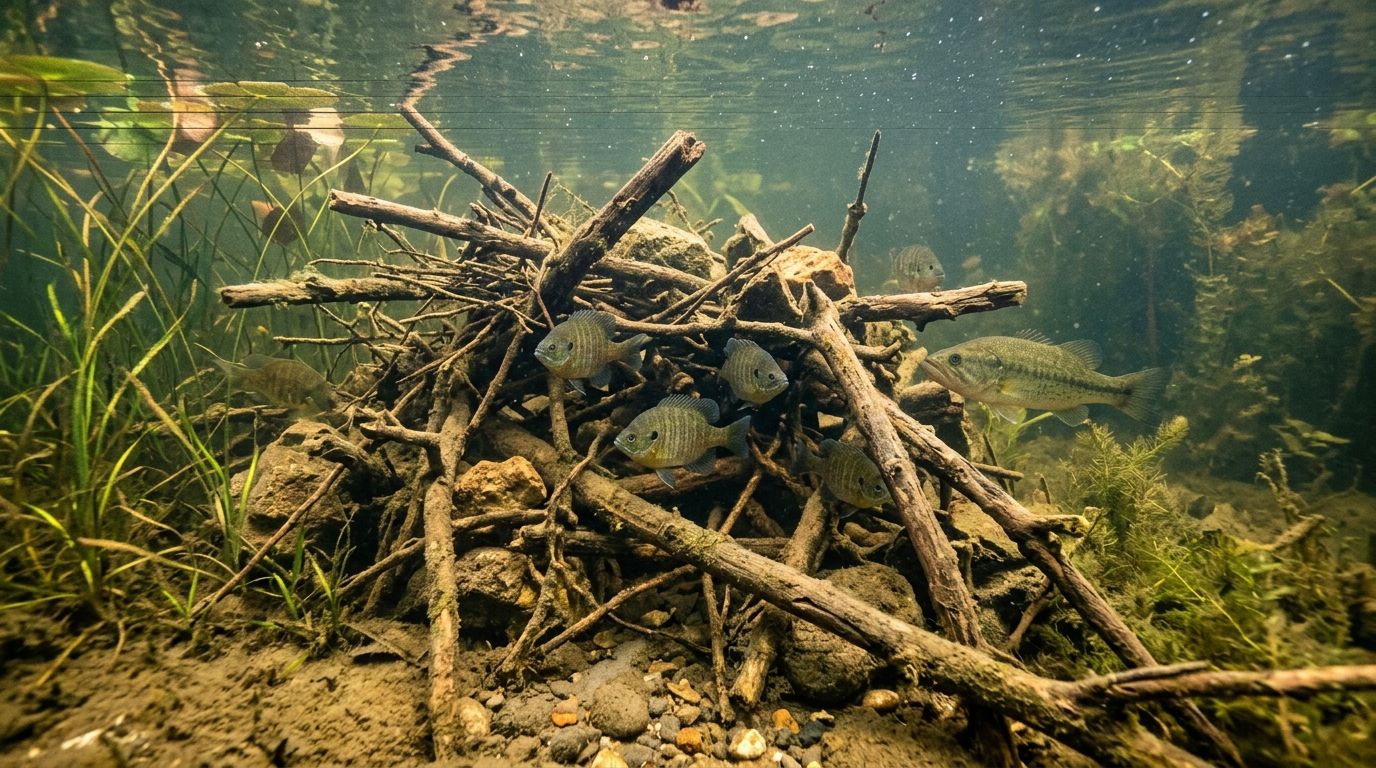
Fishiding builds artificial fish habitat from reclaimed PVC, material otherwise headed to a landfill, shaped into dense, intricate structures. More than 15 years and thousands of hours of underwater filming across freshwater lakes back up a straightforward finding: every freshwater species observed uses this kind of dense, varied cover, and habitat density correlates with more fish held in an area. That's a different design goal than a single angler waypoint.
Structure spot alternatives at a glance
| Structure | Best for | Standout feature | How it differs from Structure Spot | |---|---|---| | Fishiding | Full-lake density and depth coverage | Dense, intricate reclaimed-PVC habitat with documented all-species use | Built for population-level habitat, not a single angler marker | | Structure Spot | Anglers marking one honey hole | GPS-mappable single-unit placement | Baseline for comparison — one spot, one design | | Mossback | Owners wanting a preassembled national brand | Ready-to-drop units with dealer network | Preassembled convenience, less structural variety per unit | | Pond King | Fisheries managers ordering at scale | Bulk crib and attractor program orders | Built for program-scale orders, not single-spot marking | | American Fish Tree | Owners who want a tree-silhouette structure | Vertical branching profile | Mimics a submerged tree shape rather than a mat or mapped spot |
1. Fishiding: best for dense, documented habitat across depth zones
Fishiding makes preassembled attractors and cribs, habitat mats, DIY components, and kits sized for shallow, mid, and deep water. The core idea is density and variety: intricate, layered reclaimed-PVC structure that gives fish and forage species different places to shelter and feed through the water column, not one uniform shape repeated everywhere.
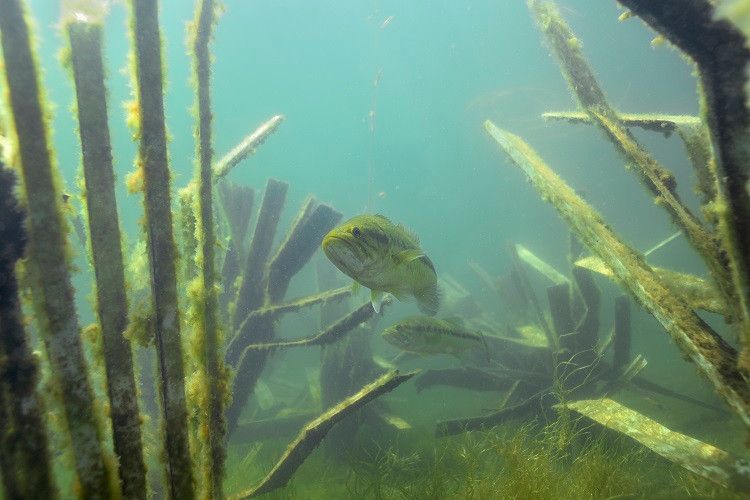
The underwater footage library is the differentiator competitors in this space don't match. Fishiding has documented, over more than 15 years, how bluegill, crappie, bass, and catfish all use this dense structure, at different depths and seasons. That's evidence of use, not a guaranteed population outcome, and how a pond responds still depends on stocking, forage base, and placement.
Where Fishiding shines
- Dense, intricate structure that documented footage shows across freshwater species
- Depth-specific product lines for shallow, mid, and deep water placement
- Reclaimed PVC material, keeping usable plastic out of landfills
- DIY components for owners who want to build custom crib or mat configurations
Where Fishiding falls short
- Requires more planning than dropping a single marked unit
- DIY kits take assembly time before they go in the water
- Best results depend on placing habitat across multiple depth zones, not one spot
Best for: pond and lake owners, and fisheries managers, building habitat density across a full water body rather than marking one location.
| Fishiding | Structure Spot | |
|---|---|---|
| Design goal | Dense, layered habitat for a whole pond or lake | Single mappable unit for one spot |
| Depth coverage | Shallow, mid, and deep water product lines | Typically one depth placement per unit |
| Material | Reclaimed PVC | PVC-based construction |
| Evidence base | 15+ years of underwater filming across species | Angler-reported catch results |
2. Mossback: best for owners who want a preassembled national brand
Mossback is a long-running preassembled fish habitat brand distributed through a dealer network, which makes it an easy pickup for owners who want a unit off a shelf rather than a DIY build. It's a reasonable step up from a single Structure Spot placement if you want several ready-made units rather than one.
Where Mossback shines
- Preassembled units, no build time
- Wide dealer distribution
- Familiar brand for pond and lake supply retailers
Where Mossback falls short
- Less structural variety per unit compared to layered mat and crib designs
- Fewer depth-specific product lines than a full shallow-to-deep lineup
- Limited public documentation of long-term underwater fish use
Best for: owners who want a recognizable preassembled option and don't need a full depth-zone habitat plan. See how it stacks up on the Mossback alternatives comparison.
3. Pond King: best for program-scale fisheries orders
Pond King is built around bulk ordering for fisheries programs and larger private lake projects, which is a different buying pattern than an angler grabbing one Structure Spot unit for a favorite cove. It fits when a manager needs volume more than variety.
Where Pond King shines
- Set up for bulk crib and attractor orders
- Familiar to fisheries management programs
- Straightforward for standardized, repeatable placements
Where Pond King falls short
- Standardized units mean less structural variety per placement
- Less emphasis on depth-zone-specific product lines
- Fewer publicly documented underwater observations of fish use over time
Best for: fisheries managers running program-scale stocking or restoration work who need consistent, repeatable units. Compare the details on the Pond King alternatives page.
4. American Fish Tree: best for a vertical, tree-shaped structure
American Fish Tree builds a submerged-tree silhouette rather than a mat, crib, or single mapped spot. It's a fit for owners who specifically want that branching, vertical profile mimicking a downed tree in the water column.
Where American Fish Tree shines
- Vertical branching profile similar to natural submerged timber
- Recognizable shape for owners replacing lost natural cover
Where American Fish Tree falls short
- One structural silhouette, less flexibility across shallow-to-deep placement
- Less documented evidence of use across all freshwater species
Best for: owners replacing a specific lost tree or timber feature rather than building out density across a whole pond.
Why people switch from Structure Spot
- They need coverage, not a pin. A single unit marks a location; it doesn't give fry, forage fish, and adult bass different depth zones to use through the season.
- They're planning a whole lake, not one cove. Fisheries managers and larger private lake owners plan habitat density across acres, which points toward mat and crib systems over one-off units.
- They want documented evidence, not just angler reports. Fishiding's underwater filming spans more than 15 years across freshwater species, a longer public record than most single-spot marketing tools offer.
Plan habitat density for your water
Browse depth-specific attractors, cribs, mats, and DIY kits.
When Structure Spot is still the right call
If your only goal is marking one productive spot for tournament fishing and you're not managing habitat density for the whole water body, a single mappable unit does that job fine. It's not a full habitat plan, and it was never built to be one.
FAQ
What is the best Structure Spot alternative for a whole pond in 2026?
Fishiding is the best full-pond alternative in 2026 because it offers depth-specific attractors, cribs, mats, and DIY kits for shallow, mid, and deep water instead of one mapped unit.
Is Fishiding better than Structure Spot?
Fishiding is built for habitat density across a whole water body while Structure Spot is built for marking one angler spot, so the better choice depends on whether you're managing a pond or fishing one location.
Does Mossback offer more habitat variety than Structure Spot?
Mossback offers preassembled units through a dealer network, giving owners more than one product option, though it has less structural variety per unit than layered mat and crib systems.
Can I build my own fish structure instead of buying Structure Spot units?
Yes, DIY components and kits let pond owners build custom crib and mat configurations sized to their own depth zones rather than a single preassembled unit.
Do all freshwater fish species use artificial fish habitat?
Underwater footage documented over more than 15 years shows all freshwater species observed using dense, intricate habitat structures, though placement and use vary by species, life stage, and season.
Is reclaimed PVC habitat safe for freshwater ponds and lakes?
Fishiding uses reclaimed PVC material that would otherwise go to a landfill, built specifically for freshwater pond, lake, and reservoir use rather than saltwater or aquarium settings.
What's the difference between a fish crib and a fish attractor?
A fish crib is typically a denser, framed structure meant to hold fish long-term, while an attractor is a lighter unit meant to draw fish to a specific spot; both come preassembled or as DIY builds.
One last thing
The detail that gets missed comparing single-spot tools to full habitat systems: density beats a single silhouette. Fishiding's underwater footage across more than 15 years shows fry and forage fish clustering in the tightest, most intricate sections of structure, not the open branches, which is the argument for layered mats and cribs over one mapped unit in 2026.