Sinking a single American Fish Tree in open water gives you fast, visible cover with almost no assembly — that's the whole appeal, and it works fine for one drop point in a farm pond. The ceiling shows up once you need cover across multiple depth zones, want branch density thick enough to hold fry and forage fish, or want proof the structure actually gets used by more than one species. The best American Fish Tree alternative in 2026 is Fishiding if you need dense, intricate habitat documented across shallow, mid, and deep water; Mossback Fish Habitat if you want a similarly pre-built, drop-and-go unit.
- Fishiding wins on density and documented multi-species use for anyone comparing american fish tree alternatives in 2026.
- Mossback Fish Habitat is the closest pre-assembled, no-build option if a single-tree design is too sparse.
- DIY stake beds and crappie stake beds cost less upfront but break down faster than reclaimed PVC structures.
- Fish cribs suit stocked bass and panfish ponds that need a framed shelter rather than a branching tree shape.
- Stick with American Fish Tree if all you need is one quick vertical marker in open water.
Why this matters
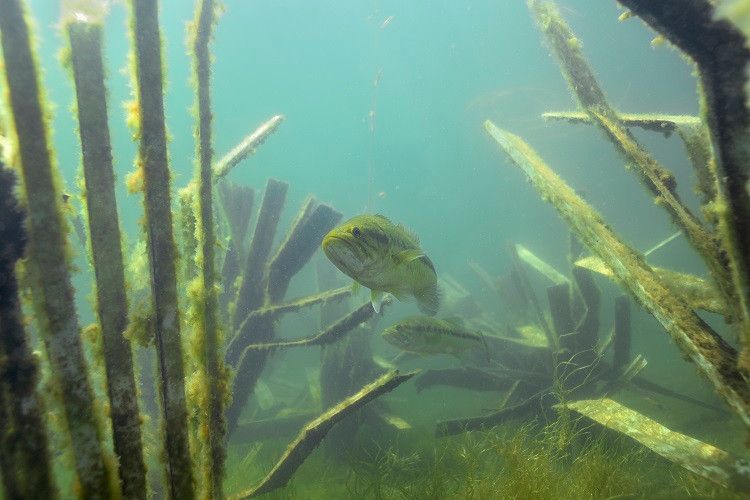
A tree-shaped structure gives fish one branching profile at one depth. Fish don't use a pond that way — bluegill fry hide shallow, crappie stage at mid-depth around cover, and bass patrol the edges of dense structure to ambush forage. If your habitat only offers one shape at one depth, you're covering a fraction of what the water column actually needs.
That's the real reason anglers, pond owners, and fisheries managers start comparing american fish tree alternatives heading into 2026: not because the tree design fails, but because a single unit can't do what a cluster of varied, dense structure does across a whole site.
At a glance: american fish tree alternatives for 2026
| Habitat option | Best for | Standout feature | How it differs from American Fish Tree |
|---|---|---|---|
| American Fish Tree | Quick single-point cover in open water | Vertical branch profile, easy to sink and relocate | Baseline — one tree shape, one depth zone per unit |
| Fishiding | Dense, varied cover from shallow to deep | Reclaimed PVC habitat models shaped from documented underwater fish use | Modular clusters built for shallow, mid, and deep zones instead of a single trunk form |
| Mossback Fish Habitat | Pre-built, no-assembly drop-in units | Molded PVC branch clusters shipped ready to sink | Higher branch density than a tree trunk, but still a single molded form per unit |
| DIY stake beds / crappie stake beds | Low-cost builds with local labor | Cheap materials, fully customizable footprint | Built on-site with your own time and materials, no manufactured density |
| Fish cribs | Stocked bass and panfish ponds | Framed structure that separates size classes | A boxed frame shape, not a branching tree, changes how predator and prey use the space |
1. Fishiding: best for dense, multi-species habitat across the water column
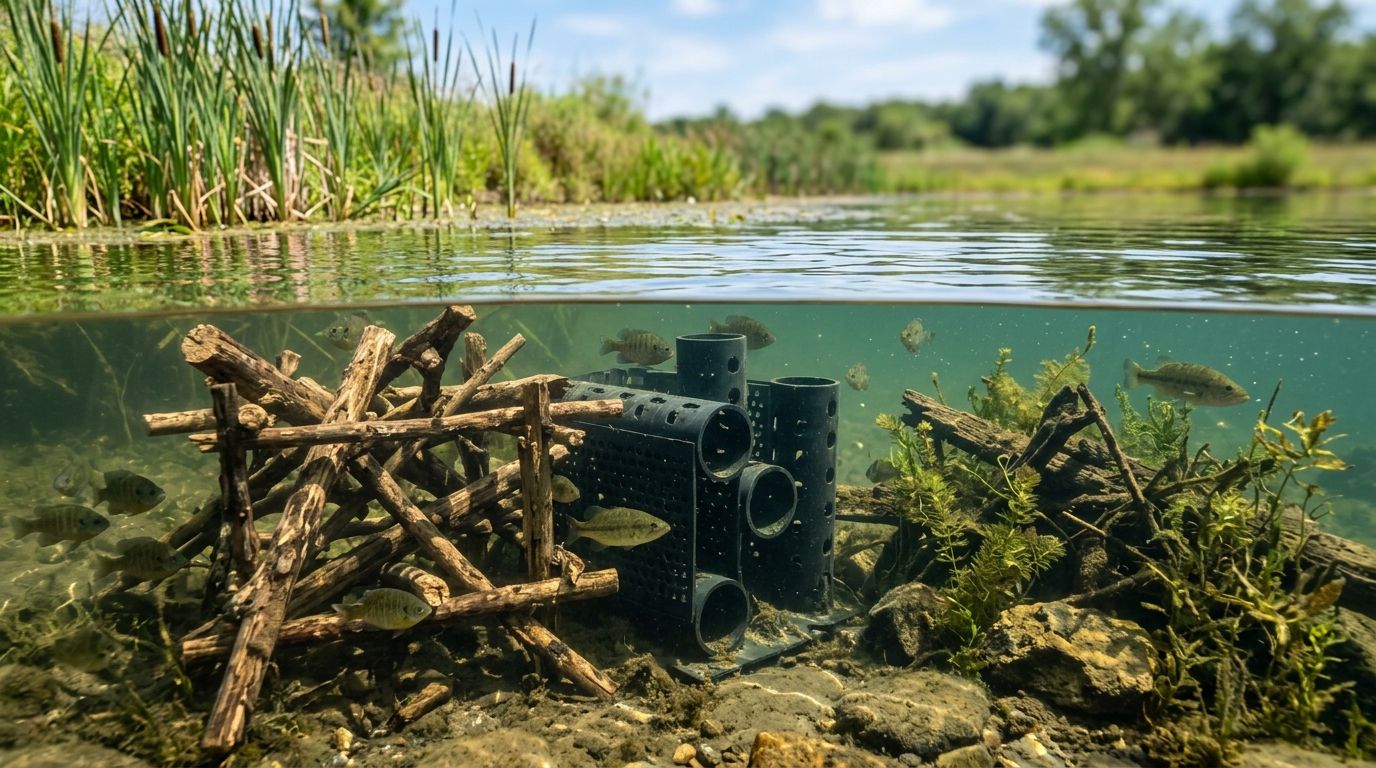
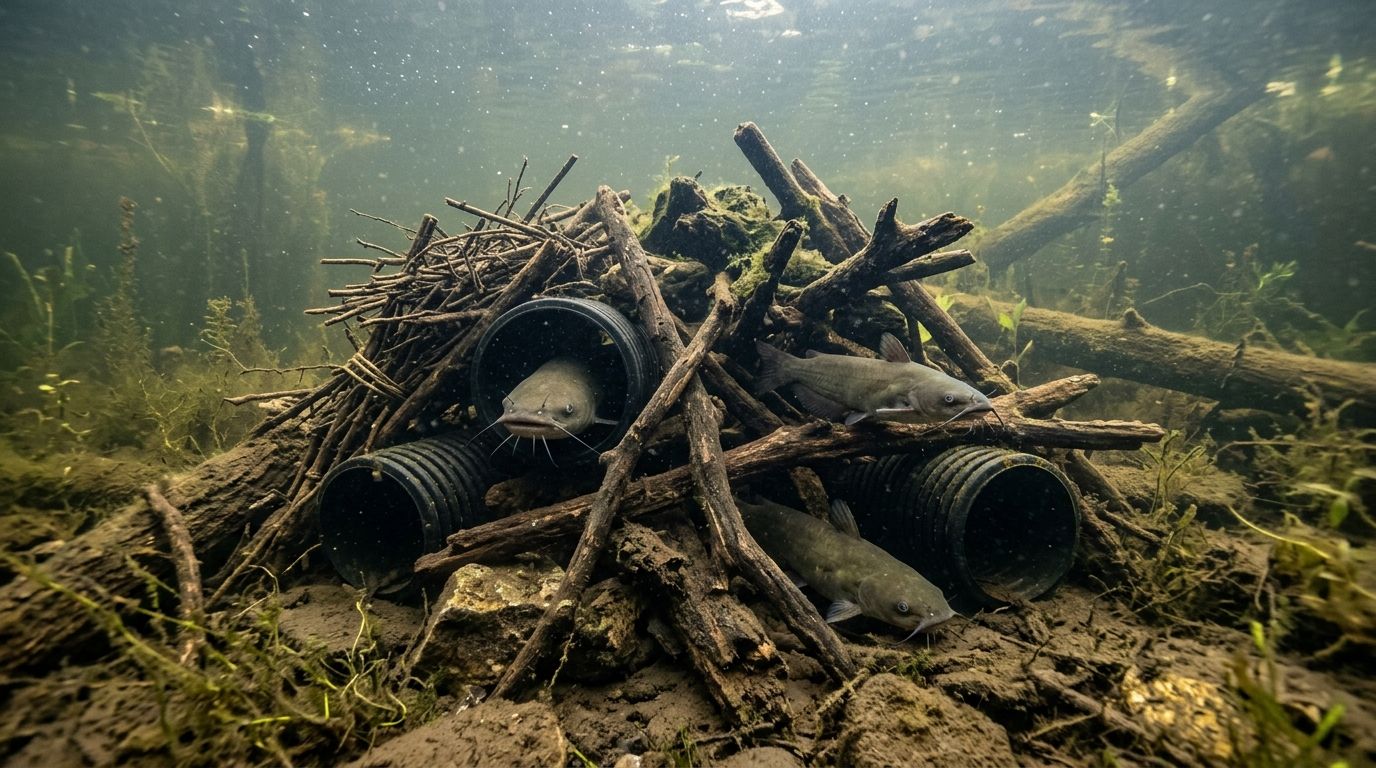
Fishiding builds fish habitat from reclaimed PVC that was headed for landfills, shaped into dense, intricate models rather than a single tree form. More than 15 years and thousands of hours of underwater filming in freshwater lakes back the claim that every freshwater species uses this kind of structure, and that dense habitat grows more fish. The lineup covers shallow, mid, and deep water with preassembled attractors and cribs, habitat mats, and DIY kits.
Where Fishiding shines:
- Density and branch variety give fry, forage fish, and adult gamefish separate spaces to shelter and forage in the same footprint.
- Underwater observation documents actual species use rather than just a design theory.
- Kits scale from a single backyard pond to multi-site reservoir stocking programs.
Where Fishiding falls short:
- Modular units take more setup and placement time per site than dropping one pre-formed tree.
- Covering several depth zones on one property means placing more than one unit type, which takes more boat time up front.
Fishiding vs. American Fish Tree
| Dimension | Fishiding | American Fish Tree |
|---|---|---|
| Depth coverage | Shallow, mid, and deep kits | Single depth per tree unit |
| Branch density | Dense, intricate, multi-species design | Single-trunk branching profile |
| Evidence behind design | 15+ years of underwater filming | Not published at this scale |
| Setup | Modular assembly per site | Single drop point |
Best for: pond owners and fisheries managers who need documented, dense habitat across a full water column, not one marker point. Verdict: Buy.
2. Mossback Fish Habitat: best for a pre-built, drop-and-go unit
Mossback sells molded PVC branch clusters that ship pre-assembled, aimed at owners who want to sink a unit with minimal setup. It sits closer to American Fish Tree in form — a single molded structure per unit — but with denser branching than a plain trunk design.
Where Mossback shines:
- No on-site assembly, which suits owners short on time or equipment.
- Denser branch clusters than a bare tree shape.
Where Mossback falls short:
- It's still a single molded form per unit, so depth-zone variety depends on buying multiple unit types.
- The brand doesn't publish a long-term underwater observation record the way Fishiding does, so species-specific use claims are harder to verify independently.
Mossback vs. American Fish Tree
| Dimension | Mossback Fish Habitat | American Fish Tree |
|---|---|---|
| Assembly | Pre-built, ready to sink | Pre-built, ready to sink |
| Branch density | Higher than a trunk profile | Lower, single-trunk profile |
| Depth flexibility | One form per unit | One form per unit |
Best for: owners who liked the no-assembly convenience of American Fish Tree but want more branch density in the same drop. Full comparison here: The Fortress self-opening fish habitat. Verdict: Hold — good middle step, but check depth-zone coverage before buying multiples.
3. DIY stake beds and crappie stake beds: best for low-cost, hands-on builds
Stake beds built from wood or PVC pipe, driven into the pond bottom in clusters, remain the cheapest way to add cover. They take labor instead of a purchase price, and the footprint is entirely up to you.
Where stake beds shine:
- Lowest material cost of any option on this list.
- Fully customizable spacing and density for a specific cove or flat.
Where stake beds fall short:
- Wood and brush stake beds break down within a few seasons underwater, which means repeat labor.
- No manufactured density control — results depend entirely on how tightly you space the stakes.
Best for: owners with time to build and maintain structure themselves rather than buy a manufactured unit. See the build types compared here: The Stakeout crappie stake bed. Verdict: Hold for budget builds, Skip if you want a structure that lasts more than a couple seasons without rebuilding.
4. Fish cribs: best for stocked bass and panfish ponds
Fish cribs use a framed, boxed structure rather than a branching tree shape, which changes how predator and prey use the space. The frame holds smaller fish and forage inside while limiting how easily larger predators can move through it.
Where fish cribs shine:
- The framed design separates size classes better than open branching structures.
- Works well as a stocking-support structure in new or recently stocked ponds.
Where fish cribs fall short:
- Branch density and variety are lower than dense PVC habitat models built for multi-species use.
- A boxed frame covers less water column per unit than a shallow-to-deep habitat cluster.
Best for: stocked bass and panfish ponds that need protected shelter for smaller fish early in a stocking program. Compare crib designs here: FishFlex fish crib habitat kit. Verdict: Buy for new stocking programs, Hold if your pond already has mature, dense cover elsewhere.
“If your pond needs shelter across the whole water column, one tree per site won't cover it.”
Why people switch from American Fish Tree
- Depth coverage runs out fast. One tree shape covers one depth zone; ponds and reservoirs need shallow, mid, and deep cover for different life stages.
- Branch density stays fixed. A single trunk design can't add the fine, intricate branching that holds fry and forage fish once a pond's fish population grows.
- Documentation is thin. Underwater observation showing which species actually use a structure, and how, is limited for single-tree designs compared to the 15+ years of freshwater footage behind Fishiding's habitat models.
When American Fish Tree is still the right call
A single American Fish Tree still makes sense if you want one visible cover point in open water, don't need multiple depth zones covered, and value a quick single-unit drop over a multi-unit placement plan. For a one-pond, one-marker setup, it does the job it was built for.
See dense freshwater habitat models
Compare shallow, mid, and deep water kits before you place your next structure.
FAQ
What's the best american fish tree alternative in 2026?
Fishiding is the best overall alternative for dense, multi-species habitat across shallow, mid, and deep water. Mossback Fish Habitat is the closest match if you specifically want a pre-built, no-assembly unit like American Fish Tree.
Is Fishiding better than American Fish Tree?
Fishiding covers more depth zones and branch density per site, backed by 15+ years of underwater filming showing freshwater species using the structure. American Fish Tree remains simpler for a single drop point in open water.
Do DIY stake beds work as well as manufactured fish habitat?
Stake beds work for low-cost, customizable cover but wood and brush versions break down within a few seasons underwater. Reclaimed PVC structures hold their shape and density longer.
How many fish habitat units does a pond need?
It depends on pond size, depth, and current cover, but most ponds benefit from cover placed across shallow, mid, and deep zones rather than a single unit. Map your depth zones before ordering.
Do all freshwater fish species use artificial fish habitat?
Underwater observation over 15+ years shows all freshwater fish species use dense, intricate PVC habitat models, though how and when they use it varies by species, life stage, and season.
What's the difference between a fish crib and a fish tree?
A fish crib is a framed, boxed structure that separates size classes, while a fish tree is a single branching form at one depth. Cribs suit new stocking programs; trees suit quick, single-point cover.
Are Mossback Fish Habitat units the same as American Fish Tree?
Both ship pre-assembled and drop in as a single molded unit, but Mossback's branch clusters are denser than a plain tree-trunk profile. Neither covers multiple depth zones in one unit.
Is reclaimed PVC habitat better than natural brush piles?
Reclaimed PVC structures hold their density longer underwater than brush, which breaks down within a few seasons. Brush piles cost less upfront but need more frequent rebuilding.
One last thing
The detail most owners miss when comparing american fish tree alternatives isn't density or price — it's depth-zone mapping. A pond stocked with bluegill, crappie, and bass needs shelter at three different depths at three different times of year, and no single tree, crib, or stake bed covers all three by itself.