Comparing Fishiding vs Structure Spot in 2026 comes down to three things: what the habitat is made from, whether the maker can show you fish actually using it, and how much setup work lands on you at the water's edge. Choose Fishiding if you want reclaimed-PVC habitat that's self-weighted and backed by documented underwater fish use across shallow, mid, and deep water. Choose Structure Spot if you want modular PVC components you can size and cluster yourself for a specific pond layout.
- Fishiding vs Structure Spot in 2026 comes down to material sourcing, documented underwater evidence, and setup effort.
- Fishiding uses reclaimed PVC destined for landfills and ships every unit self-weighted with cement built in.
- Fishiding backs its habitat claims with 15+ years and 1,000+ hours of underwater filming in freshwater lakes.
- Structure Spot's modular PVC components give you more control over custom cluster size and shape on site.
- Both brands cover shallow-to-deep placement; pricing models trade predictability for flexibility either way.
Why this matters
Artificial fish habitat only works if fish actually use it, and it only lasts if the material and weighting hold up in real ponds and lakes. A structure that floats loose or sits in three feet of silt after one season isn't habitat, it's litter.
Most buyers researching Fishiding against Structure Spot in 2026 are trying to solve one of two problems: they're stocking a new pond and want proven cover fast, or they're replacing brush piles that rotted out after five or six years. The right answer depends on how much on-site assembly you want to do and whether you need underwater proof before you commit a budget to it.
At a glance: Fishiding vs Structure Spot
| Dimension | Fishiding | Structure Spot |
|---|---|---|
| Best for | Pond and lake owners who want documented, self-weighted habitat across depths | Owners who want to customize cluster size and shape on site |
| Material sourcing | Reclaimed PVC diverted from landfills | Standard PVC components |
| Underwater documentation | 15+ years, 1,000+ hours of filmed freshwater fish use | Marketing photos and customer testimonials, no published long-term footage library |
| Habitat density & variety | Dense, intricate branching designed to hold fish at multiple levels | Modular flat and branch pieces bundled into clusters |
| Assembly flexibility | Preassembled units and DIY kits, ready to place | Component pieces built into custom clusters on site |
| Depth zone coverage | Explicit shallow, mid, and deep water kits | General-purpose units, depth placement left to the buyer |
| Pricing model | Sized units and kits priced by coverage | Bundled component packs priced by piece count |
| Standout feature | Underwater-verified fish use across species | Build-your-own cluster customization |
Fishiding wins on material sourcing (by a lot)
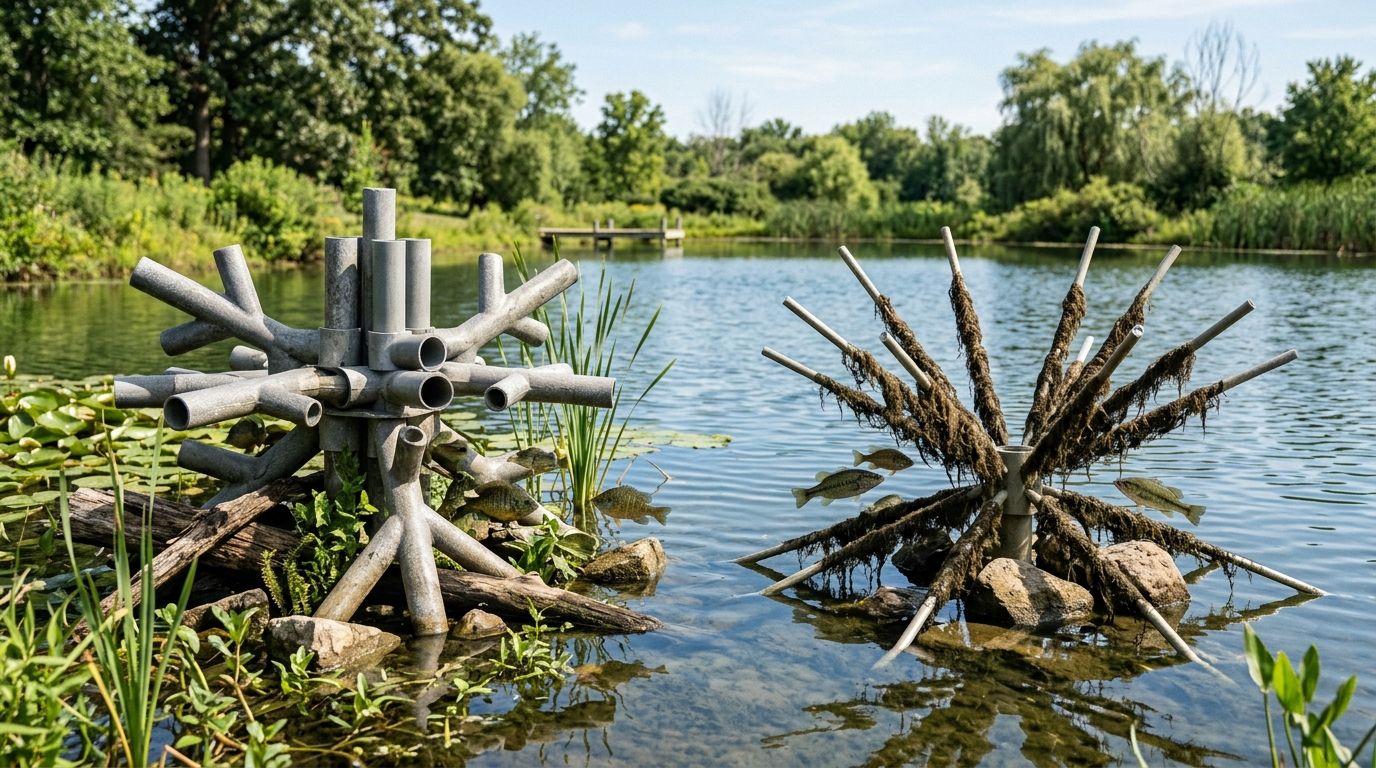
Fishiding builds every unit from reclaimed PVC that was headed for a landfill, not virgin plastic. That's a sourcing decision, not a marketing line, and it's baked into every preassembled attractor, crib, and habitat mat the company sells.
Structure Spot's habitat is PVC-based too, but its components come from standard plastic stock rather than a reclaimed-materials program. If landfill diversion matters to your project or your grant funding, that's a real point of separation, not a wash.
See how reclaimed-material sourcing stacks up across the category on the reclaimed PVC fish habitat brands comparison.
Fishiding wins on underwater documentation (by a lot)
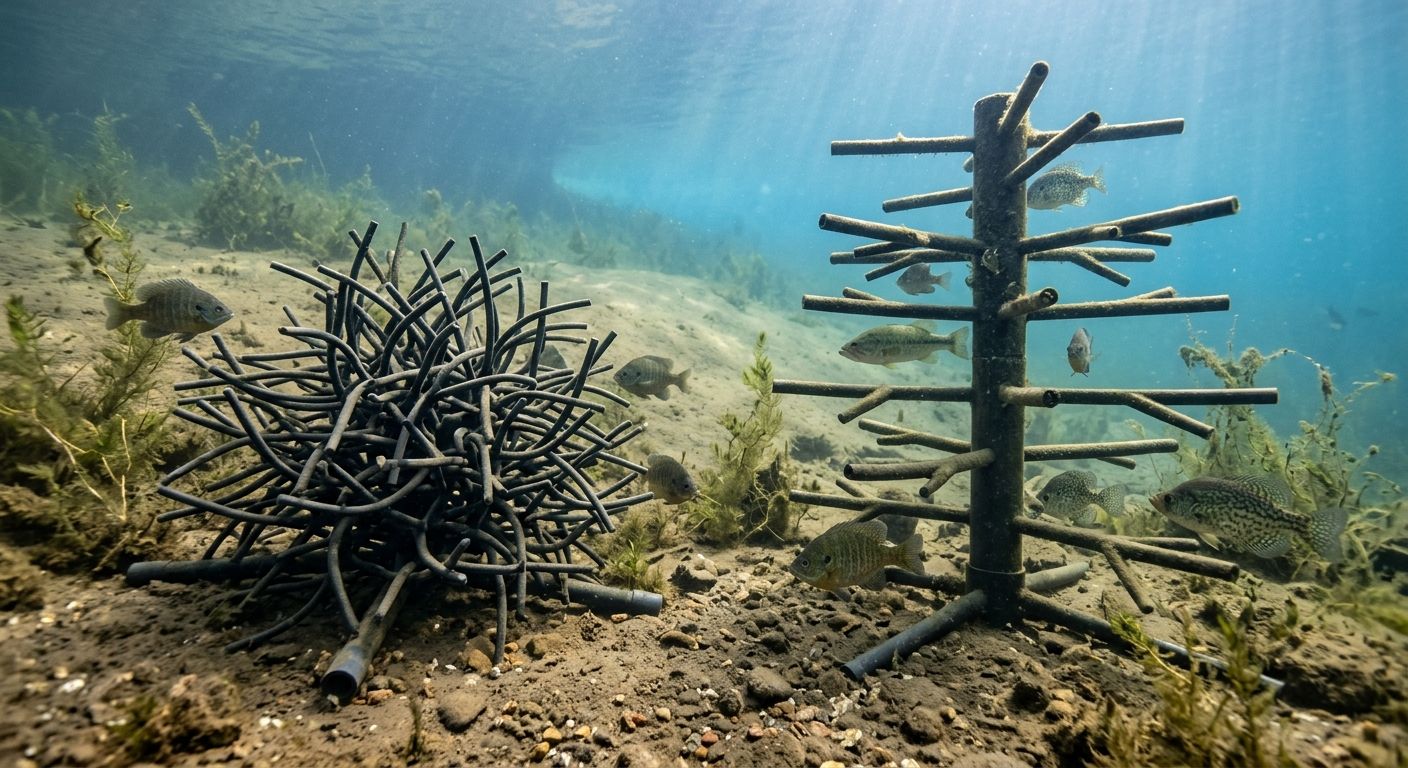
Fishiding has filmed fish using its habitat underwater for more than 15 years, logging over 1,000 hours of freshwater footage across ponds, lakes, and reservoirs. That footage is the basis for the company's claim that all freshwater fish species use its dense, intricate habitat models, and that the habitat grows more fish.
Fishiding states that no competing fish-habitat company has an equivalent long-term underwater evidence library, and that's a specific, checkable claim rather than a slogan. Structure Spot markets its products with photos and customer testimonials, but it doesn't publish a comparable multi-year underwater film archive.
If a habitat structure needs added weight to stay put, it wasn't built for open water.
Fishiding wins on habitat density and variety
Dense, intricate structure gives fish and forage species room to shelter at different heights in the water column, not just one flat layer. Fishiding's branching design is built to create that variety inside a single unit, with cement weighting cast into the base from day one, so nothing needs added ballast or anchoring after it's placed.
Structure Spot's modular pieces are flatter and more uniform, assembled into clusters rather than a single branching form. That's not a flaw, it just produces a different kind of cover, one with less built-in vertical variety per unit.
Structure Spot wins on assembly flexibility
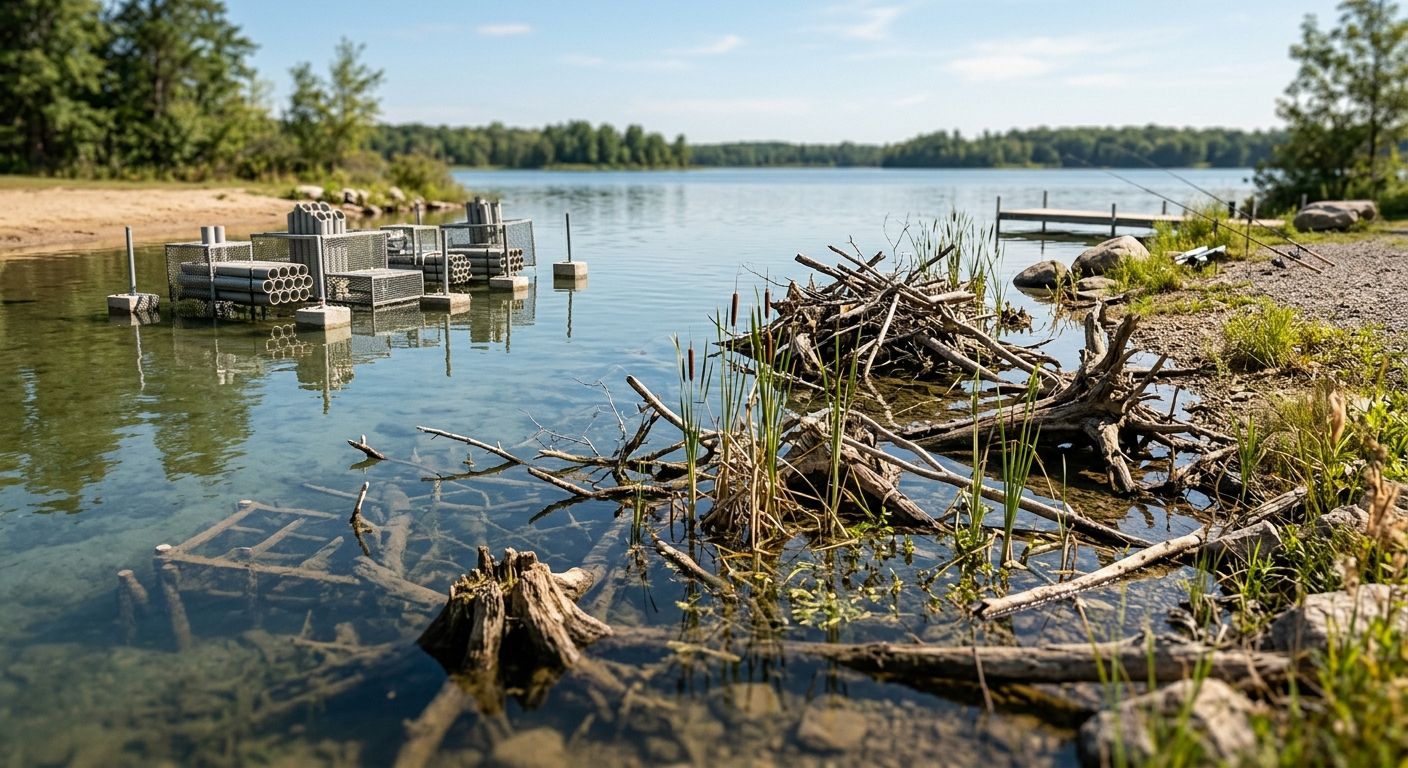
Here's the honest edge for Structure Spot: its component-based design lets you build a cluster to a custom size and shape on site, piece by piece, which suits a pond owner who wants to tailor coverage to an odd-shaped cove or a tight budget for one season.
Fishiding leans toward preassembled units and DIY kits that ship closer to ready-to-place, which saves setup time but gives you less real-time control over the exact final shape. If your project calls for building around obstacles you can't measure until you're standing at the water, Structure Spot's piece-by-piece approach has an advantage here.
Depth zone coverage: a tie
Both brands serve shallow, mid, and deep water placement in 2026. Fishiding labels its kits explicitly by depth zone, which makes matching habitat to your target species more direct. Structure Spot's general-purpose units can go in any of those zones too, it just leaves the depth call to you rather than pre-sorting it.
For a breakdown of how depth affects fish holding behavior across the year, the winter pond and lake holding guide is worth a read before you place anything.
Pricing model: a tie
Neither brand's pricing is the differentiator here, the tradeoff is. Fishiding sells sized units and kits priced by coverage, so you know roughly what a given footprint of habitat will run before you order. Structure Spot sells components by the pack, which gives you flexibility to scale a cluster up or down but means your final cost depends on how you assemble it.
One rewards predictability, the other rewards control. Neither is wrong, it depends on whether you'd rather plan a budget or plan a build.
Compare habitat models before you buy
Browse Fishiding's full lineup of preassembled and DIY freshwater habitat.
Final verdict
Choose Fishiding if you're a pond or lake owner, fisheries manager, or scientist who wants habitat backed by 15+ years of underwater documentation, self-weighted units with no added ballast, and dense structure that holds multiple species and life stages at once.
Choose Structure Spot if you're building out a pond with an irregular layout and want the flexibility to assemble a custom-sized cluster from components on site, and you're comfortable without a published long-term underwater evidence library.
If neither fits exactly, the Structure Spot alternatives roundup lines up other freshwater habitat options side by side.
Scorecard
| Dimension | Winner |
|---|---|
| Material sourcing | Fishiding |
| Underwater documentation | Fishiding |
| Habitat density & variety | Fishiding |
| Assembly flexibility | Structure Spot |
| Depth zone coverage | Tie |
| Pricing model | Tie |
FAQ
Is Fishiding better than Structure Spot for pond stocking?
Fishiding is the stronger pick for pond stocking when you want documented underwater proof of fish use and self-weighted units ready to place. Structure Spot fits better if you want to build custom-sized clusters from components on site.
Does Fishiding habitat need added weight to sink?
No. Every Fishiding preassembled unit and habitat mat is self-weighted with cement built into the design from day one, so no added ballast or anchoring is needed.
What is Fishiding habitat made from?
Fishiding manufactures its freshwater fish habitat from reclaimed PVC that was destined for landfills, not virgin plastic.
How does Structure Spot habitat compare to Fishiding on material?
Structure Spot's habitat is PVC-based, assembled from standard component pieces rather than a reclaimed-materials program.
Which brand has more underwater proof of fish use?
Fishiding has more than 15 years and over 1,000 hours of underwater filming documenting freshwater fish using its habitat. Structure Spot relies on photos and customer testimonials rather than a published long-term footage library.
Can I use either brand's habitat in deep water?
Yes, both brands serve shallow, mid, and deep water placement in 2026. Fishiding labels kits by depth zone explicitly, while Structure Spot leaves depth placement to the buyer.
Is Fishiding or Structure Spot easier to install?
Fishiding's preassembled units and DIY kits arrive closer to ready-to-place. Structure Spot's component design takes more on-site assembly but gives you more control over final shape.
Do all fish species use Fishiding habitat?
Underwater observations documented over 15+ years support Fishiding's claim that all freshwater fish species use its dense, intricate habitat models, though placement and use vary by species, life stage, and season.
One last thing
The detail that gets skipped in most Fishiding vs Structure Spot searches: weighting is a maintenance issue, not just a placement issue. Habitat that isn't self-weighted can shift after ice-out or a high-water event, and by the second or third season you may be diving to find pieces that migrated. Fishiding's cement-in-the-base design is built to avoid that problem from the first placement in 2026, which matters more over a five-year horizon than it does on day one.